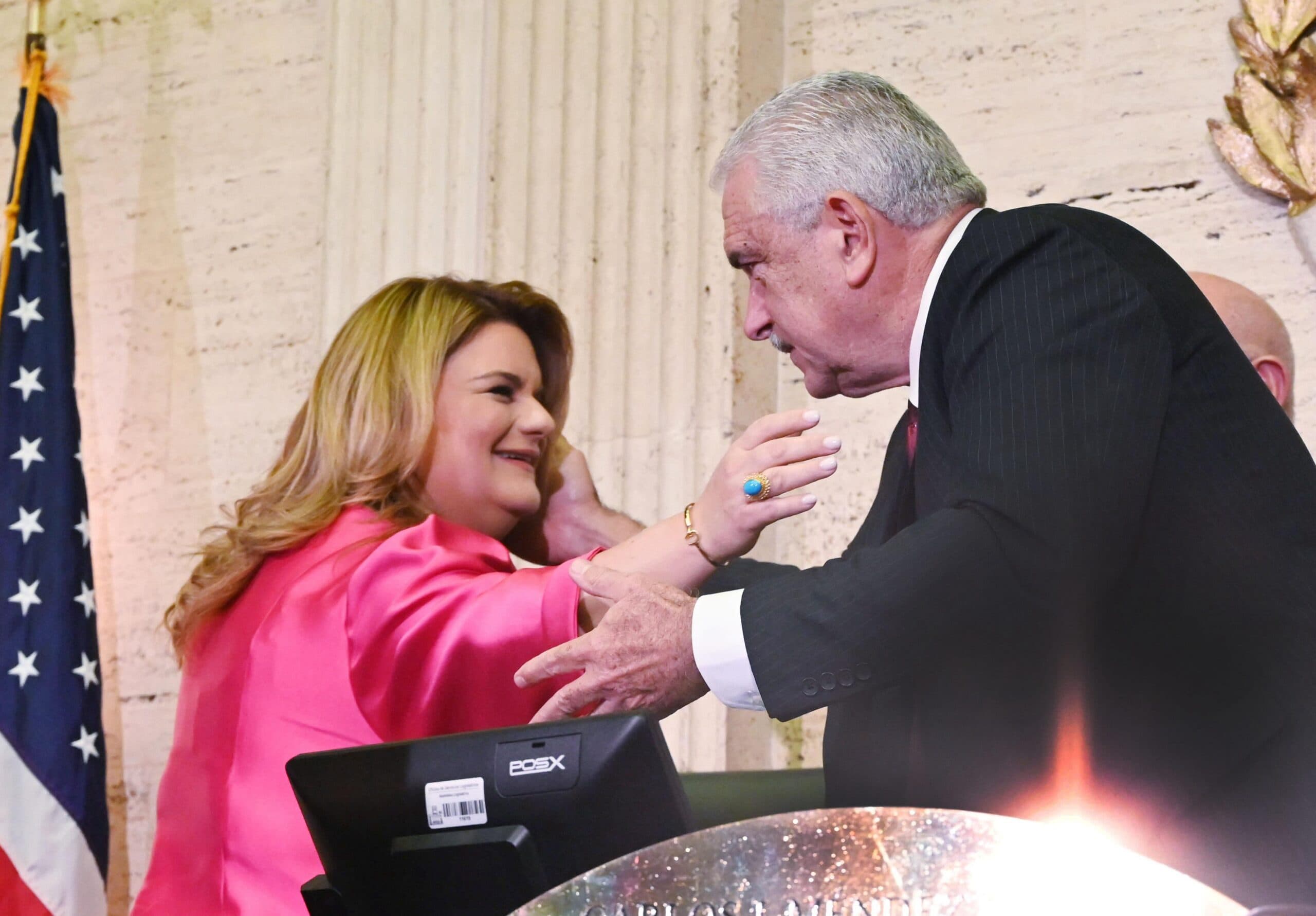
San Juan— Gov. Jenniffer González Colón is set to deliver her State of the Commonwealth address (Mensaje de Estado) this afternoon before a joint session of the Legislature at the House of Representatives, and Puerto Rico’s business community will be listening closely for how she frames the economy and her recommended Fiscal Year 2026-2027 budget. The administration filed that roughly $33.57 billion spending plan on May 15, opening a high-stakes window in which the Legislature must adopt a budget and the Financial Oversight and Management Board (FOMB) must certify it on or before June 30. For employers and investors, the speech is more than political theater: it is the clearest signal yet of how the administration intends to balance fiscal discipline with growth — and of the risks that could reshape the island’s economy in the year ahead.
The consolidated budget totals roughly $33.57 billion, including about $13.18 billion from the General Fund, and was filed approximately $312 million below the revenue projections of the Certified Fiscal Plan, according to the governor’s office. It is the product of the joint process between the commonwealth government and the Oversight Board under the federal PROMESA law, and it would mark Puerto Rico’s second consecutive balanced budget — a milestone that matters to investors and lenders weighing the island’s long-term creditworthiness.
A disciplined baseline
“This government is acting with planning and anticipation. We are identifying risks before they happen, strengthening reserves and protecting the essential services of our people,” González Colón said in announcing the filing. The plan sets aside a $103.9 million reserve for operational risks and fiscal contingencies, on top of roughly $102 million carried for FY2026 and about $235 million tied to FY2025. It was prepared under modified-accrual accounting and Governmental Accounting Standards Board (GASB) rules, as PROMESA requires.
For the private sector, that conservatism cuts two ways. Sustained balanced budgets and growing reserves reinforce the stability narrative Puerto Rico needs to attract capital and to keep moving toward the four consecutive balanced budgets required to dissolve the Oversight Board. At the same time, holding spending below the fiscal plan’s own revenue estimate limits the public investment that some industries had hoped to see. The proposal channels money into priority areas — public safety, health, seniors, infrastructure, technology and municipal support — including $44 million to update Police salary scales, $20 million for correctional-officer raises, $25.5 million for road repaving, $23.7 million to strengthen Medicaid and the MMIS platform, and $11.1 million to guarantee maritime transportation for Vieques and Culebra.
Tax reform is the headline businesses are watching
The budget lands as González Colón advances a $550 million tax reform that would lower income-tax rates for individuals earning less than $90,000 a year and raise the deduction for dependents, with the cost offset by spending cuts, the application of excess revenues and the elimination of certain tax exemptions, Bond Buyer reported. The governor has said a second phase would address excise taxes on vehicles and corporate taxation.
Business groups generally welcome rate relief, but they want detail on how it will be funded and whether the elimination of “certain tax exemptions” could touch the incentives that underpin manufacturing and high-value services. They are also wary of new levies: the Puerto Rico Chamber of Commerce urged the governor to veto Senate Bill 615, which it argued would impose a new tax on telecommunications. The message from the private sector heading into the budget debate is consistent — predictability over new burdens.
The federal overhang: Medicaid and beyond
No issue looms larger over FY2027 than federal funding. Puerto Rico’s capped federal Medicaid allotment rises to about $3.825 billion in FY2027, but without congressional action the formula reverts after that year to a far lower base calculated from FY2019 — a “fiscal cliff” that analysts at KFF and the Center on Budget and Policy Priorities warn would hit the health sector and the consumers who depend on it. The budget already builds in a 5% increase in Medicaid costs for managed-care organizations based on actuarial projections, and the governor has emphasized reserves aimed specifically at Medicaid and other federal programs.
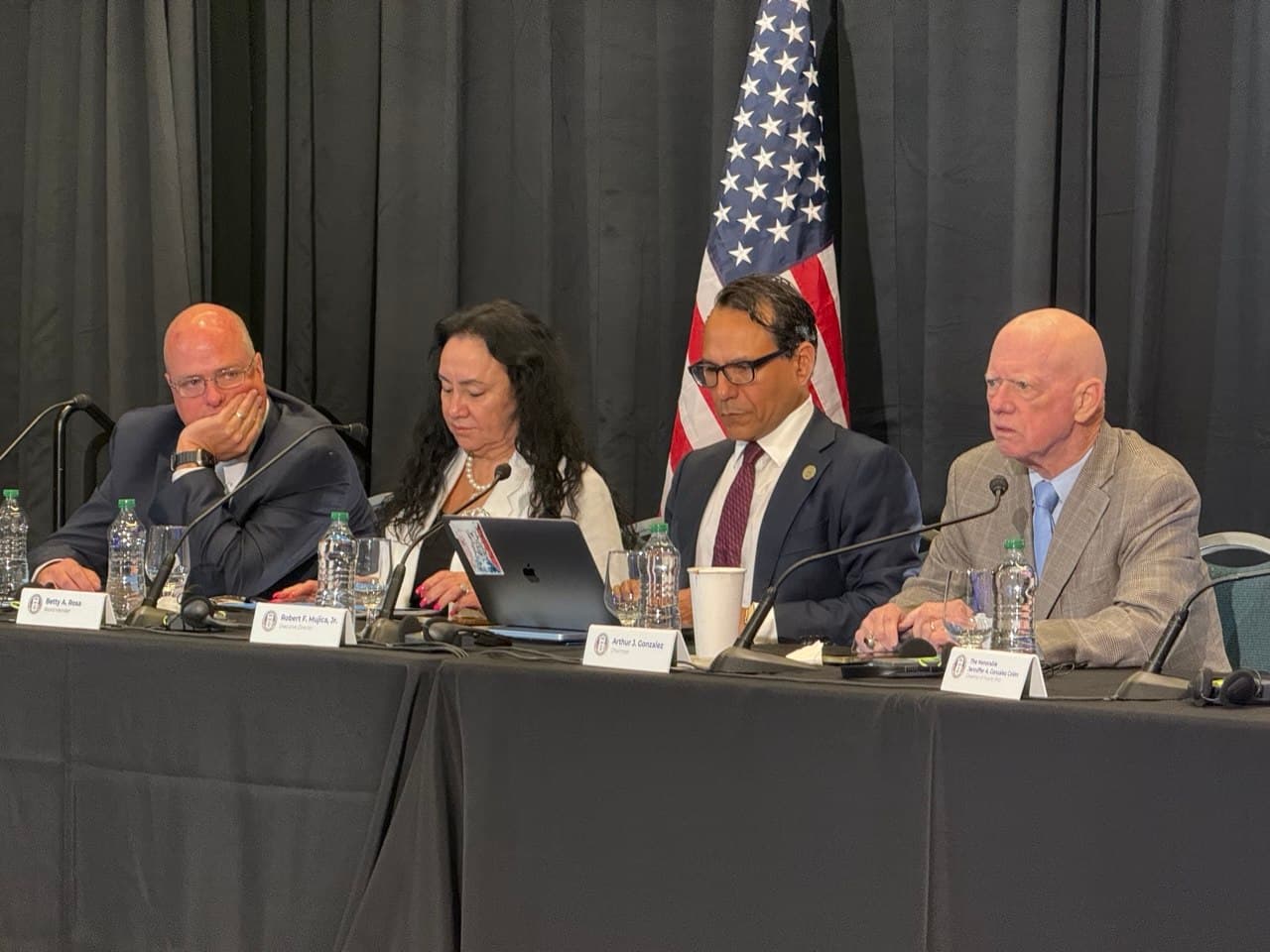
The exposure is broader than health care. The Oversight Board has warned that more than $500 million in federal money is at risk for the Department of Education amid shifting federal policy, and Executive Director Robert F. Mujica Jr. has argued that fiscal responsibility positions the commonwealth to respond to a changing federal landscape. For employers, the stakes are direct: federal transfers ripple through household spending, the health-care industry and the broader consumer economy.
Energy, the perennial wild card
Few variables weigh on business confidence like the power grid. The debt restructuring of the Puerto Rico Electric Power Authority (PREPA) remains unresolved — Mujica has said he does not expect the utility’s bankruptcy to conclude this year — even as Act 17-2019 requires retiring roughly 450 megawatts of coal-fired generation by Dec. 31, 2027 and meeting renewable-energy and storage targets. The budget does not resolve the energy crisis, but manufacturers, retailers and tourism operators will read it for any signal of stability in a sector where reliability and cost remain their loudest complaints.
Oversight Board friction
The road to certification is not frictionless. The Oversight Board notified the governor on May 8 of a formal violation under PROMESA Section 202(c)(1)(B), finding that the proposed budget for the Puerto Rico Industrial Development Company (PRIDCO) did not comply with the 2025 Certified Fiscal Plan. PRIDCO is central to the island’s industrial-recruitment strategy, so any dispute over its funding carries weight for the manufacturing pipeline. Under the timetable the board issued in February, the Legislature must submit its adopted budget by June 5, with certification on or before June 30 — leaving a narrow runway for the executive, lawmakers and the board to reconcile their differences.
Opportunity in a shifting landscape
Amid the risks, officials see openings. The Oversight Board has noted that federal efforts to bring manufacturing back to the United States could benefit Puerto Rico’s industrial base, given the island’s tax framework, federal-jurisdiction advantages and skilled workforce. Whether the FY2027 budget — and the tax reform that accompanies it — sharpens that competitive edge is exactly what executives will be assessing as the global supply chain continues to realign.
What to watch
As the budget moves through the Legislature, the private sector’s checklist is clear: a clean, on-time certification that preserves the stability narrative; clarity on the design of tax reform and its treatment of incentives; credible reserves against the Medicaid cliff; and any sign of progress on energy. The coming weeks will reveal whether FY2027 delivers the predictability businesses say they need — or simply postpones the island’s hardest fiscal choices.