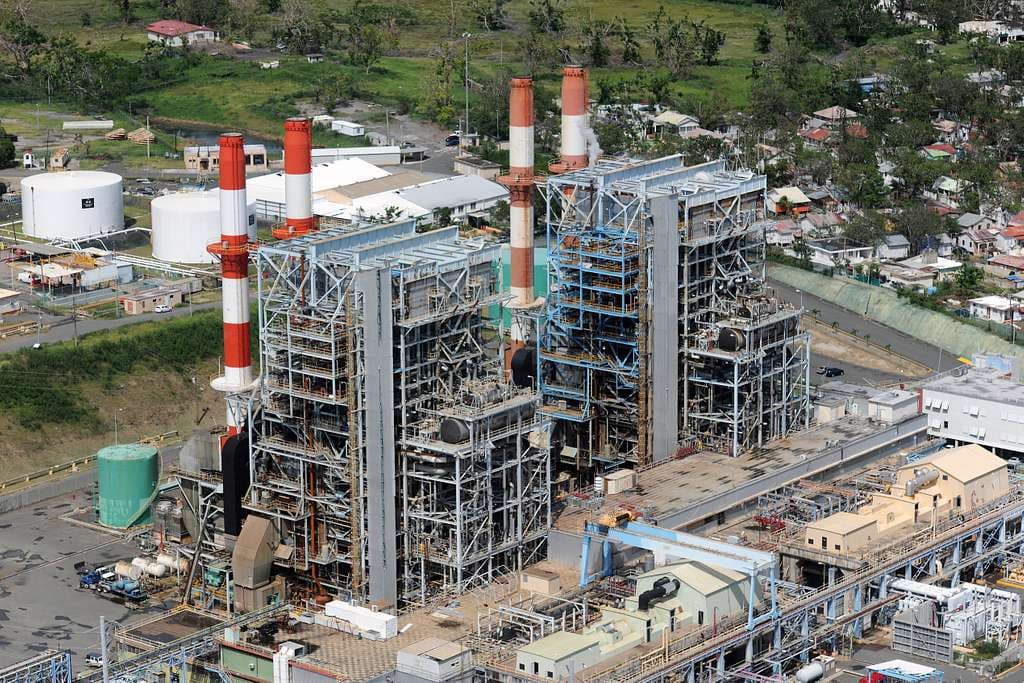
The filing presented this week by Genera PR, the private operator of the island’s power plants, raises questions about what government officials knew about the fleet’s condition and when that information was communicated to the operator. Genera said it did not receive the 2024 assessment until August 2026, according to documents filed this week with the Puerto Rico Energy Bureau.
Genera noted that the inspection report was issued in PREPA’s name and that PREPA Executive Director at the time was current Energy Czar Josué Colón Ortiz, who now serves as executive director of Public Private Partnership Authority (P3A). The report was addressed to PREPA Operations Director Jaime Umpierre. Colón Ortiz did not respond to requests for comment.
A Warning That Went Unshared
Inspection reports filed with PREB indicate that multiple temporary TM2500 generating units acquired to bolster Puerto Rico’s electricity system have experienced worsening mechanical conditions, with several units deemed “not serviceable” and requiring major maintenance or hot-section replacements, according to documents submitted by Genera in an ongoing regulatory proceeding.
Tasked with serving as an indispensable reserve buffer through December 2027 under Priority Stabilization Plan Activity No. 1, fourteen GE TM2500 mobile gas turbine units deployed across the San Juan and Palo Seco power plants are now at the center of a dispute over maintenance responsibilities, funding and grid reliability.
At the center of the filing in Case No. NEPR-MI-2024-0005 is a previously undisclosed May 14, 2024 assessment prepared by Power Engineering Consultants LLC for PREPA. The report found that several TM2500 units at the San Juan and Palo Seco power plants were already operating beyond original equipment manufacturer recommendations and required immediate corrective action, including hot-section exchanges and compressor repairs.
The assessment was based on site inspections conducted in March 2024, operational data collected from the units, maintenance records, and borescope inspection reports performed between May 2023 and March 2024. Those earlier inspections included reviews of Palo Seco GT-3 in May 2023, San Juan GT-1 in June 2023, San Juan GT-5 in July 2023, several San Juan units between November 2023 and January 2024, and additional Palo Seco and San Juan inspections in March 2024.
According to Genera’s filing, the company first became aware of the report on Aug. 25, 2026, when it was provided by the Puerto Rico Public-Private Partnerships Authority as part of a request for information. Genera told regulators that it had not previously located the report in its records.
The newly disclosed assessment found that San Juan units GT-2, GT-3 and GT-4 required hot-section exchanges “as soon as possible” because they were already operating beyond original equipment manufacturer recommendations. At Palo Seco, consultants reached the same conclusion for GT-1 and warned that GT-2 and GT-4 faced significant risks from damaged compressor components that could cause additional failures if not promptly addressed.
In one of the report’s starkest warnings, the consultants wrote that delaying repairs on Palo Seco units could be risky because “waiting until the next Hot Section Exchange outage could potentially risk the compressor’s integrity.”
Inspections Track Worsening Damage
The document filed by Genera also revealed an extensive history of inspections by multiple companies. The original condition assessment was prepared by Power Engineering Consultants LLC, while later borescope inspections were conducted by PPG Energy throughout late 2024, by SOM during 2025, and by GESA between June 8 and June 21, 2026.
Records included in the filing show PPG Energy inspections were performed between Nov. 23 and Dec. 31, 2024 at units in both San Juan and Palo Seco. Several of those reports classified units as “not serviceable.” Additional inspections performed by SOM took place between Aug. 4 and Aug. 22, 2025.
The most recent inspections cited in the filing were conducted by GESA in June 2026. Those inspections found widespread problems, including combustor burn-throughs, cracks, missing turbine material, damaged compressor blades, erosion and hot-section damage, leading inspectors to classify many units as “not serviceable.”
Several of the 2026 findings specifically documented deterioration over time.
For San Juan GT-4, inspectors reported combustor burn-through, missing rivets and heavy turbine erosion, concluding that the results showed “clear deterioration compared to previous inspection findings.” Similar conclusions were reached for San Juan GT-7 and GT-10.
At Palo Seco GT-3, inspectors stated that the hot section had “continued to deteriorate further” from conditions identified in prior reports and concluded that replacement was necessary. Palo Seco GT-4 likewise showed deterioration compared with previous inspections and was recommended for immediate hot-section replacement.
The filing states that inspection findings from GESA and other contractors were subsequently evaluated by GE Vernova, the original equipment manufacturer, which completed a root-cause assessment on Oct. 2, 2026 and provided maintenance recommendations for the fleet.
Fleet Failures Threaten Grid Reliability
The deteriorating condition of the temporary fleet has become a growing concern for government officials because the TM2500 units were acquired with federal support to stabilize Puerto Rico’s electric system while permanent generating assets undergo repairs. In an August 2026 letter included with the filing, Colón Ortiz acknowledged that the PEC report had identified “immediate or near-term corrective needs affecting several TM2500 units” and referenced multiple hot-section replacements that were due.
Colón also warned that “the continued unavailability of these resources may affect PREPA’s ability to comply with the federal emergency requirements directed to PREPA and its agents,” underscoring the importance of restoring the temporary generation fleet to service.
A Dispute Over Maintenance and Funding
Adding legal friction to operational problems is a dispute over who bears responsibility for performing and funding multi-million-dollar major overhauls.
At the center of that dispute is a March 15, 2024 side letter to the Asset Purchase Agreement under which New Fortress Energy agreed to complete major maintenance on up to seven TM2500 units if requested within 12 months of the closing of the transaction. According to the filing, NFE took the position in July 2025 that those obligations had expired.
In a June 10, 2026 letter included in the filing, Genera argued that major maintenance and repair work on the temporary generation fleet was delayed because PREPA failed to adequately fund service accounts required under the operating agreement. Genera stated that underfunding prevented the procurement of long-lead-time parts, the scheduling of OEM service teams, and the completion of hot-section exchanges and other major maintenance work. The company also blamed budget reductions imposed by the Energy Bureau for disrupting maintenance schedules and procurement activities.
A Push for a Clear Solution
Daniel Hernández, creator of Puerto Rico Energy Transformation publication and a former vice president of operations at Genera, said the documents point to a straightforward solution.
“The solution here is very simple,” Hernández said. “Either New Fortress should be required to carry out the major maintenance it was obligated to perform under the purchase agreement, or PREPA and the Energy Bureau need to identify the funding necessary for Genera to do the work.”
Hernández said restoring the temporary generation fleet is critical given Puerto Rico’s persistent shortage of generating capacity.
The filing was submitted as part of the Energy Bureau’s review of maintenance practices, operating costs and the condition of the temporary generation fleet under the electric system’s Priority Stabilization Plan. Genera attached inspection records, maintenance documentation and the 2024 PEC assessment in response to a series of supplemental information requests from regulators.