PREPA Seeks Approval of Amended EcoEléctrica Battery Deal
The 20-MW Peñuelas storage project advances under a revised contract the public cannot yet see, as regulators review it and lawmakers press for clarity on the producer’s gas plant beyond 2032
The Puerto Rico Electric Power Authority (PREPA) is seeking regulatory approval for an amended agreement with EcoEléctrica BESS LLC that would advance a 20-megawatt battery energy storage project in Peñuelas, marking the latest step in Puerto Rico’s effort to accelerate deployment of grid-scale energy storage as part of the island’s transition to a more resilient power system.
In a filing submitted to the Puerto Rico Energy Bureau on Oct. 16, PREPA requested approval of a proposed First Amended and Restated EcoEléctrica Battery Energy Storage System (BESS) Standard Offer Agreement under LUMA Energy’s Accelerated Storage Addition Program (ASAP).
The utility also asked regulators to keep the amended contract confidential while it undergoes review by both the Energy Bureau and the Financial Oversight and Management Board (FOMB).
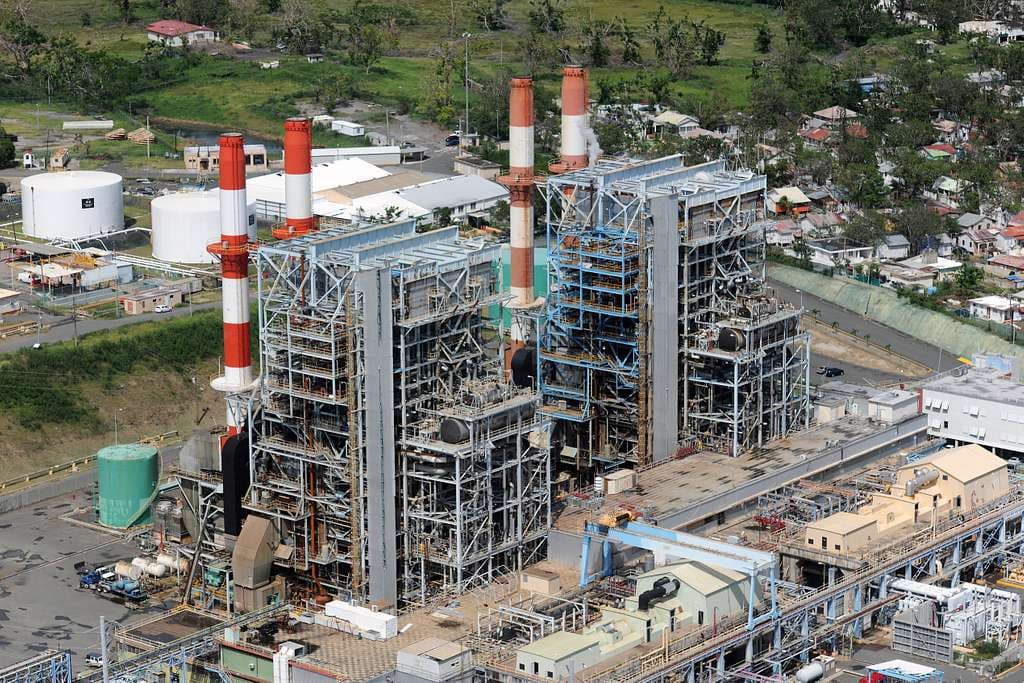
The project calls for development of a 20-MW, four-hour battery storage facility at EcoEléctrica’s Peñuelas site, one of several projects advanced through ASAP, a program launched to add energy storage capacity more quickly by leveraging existing power generation locations and infrastructure.
PREPA said the amended agreement incorporates revisions addressing insurance provisions, tariff pass-through procedures, interconnection-related requirements, tested storage capability provisions and pricing parity provisions associated with another Energy Bureau-approved storage agreement.
The utility emphasized that the proposed changes do not affect the project’s core commercial terms, including its storage capability payment price, installed capacity, 20-year supply period, early commercial operation incentives, liability provisions, insurance requirements or PREPA’s budget estimate for the project.
For investors and energy-sector stakeholders, the project represents one of the battery storage initiatives being advanced through ASAP, a program intended to add dispatchable storage capacity to Puerto Rico’s grid.
Notably, the filing does not disclose the project’s cost, contract value, storage payment rate, total investment amount or PREPA’s budget estimate, because the amended agreement itself was filed confidentially.
The public motion expressly requests that the entire amended contract be protected from public disclosure while regulatory approvals are pending. As a result, no specific project costs are identified in the publicly available filing.
The figures from the earlier version are on the public record, however. When the oversight board approved the contract in January 2026, its review put the estimated maximum value at $131.1 million, including about $12.3 million in pass-through costs for black start capability.
The storage capability payment was set at $16,000 per megawatt a month if the developer obtains federal investment tax credits, and $20,600 per megawatt a month if it does not. PREPA’s filing says the payment price is unchanged, which would mean those numbers still apply, but the public cannot confirm that from the filing itself.
How the contract got here
The ASAP process began in April 2024 when the Energy Bureau opened a proceeding to evaluate LUMA’s proposal to add battery storage systems at existing independent power producer facilities through standardized contracts.
LUMA argued the program could accelerate deployment timelines while improving grid reliability, reducing load-shedding events and lowering overall costs.
The Energy Bureau approved the overall ASAP concept in May 2024, finding it consistent with Puerto Rico’s public energy policy and the island’s approved Integrated Resource Plan. Regulators subsequently directed LUMA and participating generators to develop standard-form agreements to support project implementation.
The EcoEléctrica project has gone through multiple rounds of review since then. After draft agreements were submitted and revised, the Energy Bureau approved a proposed final agreement for the project in January 2025, including a pass-through cost adjustment mechanism, and directed LUMA to seek FOMB approval before execution.
PREPA’s board approved that version of the agreement in April 2025 and submitted it to the oversight board. FOMB later classified the proposal as “Approved with Observations” and required additional review for any material modifications. Subsequent revisions led to another round of Energy Bureau approval and renewed submission to FOMB.
According to the filing, FOMB ultimately issued an “Approved with Conditions” determination on Jan. 28, 2026. Those conditions required the developer to make good-faith efforts to secure the tax credits behind the lower payment rate, and required PREPA to report on those efforts and to bring any material change or extension back to the board for approval. PREPA and EcoEléctrica executed the agreement on April 7, 2026.
A confidential amendment in a public process
The newest amendment emerged after LUMA submitted a request to PREPA on Sept. 10, 2026 seeking approval of an amended and restated agreement. PREPA’s governing board subsequently adopted Resolution 5266 on Sept. 25, approving the revised contract and authorizing its submission to both the Energy Bureau and FOMB.
In its filing, PREPA argues the amended agreement should remain confidential because it is still under regulatory review and therefore constitutes a pre-decisional document protected under Puerto Rico law governing deliberative governmental processes.
The utility contends that public disclosure before final approvals could interfere with the evaluation process and expose terms that may ultimately be modified, accepted or rejected by regulators.
There, the company’s president said formal talks on that contract could begin as early as 2027, and that the plant would be needed on the system until about 2045. The battery agreement’s 20-year term from commercial operation would run well past 2032 as well. Both filings point to the same reality: the utility is making long-horizon commitments to this producer while the public record remains thin on what they cost.
Implications beyond the filing
The request highlights the lengthy regulatory path battery projects have faced as Puerto Rico works to strengthen a power grid that continues to grapple with reliability challenges and renewable energy integration.
The case illustrates the complex governance framework surrounding major energy infrastructure projects in Puerto Rico, where approvals from PREPA, the Energy Bureau and FOMB are often required before contracts can move forward. While the amended EcoEléctrica agreement appears designed primarily to refine commercial and operational provisions rather than alter the project’s scope, final implementation remains contingent on approval by both regulators.
For investors and energy-sector stakeholders, the project remains significant because it represents one of the battery storage initiatives being advanced through ASAP, a program intended to add dispatchable storage capacity to Puerto Rico’s grid at a time when the island is increasingly relying on renewable generation and seeking tools to improve reliability and system flexibility.
The open question is less whether the battery project proceeds than how much of its economics the public can test.
The January figures show that the island is paying between $16,000 and $20,600 per megawatt a month for storage, depending on tax credits that the developer had not yet secured at approval.
If the amendment leaves that pricing intact, the confidential material is the detail around it. Regulators will have to decide whether that detail can stay out of public view for long.
Federal timelines and limits on court challenges could help unclog an island grid where about 75% of FEMA’s obligated recovery dollars remain undisbursed, but much still depends on a purely local process