House report flags procurement failures and potential conflicts of interest; Energy Czar denies improper involvement
Puerto Rico’s House of Representatives voted Thursday to refer several current and former energy-sector officials to state and federal authorities after adopting the first partial report of its investigation into the failed emergency generation contract awarded to the Power Expectations consortium, escalating a controversy that has become a flashpoint in the island’s ongoing power crisis.
The action follows months of investigation by the House Government Commission into the procurement process for temporary emergency generation projects that were intended to help address a shortfall in generating capacity and strengthen the reliability of Puerto Rico’s electric system. According to the commission’s findings, the procurement process was plagued by disclosure failures, questionable oversight, potential conflicts of interest and what lawmakers described as apparent contradictions between sworn testimony and documentary evidence.
The referrals target Josué Colón Ortiz, Puerto Rico’s Energy Czar and executive director of the Public-Private Partnerships Authority (P3 Authority); former Puerto Rico Electric Power Authority (PREPA) Executive Director Mary Carmen Zapata; and Osvaldo Carlo Linares, president of the Independent Procurement Office known as 3PPO.
The House also referred Power Expectations and its representatives to state agencies and the FBI over allegations that include fraud, extortion and the alleged use of falsified signatures associated with ERock Inc.
The contract at the center of the investigation was signed by PREPA in June 2026. The 10-year, $5.9 billion agreement with a consortium led by Power Expectations LLC and Reyes Contractor LLC called for the deployment of 400 megawatts of temporary power generation units.
A critical requirement of the deal was the participation of energy technology company Enchanted Rock LLC, operating through its parent company, ERock Inc., to supply the generation equipment. Enchanted Rock, however, publicly said it was never a party to the project and alleged that its signature had been used without authorization and forged by someone named Jhoby Weaks who falsely claimed to be its “COO-Caribbean Operations.”
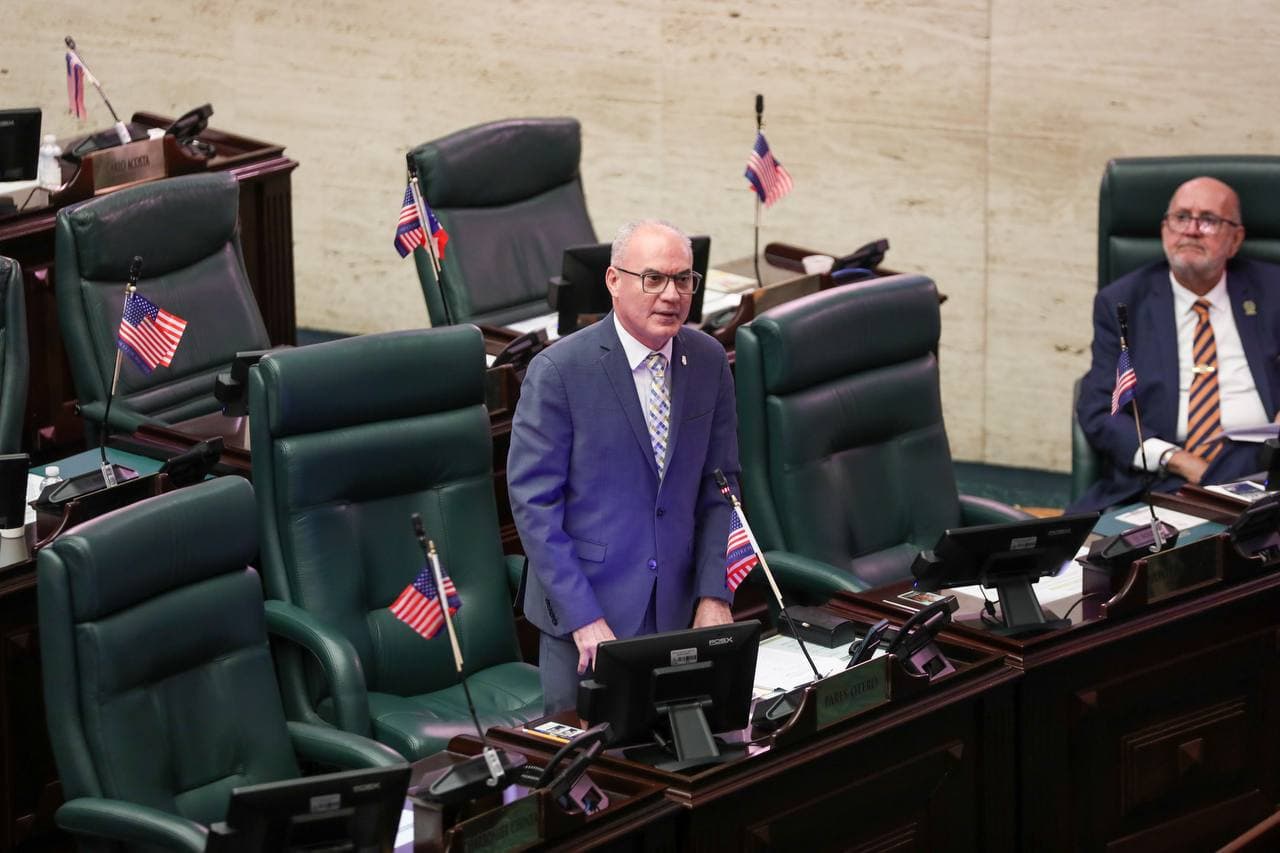
During floor debate, Government Commission Chairman Víctor Parés Otero argued that the failed procurement contributed to Puerto Rico’s current generation challenges.
“Today, we are paying the price for not having sufficient generation because there was a flawed process,” Parés said, according to a House press release, contending that government officials were aware of problems and failed to act.
The 120-page partial report concludes that criminal violations may have occurred through omissions of material information, conflicts of interest and potential violations of anti-corruption rules. It also highlights what lawmakers called “apparent contradictions” in Colón’s sworn testimony.
Among the report’s most significant findings is the allegation that information considered material to the procurement process was not communicated to PREPA for weeks, even though other parties involved were aware of concerns surrounding the consortium. The commission also questioned the handling of a change in consortium membership and raised concerns about the verification of signatures and authorization documents.
Lawmakers further determined that 3PPO bears primary responsibility for the procurement process because it restarted the competition without evidence of formal approval, later recommended negotiations with the lowest-ranked proposer and executed the contract despite being aware of fraud allegations as early as June 16 and 17, 2026.
The report assigns PREPA what it described as a mitigated level of responsibility, arguing that the utility should have independently verified the authority of the parties involved before signing the contract and should not have approved certain changes without having a complete record before it.
The findings prompted opposition lawmakers to demand Colón’s resignation during the House debate. Representatives Héctor Ferrer Santiago and Ramón Torres Cruz called for an independent investigation and argued that accountability should extend beyond referrals.
Yet Colón forcefully rejected suggestions that he improperly influenced the procurement process, arguing that the report itself confirms several key elements of his testimony.
In a statement issued after the report’s publication, the Energy Czar said he respects the Legislature’s investigative authority and welcomes scrutiny because, he said, “we have always acted legally and correctly, we have told the truth, and the documentary evidence supports our actions.”
Colón emphasized that the competitive process originated from an order issued by Puerto Rico’s Energy Bureau, that PREPA was the contracting authority, and that investigators found no evidence that he personally participated in negotiations or communications with lobbyists related to the procurement. He also maintained that neither the P3 Authority nor his office administered the procurement, evaluated bids, selected proposers or awarded the Power Expectations contract, arguing that those responsibilities belonged to 3PPO and PREPA.
“A thing is to monitor government public policy aimed at addressing an energy emergency, and quite another to direct or improperly intervene in a procurement process,” Colón said in the statement.
The House report reached a different conclusion on several issues, finding evidence that the P3 Authority and the Energy Czar’s office exercised direction and oversight over aspects of the process despite assertions that 3PPO operated independently. The commission also identified multiple areas in which it believes documentary records and communications are inconsistent with testimony given under oath.
Beyond referrals, lawmakers recommended eliminating the 3PPO procurement model altogether, canceling the contract under which Regulatory Compliance Services Corp. administered the office, and shifting future energy procurements to procedures conducted directly under the P3 Authority’s established regulatory framework. The commission also recommended legislation to clearly separate the duties of the Energy Czar from those of the executive director of the P3 Authority, positions currently held simultaneously by Colón.