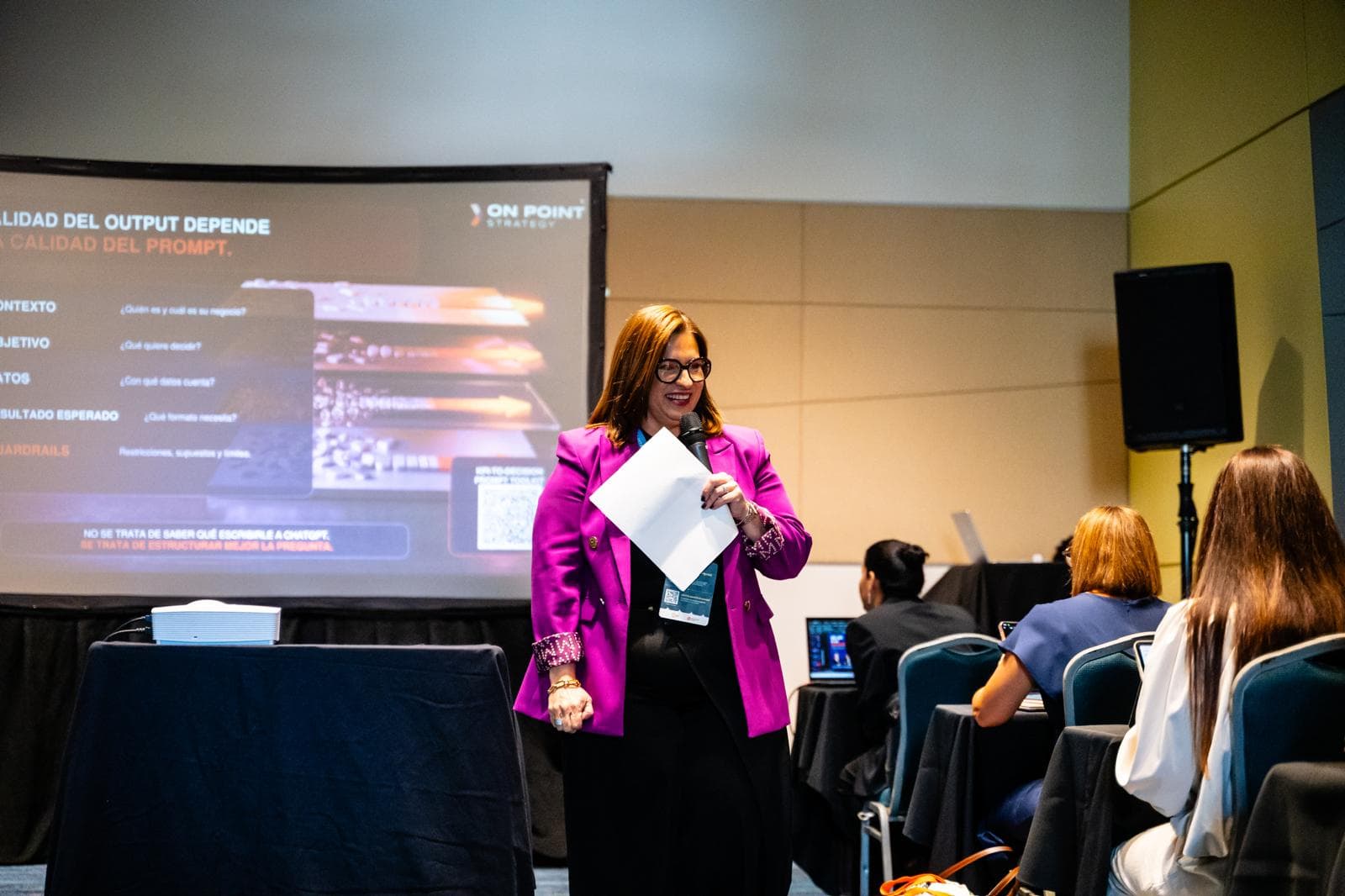
The firm will pair consulting expertise with proprietary analytics technology to serve public, private, and multilateral clients.
Puerto Rican consulting firm On Point Strategy (OPS) is expanding into Panama as it seeks to capitalize on growing demand across Latin America for organizational transformation, grant management, compliance and data-driven decision-making services, while also positioning one of its homegrown technology platforms in a rapidly growing global business intelligence market.
The move marks a significant milestone for the firm, which was founded in 2016 and has grown from a Puerto Rico-based management consulting company into a professional services provider with operations in Puerto Rico, Washington, D.C., and now Panama. Company officials view the Central American nation as a strategic gateway for serving government agencies, private-sector organizations and multilateral institutions throughout the region.
“Expanding into Panama represents an opportunity to bring the experience and knowledge we have developed in Puerto Rico to new markets,” Carmen “Mely” Torres, founder and chief visionary officer of OPS, said in a statement. “We see Panama as a strategic platform for building relationships, collaborating with organizations across different sectors, and contributing to initiatives that require planning, execution capabilities and measurable results.”
The expansion comes as OPS seeks to build on a decade of growth that includes managing a portfolio of funds exceeding $4 billion and developing expertise in organizational transformation, disaster recovery, compliance, operational modernization and grant administration.
From Panama, the firm plans to focus on three primary business segments: public-sector consulting, private-sector operational improvement and advisory services for multilateral development organizations. The company said it will offer services ranging from governance and regulatory compliance to process optimization, project management, monitoring and evaluation.
But the Panama expansion is not just about growing a consulting practice. It also reflects the company’s broader bet that technology and artificial intelligence will increasingly shape how organizations manage operations and make decisions.
Among the firm’s key offerings is Impact Visibility Hub (IVH), a software platform designed to consolidate financial, operational and performance data that is often scattered across spreadsheets, reports and email systems. The platform provides organizations with dashboards and analytics tools intended to improve oversight and support data-driven decision-making.
OPS introduced the platform on September 5 as part of its effort to expand beyond traditional consulting services and into the growing field of applied artificial intelligence and business intelligence software.
That market is substantial. Industry estimates place the global business intelligence market in the tens of billions of dollars, with continued growth expected as organizations increasingly adopt analytics platforms capable of turning large volumes of data into actionable insights.
Torres has argued that the value of data lies not in its collection but in the decisions it enables.
“Data on its own does not generate results,” she said during a recent presentation of the platform. “Its value is in helping us recognize what is happening, understand why, and decide what we should do.”
The emergence of AI-powered analytics tools has transformed the competitive landscape, creating opportunities for smaller firms to develop specialized applications tailored to specific industries and use cases. Rather than competing directly with technology giants, boutique firms such as OPS are increasingly focusing on integrating technology with subject-matter expertise and implementation services.
That strategy appears to be helping the company carve out a niche in sectors where operational oversight, grant compliance and performance measurement are critical. The firm’s experience managing federally funded projects and advising public-sector organizations has informed the development of its technology offerings, including IVH.
The expansion into Panama could also broaden the platform’s reach at a time when governments, development organizations and businesses across Latin America are investing heavily in modernization initiatives and digital transformation.
“Organizations need more than strategic plans; they need the capabilities, processes and information required to execute them,” Torres said. “This combination of experience, methodology and technology is part of what differentiates our value proposition.”
Beyond its significance for OPS, the move underscores a broader shift in Puerto Rico’s economy toward exporting specialized professional and technology services. While the island has traditionally relied on manufacturing and pharmaceutical exports, a growing number of local firms are pursuing opportunities in software, analytics, artificial intelligence and knowledge-based services.
OPS joins a small but expanding group of Puerto Rico-founded companies seeking growth beyond the island through technology-enabled business models. Company executives say Panama will serve as a regional hub for building client relationships and pursuing long-term opportunities throughout Latin America.
For Puerto Rico, the expansion represents another example of how locally developed expertise can compete in international markets. For OPS, it is a bet that demand for consulting, data analytics and AI-assisted decision-making tools will continue to grow across the region, creating new opportunities far beyond its home market.
As the firm enters its second decade, its strategy is increasingly centered on combining consulting services with proprietary technology, a model that executives believe can help organizations not only develop plans, but execute them and measure their results.