Puerto Rico needs private capital to build new power generation, add renewables and storage and rebuild its grid, PRMA noted, and “the predictability of government processes and regulatory and contractual certainty are fundamental elements” for investors weighing long-term commitments on the island.
It is a fair question, and one with a track record. Governments across the United States and Latin America have canceled, voided, renegotiated or rebid major infrastructure contracts over the past three decades. Here at home, several energy-infrastructure deals are in the process of raising capital, and their fate may very well come down to how authorities handle the LUMA contract cancelation.
A Caribbean Business review of those cases suggests investors rarely punish a jurisdiction simply for ending a deal. They punish it for how the deal ends.
Puerto Rico through two lenses
Investors tend to read Puerto Rico through two lenses at once. It is U.S. soil, with federal courts, the U.S. dollar and the protections of the U.S. Constitution. It also sits in a region where incoming administrations have repeatedly reopened contracts signed by their predecessors, a pattern investors know well from Mexico, Peru and Argentina.
That dual reading shapes how the LUMA dispute will be fought. LUMA is owned by Houston-based Quanta Services and Canadian Utilities, part of Calgary’s ATCO group. Most of the Latin American cases below were fought through investor-state dispute settlement (ISDS), a mechanism in trade and investment treaties that lets a foreign company sue a government before international arbitrators, instead of courts in that country.
In Puerto Rico, the U.S.-Mexico-Canada Agreement eliminated ISDS between the United States and Canada, and the window for older NAFTA claims expired in 2023. So the fight stays in Puerto Rico and U.S. courts.
LUMA tried to move the case to federal court before the island’s Supreme Court took it up, and the justices ultimately decided it under local statute. For investors, that is the American lens at work: a known legal system, written opinions, an appeals path and judges bound by precedent.
The U.S. record: exits that didn’t close the market
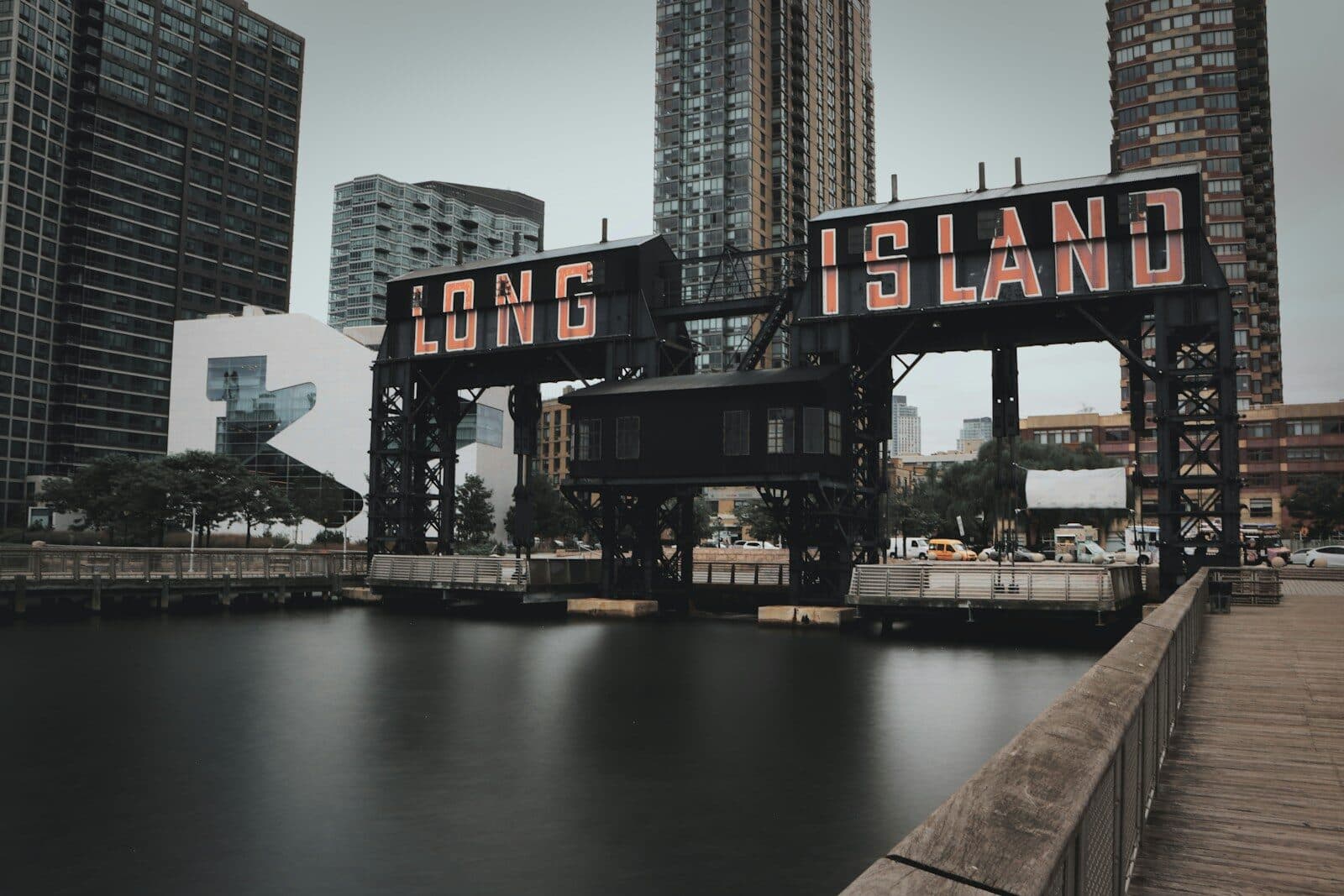
Long Island offers the closest parallel to Puerto Rico’s structure. The Long Island Power Authority (LIPA), a public entity, owns the grid and hires a private company to run it, much as PREPA did with LUMA.
When state officials moved on from National Grid, LIPA ran a competitive bid, chose New Jersey-based PSEG in December 2011 and gave it two full years, including an 18-month formal transition, before PSEG took over on Jan. 1, 2014. About 1,400 National Grid employees became PSEG employees by the end of that year, according to PSEG Long Island.
LIPA’s switch came at the natural expiration of National Grid’s contract, not through a court ruling, and the transition ran on a two-year runway. Puerto Rico has 12 months and, so far, no named successor.
Atlanta, for its part, has become the classic U.S. case of an early exit. In January 2003, the city ended what was then the largest water privatization contract in the country, a 20-year agreement with United Water signed in 1999, after four years of service complaints and a critical city audit.
The two sides negotiated an agreed termination, and the city took back operations. Opponents of privatization argued the episode chilled big-city water deals, yet the industry endured. About 2,000 U.S. water facilities operate under public-private arrangements, according to industry data.
Jacksonville, Florida, shows where the damage lands when a process, rather than a contract, goes wrong. In December 2019, the board of the city-owned utility JEA abruptly canceled a sale process that had drawn bids from NextEra Energy, Duke Energy and others, after spending an estimated $13 million.
The chief executive and finance chief were fired, and state and federal investigators opened inquiries. The reputational cost fell on the officials who ran the process.
Chicago is the cautionary tale in the other direction. Its 2008 lease of 36,000 parking meters to a Morgan Stanley-led group for $1.15 billion over 75 years contained no practical way out. The city’s inspector general later concluded the system was worth $974 million more than the city received, and Chicago had to renegotiate terms in 2013.
The lesson for Puerto Rico is that a bad contract with no exit can cost more than leaving one, which is why the transition clauses in LUMA’s 2020 agreements, the ones the Court has now ordered enforced, are relevant.
Puerto Rico has been here before
The island has its own precedent. In 2002, the Puerto Rico Aqueduct and Sewer Authority (PRASA) awarded Ondeo, a subsidiary of France’s Suez, a 10-year contract valued at about $4 billion to run the entire water and sewer system, then billed as the largest water operations contract in the world.
On Jan. 13, 2004, less than two years in, Ondeo and PRASA agreed to terminate it, and the government resumed management on April 1, 2004, with Ondeo’s assistance, according to Suez’s filings with the U.S. Securities and Exchange Commission.
That early exit did not shut the door to global capital. In June 2011, under the new Public-Private Partnerships Act of 2009, Puerto Rico signed a 40-year, $1.136 billion concession for the PR-22 and PR-5 toll roads with Metropistas, a consortium of Goldman Sachs Infrastructure Partners and Spain’s Abertis.
In February 2013, it signed a 40-year concession for Luis Muñoz Marín International Airport with Aerostar Airport Holdings, then a joint venture of Mexico’s Grupo Aeroportuario del Sureste and U.S. investor Highstar Capital, in a deal valued at $2.6 billion over its life, according to the Federal Highway Administration.
Two things stand out. The Ondeo exit was negotiated, not imposed, and the investors who came later found a new legal framework and a dedicated P3 Authority waiting for them. Puerto Rico rebuilt credibility through institutions, not promises.
The Latin American record
Mexico is the case most investors will have in mind. In October 2018, then-President-elect Andrés Manuel López Obrador canceled a $13 billion Mexico City airport that was about one-third built, after an informal referendum in which fewer than 1% of voters took part.
Within two days, Fitch Ratings revised Mexico’s sovereign outlook to negative, saying the decision “sends a negative signal to investors.” S&P Global later followed with its own negative outlook, citing the airport among the factors.
The cancellation was not free. The government bought back $1.8 billion of the $6 billion in airport bonds at par plus interest and paid more than 71 billion pesos, about $3.5 billion, to settle construction contracts, according to Mexican officials.
The following year, the state utility CFE forced the renegotiation of natural gas pipeline contracts signed by the previous administration, winning average tariff cuts of 28% over 25 years and claiming $4.5 billion in savings. One investor’s verdict, as quoted by Reuters: “He’s won the battle, but not the war.”
Peru shows how long the damage can linger. After the Municipality of Lima closed a toll booth amid protests and moved to void the Rutas de Lima highway concession, alleging corruption, arbitral tribunals rejected the corruption defense, and a U.S. federal court in Washington, D.C., confirmed more than $196 million in awards against the city in March 2024.
The investor says the city has not paid, and Canada’s Brookfield, a shareholder, filed a claim against Peru at the World Bank’s International Centre for Settlement of Investment Disputes in 2025.
Argentina is the extreme. Its 2012 renationalization of oil company YPF without a buyout offer to minority shareholders produced a $16.1 billion judgment in a New York federal court in 2023. A federal appeals court reversed it in March 2026, but the litigation funder behind the case has signaled the fight could move to international arbitration, a process it expects to take years.
What separates the two outcomes
Set side by side, the cases point to four factors that decide whether an exit raises a jurisdiction’s contract-risk premium or leaves it intact:
- Whether the exit runs through courts and statute or through political decree
- Whether the government pays what the contract says it owes
- Whether a credible successor is chosen through a transparent, competitive process
- Whether contracts survive changes of administration.
On the first factor, Wednesday’s ruling reads more Long Island than Mexico City. The case was decided by Puerto Rico’s highest court on statutory grounds, namely that the 2022 extension skipped the approvals Act 120-2018 requires.
The Court left the 2020 agreements standing, ordered the parties’ own negotiated transition clauses enforced and declined to unwind work already performed. The majority’s view is that the decision strengthens, rather than weakens, the rules future partners will rely on.
On the other three factors, the verdict is still open. LUMA’s damages claims are unresolved, and its $1.3 billion estimate of the cost of its exit remains in dispute with the government.
No successor has been named, and Gov. Jenniffer González Colón has said she has a plan but will not disclose it until LUMA’s 10-day window to seek reconsideration closes.
Meanwhile, the dissent’s central warning, that the government approved the extension, relied on it for three years and then challenged it after a change of administration, describes precisely the pattern investors associate with Latin American political cycles.
What investors will watch next
The signals to track over the coming weeks are concrete.
- First is the government’s transition plan, which PRMA has asked to see published within 60 to 90 days, with periodic progress reports to the Legislature and the public.
- The second is whether the trial court, under Judge Anthony Cuevas Ramos, determines what LUMA is owed under the contract, and whether the government pays it on time.
- The third is the successor process itself. Any new operator contract will now have to clear the same safeguards the Court said were skipped in 2022: approval by the P3 board’s public-interest members, an Energy Compliance Certificate from the Energy Bureau and the Financial Oversight and Management Board’s contract review. A rebid that draws several qualified bidders would be the strongest market signal available.
- The fourth, and perhaps the most telling, is the treatment of contracts that have nothing to do with LUMA’s performance. PRMA singled out the power purchase and interconnection agreements already signed with renewable and storage developers. Those private investors made commitments based on the grid’s current rules, and how the transition handles their timelines will tell the market more than any statement.
The record elsewhere suggests that Puerto Rico’s contract-risk premium will not be set by Wednesday’s ruling.
- Atlanta, Long Island and the island’s own water exit show that ending a contract through the law, paying what is owed and handing off to a capable successor leaves the door open to the next investor.
- Mexico City, Lima and Buenos Aires show what happens when exits look political, payments stall and disputes drag on for years.
Puerto Rico now has 12 months to show investors which of those two stories it belongs to.