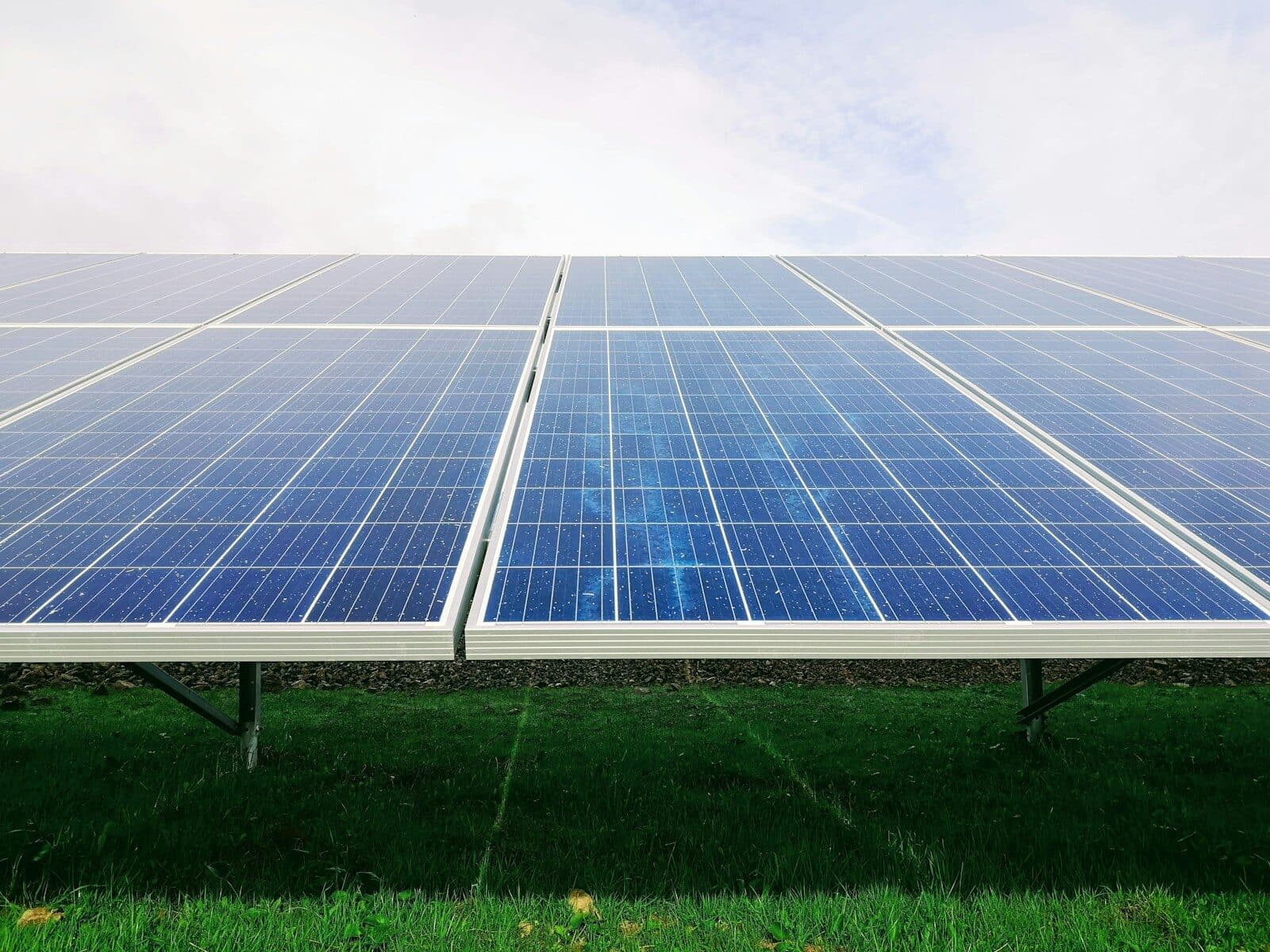
The additional 18 MW amounts to about 0.6% of the 3,000 MW target, so the decision is better read as a sign of how slowly utility-scale solar is advancing than as a breakthrough.
Marisol’s place in Tranche 2
The Marisol Power project was selected through Tranche 2, the second round of renewable energy procurements established under PREPA’s Integrated Resource Plan, the blueprint for the island’s energy needs.
The tender was originally designed to secure at least 500 MW of renewable energy generation and 250 MW of battery energy storage capacity as Puerto Rico works to transform its electric system and meet renewable energy mandates.
The Energy Bureau issued the request for proposals on Sept. 28, 2022, according to a review of the resulting contracts by the Financial Oversight and Management Board.
The Marisol Power solar photovoltaic facility was among the projects approved by the Energy Bureau in August 2024 under the Tranche 2 procurement process. Only three projects made the cut: Marisol, at 40 MW, a 20 MW solar plant by Solar Project San Juan, and a 60 MW battery storage facility proposed by CS-UR Vega Baja ST. That is 60 MW of solar against a design of at least 500 MW, or about 12% of the target.
The power purchase and operating agreement between the Puerto Rico Electric Power Authority (PREPA) and Marisol Power LLC was subsequently executed on May 26, 2026. The project is being developed by Marisol Power, LLC, a special-purpose entity led by Yarotek, which operates utility-scale solar farms across Puerto Rico, such as the Oriana project in Aguadilla and Tetris Power in Arecibo.
Under the recent amendment, the project’s maximum dispatch limit will increase by 18 MW, from 40 MW to 58 MW.
PREPA told regulators that studies conducted by LUMA Energy concluded the additional capacity can be accommodated through the project’s existing point of interconnection without requiring new transmission system upgrades.
What regulators weighed and required
In its review, the Energy Bureau found that the additional solar generation would advance the renewable energy objectives established in the approved Integrated Resource Plan. Regulators noted that, despite recent renewable energy procurements, total solar development remains below the approximately 3,000 MW of photovoltaic capacity contemplated for the plan’s first five years.
The Bureau concluded that the additional 18 MW from the Marisol project would help narrow that gap while improving the system’s reliability and resilience. The contribution is modest: the gap is still measured in the thousands of megawatts.
The decision relied heavily on updated interconnection studies completed by LUMA in 2026. Those studies determined that while a larger expansion to 84 MW could create grid constraints requiring upgrades, a 58 MW project could operate without causing new thermal or voltage violations or exceeding equipment limits under normal operating conditions.
LUMA also found the project met PREPA’s minimum technical requirements under multiple operating scenarios, including photovoltaic generation and battery charging and discharging configurations, supporting the project’s ability to integrate reliably into Puerto Rico’s electric grid.
The Bureau conditioned its approval on Marisol Power assuming responsibility for any future interconnection or network upgrade costs associated with the increased capacity.
Regulators said the expansion must not result in additional costs, liabilities or delays for PREPA, and prohibited the developer from recovering such costs through the contract’s interconnection cost recovery provisions.
The Bureau also noted that the amendment leaves unchanged the project’s contract rate, payment methodology, contract term and other key economic provisions that were previously approved.
As a result, regulators said there was no basis to revisit their earlier finding that the agreement’s pricing is reasonable and competitive.
Approving the amendment, the Energy Bureau said the project’s expansion contributes to Puerto Rico’s sustainability, resilience and affordability goals while remaining consistent with the island’s broader renewable energy transition.
The agency ordered PREPA and Marisol Power to submit revised versions of the amendment within 10 days and provide a copy of the fully executed document once signed.
How the tranche process works
The tranches were designed as a series of competitive solicitations. When the first request for proposals was launched in 2021, PREPA planned six tranches over three years, with a cumulative 3,750 MW of renewable generation and 1,500 MW of energy storage.
Each round would be written by the Energy Bureau, scored by a selection committee and priced by bidders, with contracts of 20 to 25 years in Tranche 2.
Winning a tranche is only the first step. Each selection needs approval from the PREPA governing board and the Energy Bureau, and each contract then goes through negotiation and review by the Financial Oversight and Management Board under PROMESA, while LUMA runs interconnection studies that can change a project’s size or cost.
Marisol shows how long that takes. The request for proposals was issued in September 2022, regulators approved the selection in August 2024, and the contract was not signed until May 2026, about 44 months after the tender opened.
In Tranche 1, the Energy Bureau approved 18 solar projects totaling about 845 MW in February 2022, but the pace of construction has lagged and several developers have since asked to resize their projects.
The Marisol decision follows a pattern seen in other recent approvals. In April the Bureau approved amendments that raise the Go Green project in Yabucoa from 38.7 MW to as much as 100 MW, CIRO Two from 33 MW to 68 MW and Guayama from 25 MW to 50 MW, all Tranche 1 solar projects.
Tranche 3, which sought about 1,000 MW of renewables and 500 MW of storage, was cancelled in October 2024 after regulators judged the prices offered to be too high. The Bureau replaced it with a Tranche 4 of 500 MW of renewable energy and 250 MW of storage, with price caps of $125 per megawatt-hour for renewable energy.
In December 2025 it preliminarily approved about 659 MW of battery storage and 25 MW of solar through an accelerated process meant to secure federal investment tax credits, and it has since ordered PREPA to file detailed schedules for Tranche 1, 2 and 4 developers, warning of consequences for noncompliance.
Where the 3,000 MW goal stands
The 3,000 MW figure traces to the Modified Action Plan the Energy Bureau approved in August 2020, which called for procuring about 3,000 MW of solar, or other renewable generation, and up to 1,500 MW of battery storage over 2021 through 2025.
The Bureau’s original order spoke of at least 3,500 MW of solar and 1,360 MW of storage by 2025, a figure that included rooftop systems. The five-year window has therefore already closed.
Counting only utility-scale projects, the island is nowhere near the target. A published estimate based on federal Energy Information Administration data puts utility-scale solar on the island at about 165 MW.
Rooftop solar tells a different story. The EIA reported 1,456 MW of rooftop capacity at the end of 2025, spread over 191,929 systems, which made it 20% of the island’s generating capacity and the second-largest source after petroleum liquids.
Rooftop installations accounted for 81% of the new capacity added between 2016 and 2025.
Added together, rooftop and utility-scale solar come to roughly 1,600 MW, about half of the 3,000 MW goal, and nearly all of it was installed by households and businesses rather than through the tranches.
Act 1-2025 removed the interim targets of 40% renewable energy by 2025 and 60% by 2040 while keeping the goal of 100% by 2050, and the Energy Bureau is separately pursuing 2,500 to 3,000 MW of new firm generation capacity.