The anniversary of American independence underscores how the Insular Cases continue to shape Puerto Rico’s legal and reality.
By Carlos G. Salgado Schwarz, Judge of the Puerto Rico Court of Appeals
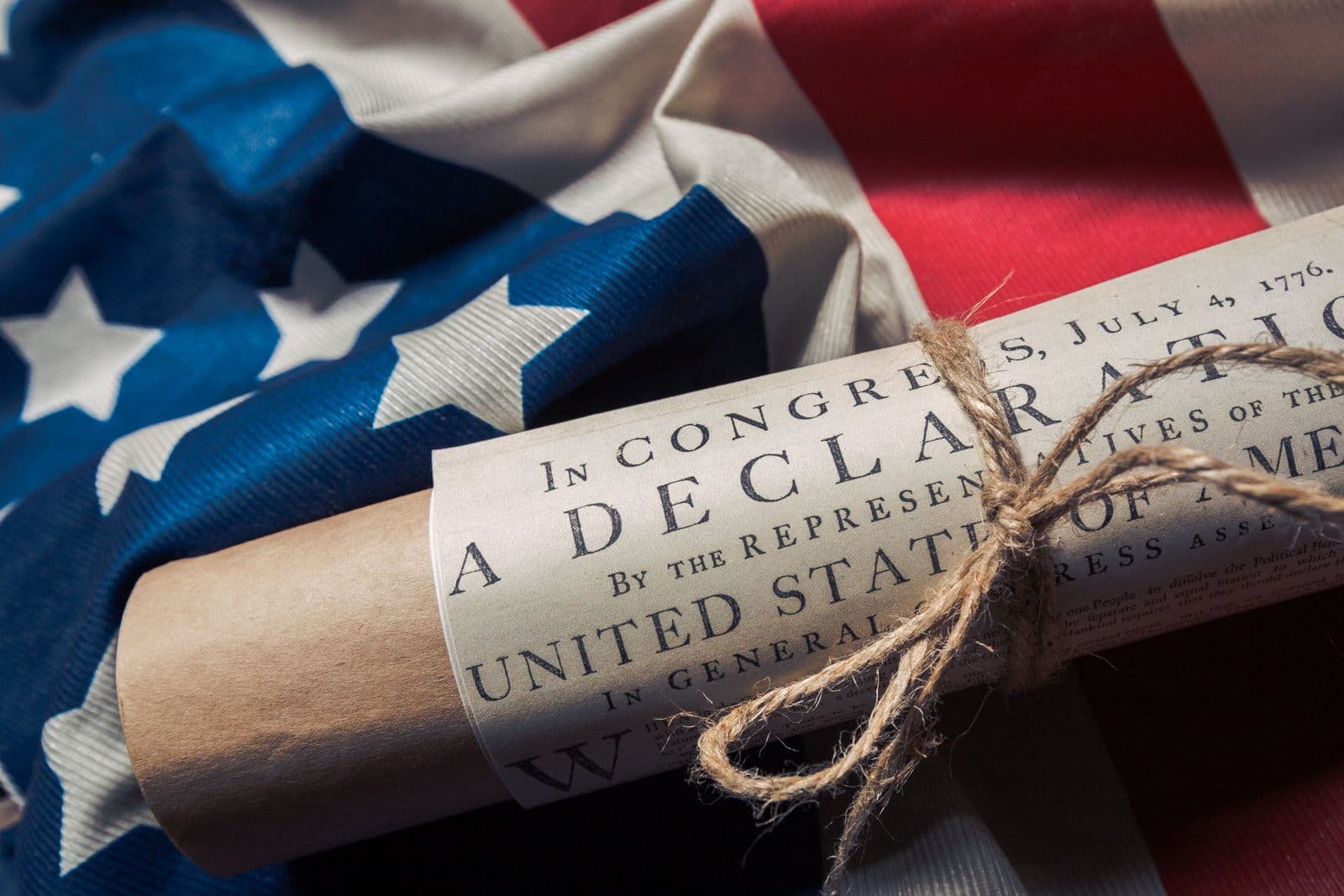
This week the United States marks 250 years since the Declaration of Independence — a milestone that invites reflection not only on the American Experiment’s founding premises, but also on how unevenly those premises have extended to the 3.2 million U.S. citizens who live under the American flag in Puerto Rico.
For a jurisdiction whose legal system has spent 12 decades merging a civil-law tradition with an American constitutional overlay, the anniversary lands at a moment when the terms of that merger remain, remarkably, still unsettled.
The starting point is 1901, when the Supreme Court decided Downes v. Bidwell and the series of rulings that came to be known as the Insular Cases. Those decisions created a category found nowhere in the constitutional text: the “unincorporated territory,” a place that belongs to the United States without being part of it, where only rights the Court deemed “fundamental” applied of their own force and everything else remained subject to congressional discretion.
The doctrine was built on premises about the capacity of the islands’ inhabitants for self-government that every serious legal scholar today disavows. Yet the doctrinal architecture survives, and it continues to shape how federal law, federal courts, and federal benefit programs treat Puerto Rico as a matter of course.
The practical consequences are not historical curiosities; they are current operating conditions for the island’s business and legal environment. In United States v. Vaello Madero (2022), the Supreme Court upheld Puerto Rico’s exclusion from Supplemental Security Income, confirming that federal benefit parity remains a matter of congressional grace rather than constitutional entitlement — a reality that continues to shape the island’s fiscal and social welfare landscape.
In Financial Oversight and Management Board v. Aurelius (2020), litigation over the constitutional status of the PROMESA Board’s members forced the First Circuit to describe the Insular Cases as a “dark cloud” hanging over the case, even as the Supreme Court ultimately avoided ruling on the doctrine’s validity. For investors and counsel navigating Puerto Rico’s fiscal restructuring, the unresolved status of that “cloud” is not an academic footnote — it is a live variable in how federal oversight mechanisms here are understood to derive their authority.
Just this week, the pattern repeated itself. In Trump v. Barbara, the Supreme Court struck down an executive order that attempted to redefine birthright citizenship under the Fourteenth Amendment.
Current and former officials from Puerto Rico and the other territories submitted an amicus brief asking the Court to hold, once and for all, that the Citizenship Clause extends to island territories as a constitutional matter rather than a statutory one.
The Court declined to reach the question. Justice Ketanji Brown Jackson’s concurrence referenced the Insular Cases only in a footnote, citing them as an example of the Court having repeatedly withheld the promise of equal citizenship.
The practical result is that Puerto Rican citizenship continues to rest on the Jones Act of 1917 rather than on the constitutional guarantee itself — a distinction with real legal consequence, since statutory citizenship is, at least in formal terms, more vulnerable to legislative alteration than citizenship secured by the Constitution.
This is the environment in which Puerto Rico’s judiciary operates and in which its dual legal system was built. Beneath the federal overlay, the island retains its civil-law foundation — a Civil Code tradition inherited from Spanish law, still visible in doctrines that have no direct common-law analogue. Above it sits a federal constitutional structure applied selectively, filtered through a century-old test distinguishing “fundamental” rights from those considered merely procedural.
Puerto Rico’s own 1952 Constitution, and the self-government it established, operate within that ceiling rather than above it; Commonwealth status did not, and could not, displace the territorial clause framework Congress retained.
For the business and legal community, the relevance of this doctrine is not abstract. It affects how federal program eligibility is structured, how litigation involving federal instrumentalities on the island is framed, and how investors assess the durability of the legal guarantees that govern their capital here. A jurisdiction whose constitutional footing is formally described by the courts as partial and contingent — rather than settled and equal — carries a different kind of legal risk than a state, regardless of how functionally similar day-to-day governance may appear.
It is precisely because that footing remains unsettled that institutional stability within Puerto Rico’s own legal system takes on added importance. An independent, well-functioning judiciary is not a luxury for a jurisdiction operating under contested constitutional terms — it is a structural necessity, since the certainty that full incorporation would otherwise provide is simply not available.
The Puerto Rico Magistrates’ Federation has consistently maintained that judicial independence and institutional integrity are not abstractions removed from Puerto Rico’s economic and legal competitiveness; they are, in a jurisdiction whose constitutional relationship with the United States remains formally incomplete, foundational to it.
Two hundred fifty years after the Declaration of Independence, the American Experiment’s core premise — government resting on the equal consent and citizenship of the governed — has yet to fully close its loop here. The doctrine that keeps it open is more than a century old, was built on assumptions everyone now rejects, and the Supreme Court, case after case, continues to decline the invitation to say so.
Editor’s note: Judge Carlos G. Salgado Schwarz is also president of the Puerto Rico Magistrates’ Federation (FMPR)
Ethics notice (Canon 24, Code of Judicial Ethics): This piece is submitted in an institutional capacity on behalf of the Puerto Rico Magistrates’ Federation (FMPR), in the legitimate exercise of its functions in defense of judicial independence and the administration of justice, as authorized by Canon 24 of the Code of Judicial Ethics. The views expressed herein do not compromise the impartiality of any judge in the adjudication of specific cases.