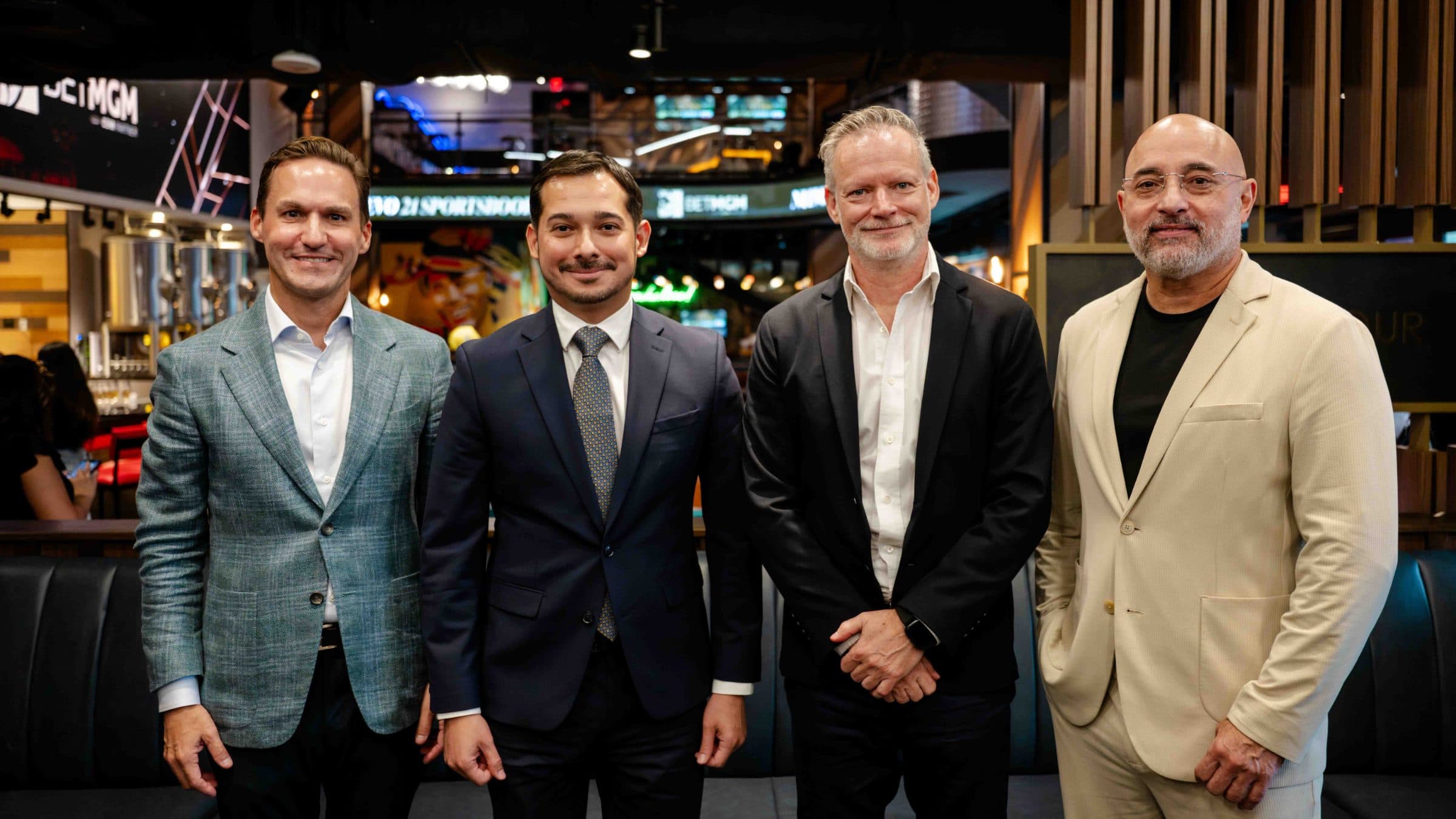
That distinction sits at the center of Retail Out of the Box 2026, the flagship summit of the Puerto Rico Retail Trade Association (ACDET), where Fernández, one of the world’s leading voices in customer experience, will deliver the keynote address on Aug. 26 at the Puerto Rico Convention Center, under the theme “Retail Rewired: Leadership Edition.” Caribbean Business previewed his central argument, along with the summit’s broader themes, in an exclusive interview with organizers ahead of the event.
Fernández’s session is titled, fittingly, “Building XperiencIAs: The Future Is Not Digital, It’s Human.” His thesis is straightforward: as artificial intelligence and automation raise the baseline for what every retailer must offer, the businesses that win will be the ones that use technology to free up people, not replace them.
“People are the true source of magic,” he said. “Leaders who inspire, employees who connect, cultures that feel authentic. That is what customers remember.”
Four legs of the table
Fernández breaks the retail value proposition into four pillars: product, processes, people and place. If any one of these legs of the table is weak, he says, the entire experience collapses.
Product quality and variety matter, but in a market where most stores carry similar merchandise, product alone rarely differentiates. Processes must be simple, well-designed and increasingly automated or digitized, but automation should never erase the human touch. People remain the true source of magic, and the physical or digital “place” must evoke trust, cleanliness, comfort and emotional appeal.
For small businesses operating on thin margins, Fernández warns against the temptation to compete on price. “When you enter a price war, you shoot yourself in the foot,” he said. “Discounts drain your business. Experience builds it.”
To help small and mid-sized companies, his firm developed the WISH model: Wow Experience, Innovation, Sales & Growth, and Humanization. The formula is simple: enchant the customer, innovate continuously, grow through meaningful experiences, and connect through people.
Fernández believes automation will play a critical role in the sector’s evolution, but only when applied strategically. Inventory management, demand forecasting, logistics optimization, product recommendations, advanced search and even cashierless stores are areas where AI can improve efficiency and reduce friction.
But he cautions against over-automation. “Technology is an enabler, not the end goal,” he said. “Automate what is necessary, but never dehumanize the experience.”
Otero: retail is evolving, not in crisis
Fernández’s message dovetails with the broader argument ACDET’s executive director, Lymaris Otero, has been making about the state of Puerto Rico retail. “Retail is not in crisis; it’s evolving,” she said. “The consumer continues to buy, but they are choosing with much more intention: where they buy, how they buy, and who they trust.”
Her assessment reflects a sector that, despite a 2.2% reduction in overall sales in early 2026, is showing pockets of strong performance. Updated data from the Department of Economic Development and Commerce (DDEC) reveal that several categories, particularly footwear, apparel, cosmetics and beauty, are not only stable but growing. Footwear sales rose 9.7%, apparel 9.1%, and cosmetics and perfumes 8.7%. Even large chains posted a 2.4% increase.
These numbers, Otero emphasized, do not signal contraction. They signal transformation. Puerto Rico’s aging population, for example, has reshaped demand so dramatically that adult disposable diapers now outsell baby diapers in supermarkets and pharmacies, forcing retailers to reconfigure aisles, product mixes and even customer-service protocols to accommodate older shoppers.
Fernández’s perspective aligns with ACDET’s emphasis on leadership and capital-human development. According to the World Economic Forum, nearly 40% of core job skills will change by 2030 due to AI and technological disruption. Retail employees will need resilience, adaptability, critical thinking, emotional intelligence and a willingness to learn continuously.
Retention, Otero noted, is already one of the sector’s biggest challenges. Migration, generational gaps and the pace of technological change have made it harder to keep talent. Yet she points out that major chains in Puerto Rico pay above minimum wage and offer real career mobility. Many senior managers began as cashiers or stock clerks.
A consumer who thinks, feels and buys differently
The pandemic accelerated a shift in consumer behavior that had already begun: a move toward convenience, omnichannel experiences, and digital discovery. But Otero argues that the next wave of change will be driven by something deeper.
“The consumer of 2028 will be more emotional, more selective and more oriented toward trust,” she said. “They will choose brands that align with their values, their beliefs, their sense of wellness and sustainability. Price will matter, but it will not be the only factor.”
At the same time, the rise of digital tools, from AI-powered product discovery to personalized recommendations, is influencing how consumers begin their shopping journey. According to Salesforce’s Connected Shoppers report, 39% of consumers and more than half of Gen Z already use AI to discover products.
But Otero insists that technology alone will not determine who wins. “The future of retail will be human and digital,” she said. “Technology enhances productivity and decision-making, but leadership, culture and service are what turn tools into results.”
While consumer trends are encouraging, retailers face mounting operational pressures. Puerto Rico’s unreliable electricity and water systems have created extraordinary costs for businesses. Otero described restaurants spending $13,000 to $14,000 per week on water deliveries during outages, and large companies spending up to $1 million.
“These costs cannot be offset by a temporary increase in sales,” she said. “They threaten competitiveness.”
The arrival of Amazon’s distribution center in Puerto Rico adds another layer of complexity. Although it is too early to measure its impact, ACDET insists that Amazon must operate under the same regulatory and tax conditions as local retailers, particularly regarding inventory taxes, labor costs and municipal permits.
“We need a level playing field,” Otero said. “Local retailers carry burdens that Amazon has not historically carried.”
A push for policy reform
ACDET is advocating for several policy changes to strengthen the sector. Chief among them is the elimination of Puerto Rico’s inventory tax, which Otero describes as “archaic and regressive.” The association also calls for deregulation of outdated commercial processes and a reduction in the cost of doing business, especially energy.
“There are regulations from the 1970s that do not reflect today’s reality,” she said. “We need modernization to compete.”
As Puerto Rico’s retail industry prepares for its annual summit, the message from both ACDET and Fernández is clear: the future belongs to retailers who can combine technology with humanity, efficiency with empathy, and leadership with adaptability.
“The differentiation through experience is still in its early stages in Puerto Rico,” Fernández said. “Many businesses still rely on product and price. But those who differentiate first through experience will lead the market. As the saying goes, the one who strikes first, strikes twice.”
Otero believes the summit will give retailers the clarity and tools they need to navigate this new landscape.
“Technology opens enormous opportunities,” she said. “But leadership, culture and service are what turn those opportunities into results.”