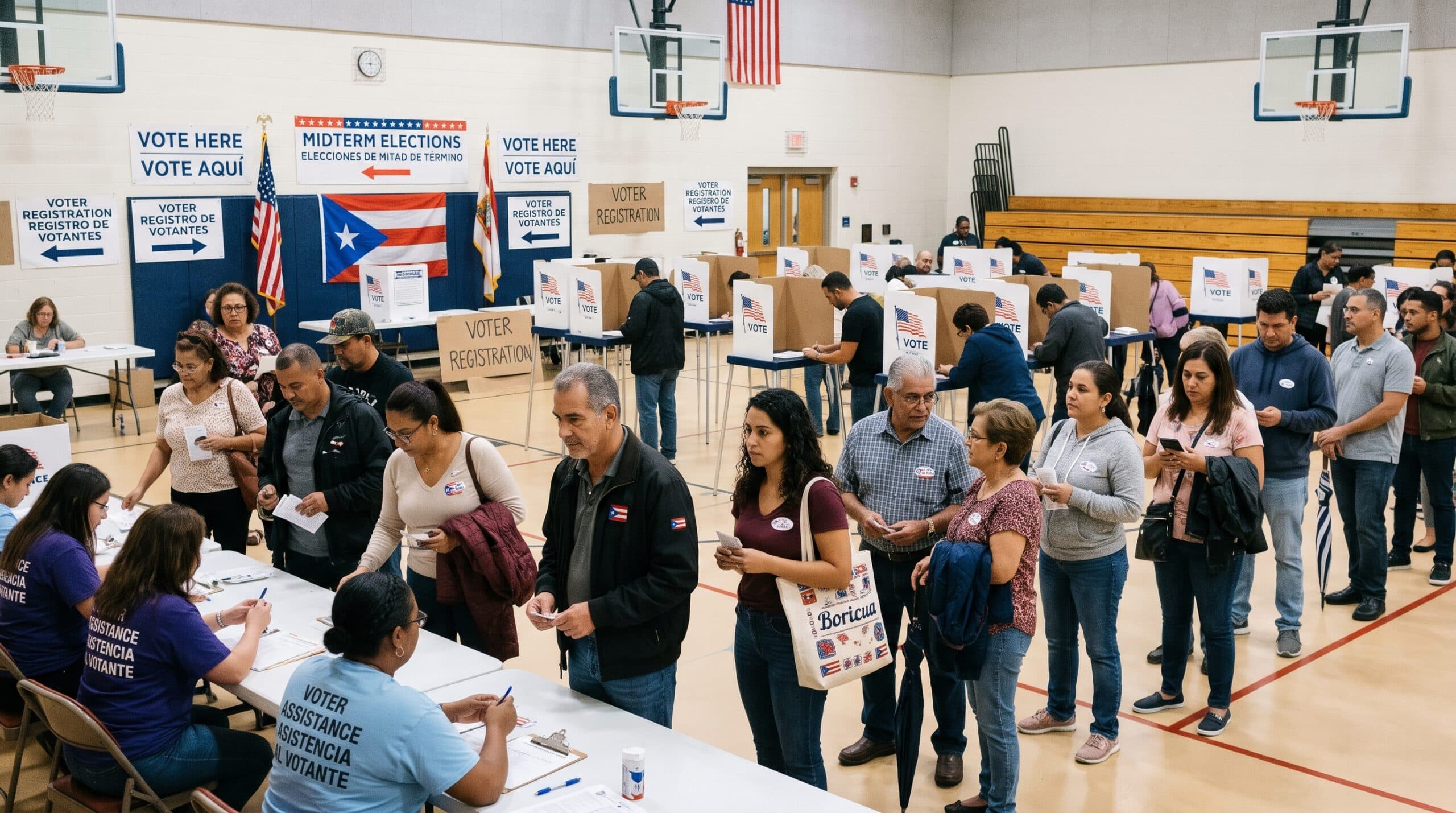
Part of a post-election series today exploring the impact on business in Puerto Rico.
AI arrived as a campaign issue this year. An NBC News exit poll found 56% of voters called AI and data centers a crucial or major factor in their vote, as reported by Time.
Puerto Rico sits out the data-center fight. Year-round heat, scarce land and high power costs make it an unlikely host, even as a House bill filed in October, PC 1523, would court operators that bring their own power.
The questions that matter here are jobs, cyber risk and productivity. IDC Latin America found 65% of Puerto Rico businesses focusing on generative AI, against 40% across Latin America.
Hearings and frameworks before laws
Expect oversight first. Maria Cantwell, positioned to chair Senate Commerce, released a framework in October calling for enforceable federal safety standards, testing of frontier models at national laboratories and incident reporting. In the House, the bipartisan FRONTIER Act from Jay Obernolte and Lori Trahan offers a starting point.
Passage is another matter. Democrats will likely end up with 56 Senate seats, four short of the 60 needed for most bills, and the president can veto, though it is not beyond the possible for four Republicans to join this fight.
The likeliest vehicles are must-pass measures such as defense and spending bills, the National Law Review noted.
Preemption remains the fault line. Ted Cruz wants a single federal standard, Cantwell opposes overriding state laws, and a December 2025 executive order created a Justice Department task force to challenge state rules. With Congress unlikely to settle it, laws in California, Colorado and other states will keep setting the compliance baseline.
Jobs and cyber, where Puerto Rico has a stake
On jobs, the evidence is early but pointed. A Stanford Digital Economy Lab study found employment among workers aged 22 to 25 in the most AI-exposed occupations fell 13% relative to their peers since late 2022. A bipartisan bill from Mark Warner and Josh Hawley would require companies to report AI-related layoffs.
Cybersecurity offers the clearest bipartisan path. The 2015 law shielding companies that share threat data with the government has survived on short-term extensions since its permanent authority lapsed in 2025, with Sen. Rand Paul blocking a full renewal, according to Roll Call.
Democrats are expected to reauthorize it and rebuild the federal cyber agency, which has lost about a third of its workforce, as reported by Cybersecurity Dive.
Locally, Act 140-2026 added AI to the training required under Puerto Rico’s government cybersecurity law, while the Legislature weighs more than 40 AI bills, as Caribbean Business reported in July.
What emerges in 2027 is likelier to be oversight, cyber funding and disclosure rules than a sweeping AI law. For Puerto Rico, the stakes lie in the fine print, such as whether territories are written into revived state and local cyber grants and any federal retraining money.