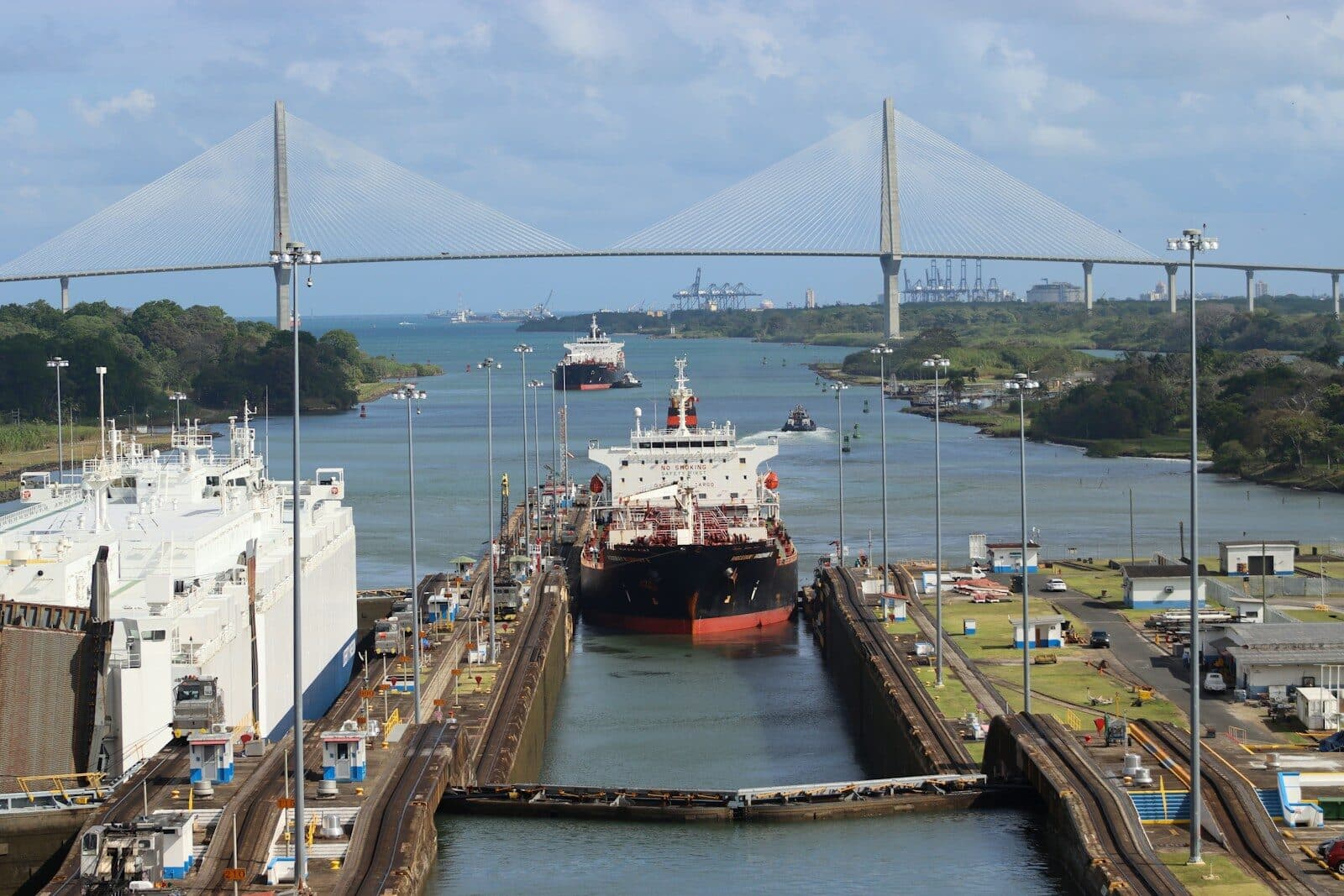
The Panama Canal Authority presented a fiscal 2027 budget Tuesday projecting $5.555 billion in revenue, up 6.6%, and a record $3.937 billion payout to Panama’s treasury, according to information from the EFE wire service.
Buried in that announcement is a number that says more about Puerto Rico’s future than about Panama’s: 5.5 million. That is roughly how many additional TEUs of container capacity Panama is building at the canal’s two entrances, nearly five times the volume San Juan handles in a year, as part of an $8.5 billion investment program with a published timeline.
Puerto Rico has spent the better part of two decades talking about becoming a regional shipping hub without building the capacity to become one.
The canal’s $8.5 billion program has three pillars of interest to Puerto Rico’s maritime industry and cargo volume. Two new container terminals, Corozal on the Pacific side and Telfers on the Atlantic, are being tendered to separate operators and would add roughly 5.5 million TEUs of annual transshipment capacity.
A 76-kilometer liquefied petroleum gas pipeline, budgeted near $4 billion, would move propane, butane and ethane across the isthmus without consuming lock water, freeing canal slots for other vessels.
The $1.6 billion Río Indio reservoir would secure freshwater supply for canal operations and roughly half of Panama’s population, with construction beginning in 2027 and completion around 2031.
The fiscal 2027 budget allocates $82 million toward that reservoir alone, with resettlements and design tenders starting this year.
This development is funded, scheduled and tendered, backed by a canal system that closed fiscal 2025 with $5.705 billion in revenue on 13,404 transits, its strongest year on record even though the fiscal 2027 projection touted this week sits below it.
The 6.6% growth figure is measured against a conservative fiscal 2026 budget the canal has already outrun: it logged 10,623 transits by July, within 127 of its entire fiscal 2027 projection.
Meanwhile in Puerto Rico
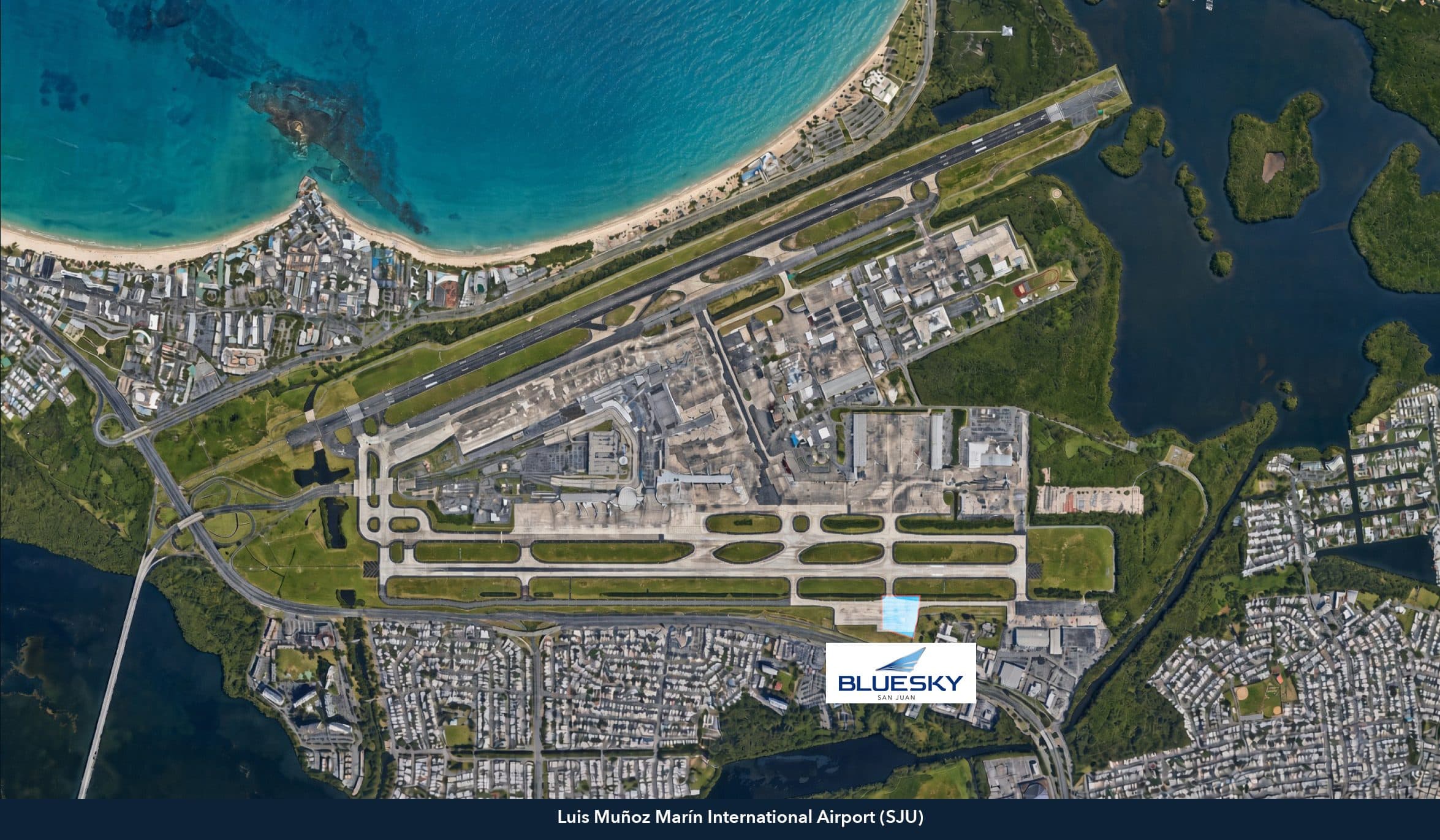
San Juan handled roughly 1.1 million TEUs and 11.2 million short tons in 2021, the most recent year with comparable figures, good for around 13th among U.S. container ports. It is a gateway port that moves cargo destined for the island, not cargo destined for somewhere else.
The Caribbean’s transshipment business, the high-volume relay traffic that a hub port lives on, is concentrated at Kingston, Caucedo, Freeport, and Panama’s own Colón and Balboa, where transshipment runs near 90% of throughput.
Puerto Rico has had a version of this ambition on the books since at least the mid-2000s, in the form of the Port of the Americas project in Ponce, a proposed transshipment hub meant to capture exactly the traffic Panama is now chasing. It has never been completed to that scale.
Meanwhile the region’s actual hub ports have kept building. Kingston moved about 1.82 million TEUs in 2024 and is executing a Westlands expansion targeting 3.1 to 3.2 million TEUs. Caucedo moved about 1.45 million TEUs and is being built out by DP World into an integrated port-industrial complex aimed at nearshoring manufacturers.
Regional container traffic reached roughly 7.1 million TEUs in 2024, growing at about 4% a year, and Puerto Rico’s share of the transshipment portion of that growth has been negligible.
That is, Panama funds its expansion and publishes the tender schedule. Jamaica and the Dominican Republic fund theirs and are mid-construction. Puerto Rico studies its version, announces it, and stalls.
The island’s lanes
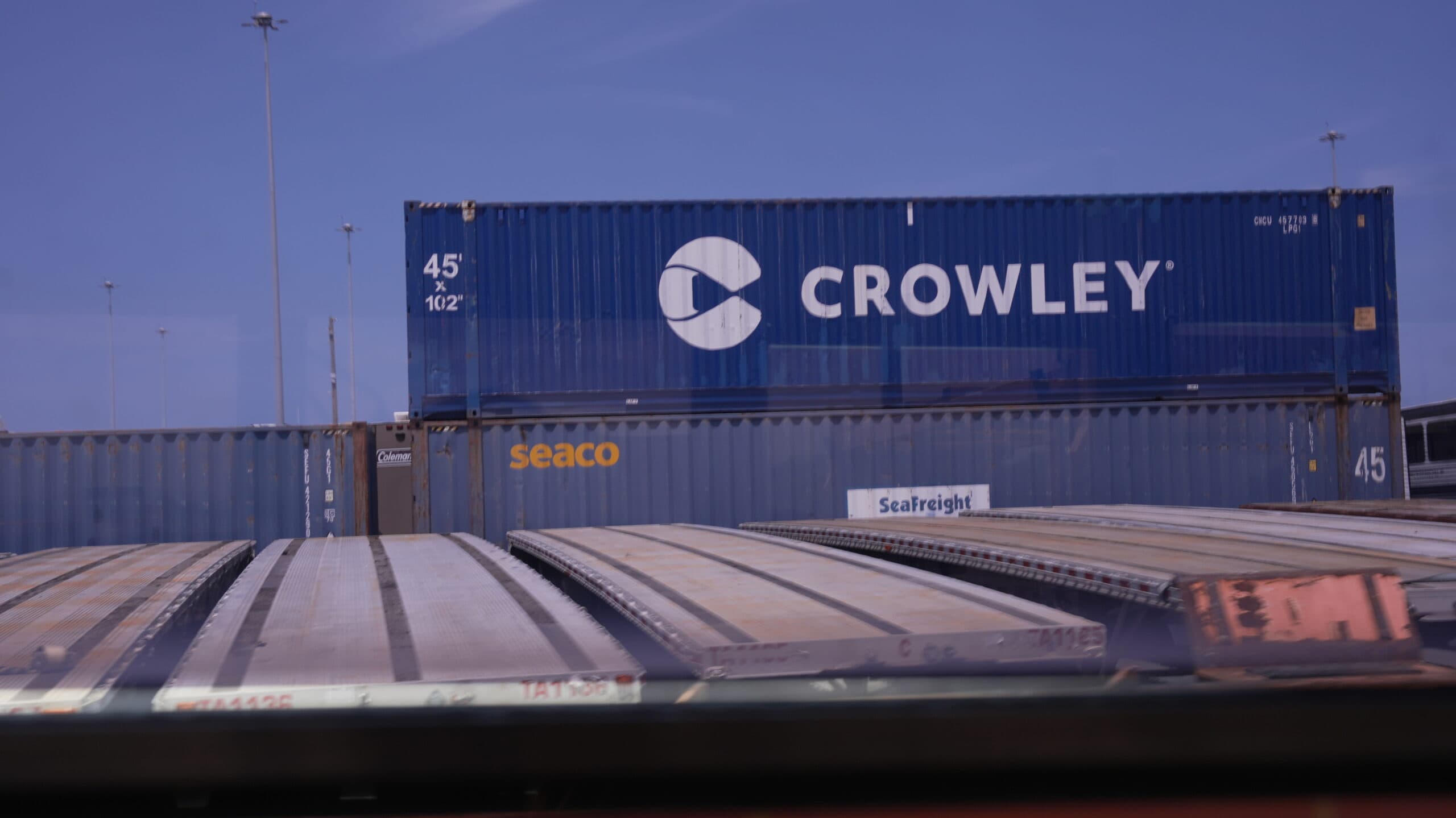
The dominant freight lane runs between the island and the U.S. mainland under the Jones Act, which requires cargo moving between two U.S. ports to travel on U.S.-built, U.S.-flagged, U.S.-crewed vessels. That traffic originates mainly in Jacksonville, carried by Crowley and TOTE on direct Atlantic runs that never approach Panama.
Planning Board figures put the United States at roughly 57% of Puerto Rico’s imports and about 72% of its exports, none of it canal-dependent.
The real exposure sits in the remainder. Ireland accounts for close to 9% of imports, with Switzerland, Mexico and Singapore each in the low single digits, a profile shaped by the island’s pharmaceutical and device manufacturing base. Asian-origin consumer goods and electronics reach San Juan through canal transits or, more often, transshipment at a Caribbean hub followed by a short feeder run, the same feeder economics that make hub status valuable in the first place.
Petroleum products, about 8% of imports, are sensitive to tanker routing through the canal. That is the slice of trade the canal’s current draft restrictions, which cut daily transits to 32 starting Sept. 15, four below normal, can actually touch.
The strategy question, again
Caribbean Business posed a version of this same challenge last week in a column by Ernesto Vázquez Martínez, president of Polytechnic University of Puerto Rico, who argued that the island’s ports, airports and industrial base put it in a privileged position for nearshoring and logistics investment, but that having the assets does not guarantee competitiveness.
“The real question is how we connect them into an integrated economic development strategy,” he wrote.
Panama’s fiscal 2027 budget is a version of that question answered. Puerto Rico’s ports and logistics planners now have a public, funded, five-year target to measure themselves against, and a shrinking window to decide whether the Port of the Americas, or any successor to it, becomes a plan or a talking point.