Earthquake Readiness Is the New Normal for Puerto Rico Business
After deadly quakes in Venezuela, Colombia and Panama this year and with active faults here at home, the lesson behind yesterday’s ShakeOut Day is the new normal of always-on seismic resilience
At 10:15 a.m. yesterday, phones across Puerto Rico sounded an emergency alert, radio and TV shows were interrupted, and families, schools, agencies and companies practiced “Drop, Cover and Hold On” as part of the Great ShakeOut Puerto Rico 2026. The drill took minutes. The readiness it is meant to prompt takes months, and for business owners and senior executives, this year has made the case for starting today.
Three damaging earthquakes in the Americas since June, in Venezuela, Colombia and Panama, and a Puerto Rican fault system that remains active, have turned seismic risk from a remote contingency into an always-on management, operational and leadership imperative, like hurricane preparedness has long been, for any company with a building, a workforce and a supply chain, not to mention administrators of the government’s infrastructure assets.
ShakeOut organizers said more than 71 million people worldwide were registered to take part, including more than 19.2 million in the United States. In Puerto Rico, the drill was backed by Executive Order 2026-053, which created the Puerto Rico Earthquake Preparedness Committee, with public safety, emergency management, disaster recovery and seismic network officials and federal partners including the U.S. Geological Survey, FEMA and NOAA. Emergency management commissioner Ángel Jiménez Colón urged businesses and agencies to register.
“We cannot predict earthquakes, but we can prepare for them,” said Elizabeth Vanacore of the Puerto Rico Seismic Network during the presentation of the drill.
From annual inspection to continuous monitoring
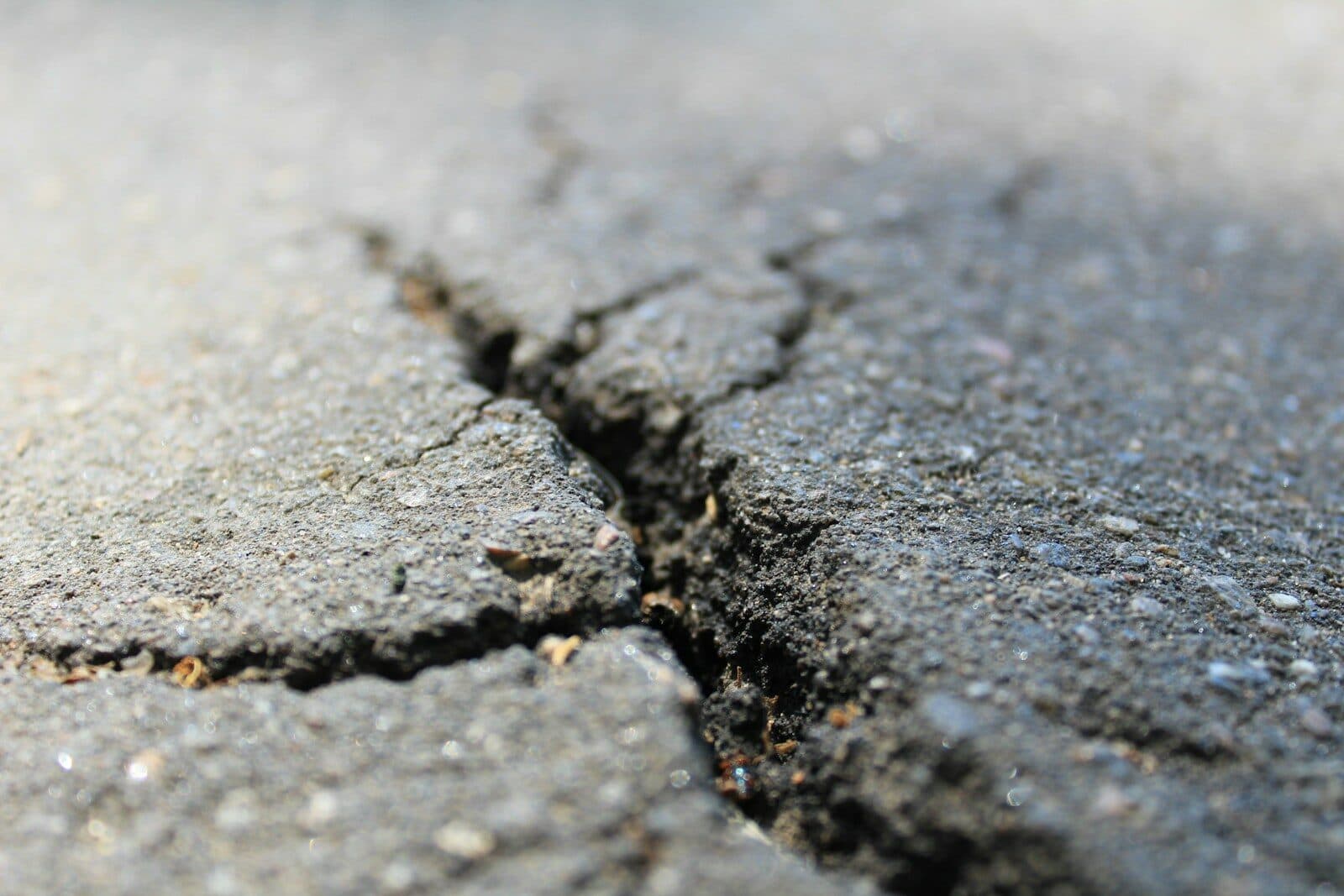
Preparing starts with knowing how a building will behave and what condition it is in afterward. Inspection has traditionally meant a periodic visual check by a licensed engineer. Fernando Neris, co-founder and president of Estructura, a structural monitoring firm that sells such systems, argues that the human eye is good at spotting cracks after they appear but not at catching the millimeter-scale shifts that can precede a problem by days, weeks or months.
Structural Health Monitoring (SHM) has become a must-have modern technology for corporate and infrastructure properties, advises Estructura cofounder and president Fernando Neris, shown here at a recent conference.
Structural health monitoring, or SHM, automates part of that work with the installation of sensors combined with software that records sensor data and reports it in real-time 24/7, much like a black box does in aviation. The system works in three stages, he told Caribbean Business:
Before an earthquake, sensors establish a baseline of how the structure normally vibrates and moves under load, information also useful for day to day maintenance.
During one, accelerometers record the real response, trigger alerts when thresholds set for that structure are exceeded, and shut down critical building systems to avoid secondary damages.
After the event, comparing the “block box” data with the baseline helps engineers decide what to inspect first, pinpoint where damages occurred, document the building’s condition, and decide immediately whether the property can be occupied or should remain vacant, avoiding costly business interruptions.
Satellite radar, known as InSAR, adds a view of the ground itself, detecting deformation of a few millimeters a year that a person could not see, while artificial intelligence software flags anomalies.
“Just as automation has reshaped manufacturing, healthcare, logistics, finance and frankly just about any field we can think of, it is now reshaping how we inspect residential and commercial buildings,” Neris added.
“Practicing the drill protects people. Knowing how the structure behaves also protects the continuity of the organization and everything those people built and operate.”
What else can businesses do
Monitoring is one layer. Best-practice guidance from emergency agencies includes several fundamental preparedness steps, a management agenda that should rise in priority status across the economy given the constant threat of a next seismic event:
Write a plan that identifies the business functions the company cannot lose.
Contemplate alternate locations.
Keep call lists with work, cell and home numbers.
Designate out-of-town contacts where employees can leave an “I’m okay” message.
Secure the space: brace or anchor shelves, filing cabinets, storage racks, light fixtures, water heaters, HVAC equipment and piping, keep exits marked and clear, and, where possible, set hazardous machinery to shut down safely when shaking begins.
Ask an engineer to evaluate structural elements such as walls and the roof system.
Protect data and the balance sheet. Back up data and store copies offsite, including payroll, financial, insurance and customer records.
Review insurance coverage with a broker, because earthquake damage typically requires separate riders, and ask about business interruption.
Appraise the property at least every five years and keep an inventory, with photographs, of equipment, supplies and the workplace.
Test the people and the chain. Run the drill for everyone, including remote and field staff, and review what it showed. ShakeOut organizers say groups can hold the drill on any date, even later in the year.
Check whether suppliers, vendors, clients and transport routes sit in hazard areas.
Plan for utility outages lasting days, as happened here in 2020, when power returned gradually over about a week.
The ShakeOut drill ended in minutes yesterday. The questions it raises for executives do not: Is the building sound? Could operations run from somewhere else? Would insurance respond? The answers cost less to find now than after the ground moves.
Venezuela, Colombia, Panama, Puerto Rico
Ask our neighbors across the region. On June 24, back-to-back earthquakes of magnitude 7.2 and 7.5 struck northern Venezuela, causing more than 6,500 deaths. That was followed Aug. 10 by a magnitude 7.4 earthquake at a depth of about 107 kilometers (66 miles) beneath Colombia’s Chocó department. By Aug. 15, Colombia’s disaster management agency, UNGRD, reported 12,504 homes destroyed and 80,744 damaged, along with damage to 260 health facilities and 2,595 educational facilities.
Most recently, on Oct. 9, a shallow magnitude 7.7 earthquake struck southern Herrera Province on Panama’s Azuero Peninsula, followed by a magnitude 6.6 aftershock two and a half hours later and a magnitude 6.1 earthquake on Monday. About 190 schools, 20 health facilities and 26 government buildings were damaged, a hotel collapsed in Tonosí, power failed in six provinces, and Tocumen International Airport suspended operations for a safety assessment.
The events differ in depth, location and toll, but they share a pattern relevant to any executive and evidenced by Puerto Rico’s own recent experience: the disruption that stalls an economy comes from damaged buildings, airports, hospitals, schools and power, not from the shaking alone.
The magnitude 6.4 earthquake Jan. 7, 2020, off Guánica, was part of a seismic swarm that killed four, destroyed an elementary school and left thousands of homes uninhabitable.
The numbers are worth recalling. About 40,000 residents of Ponce slept outside their homes the first night, and many stayed outdoors for weeks. Financial losses were estimated at $3.1 billion. The Costa Sur power plant, which supplies about a quarter of the island’s electricity, was badly damaged, leaving more than 500,000 people without power and more than 250,000 without water, and classes were delayed more than 10 days after 9% of the 561 public schools inspected were found unsafe, according to published reports.
Industry analysts noted at the time that Puerto Rico property owners were less likely to carry earthquake coverage than windstorm coverage, which means more of the loss falls on owners and the economy, losses that can be minimized by installing an SHM system and taking the common-sense best-practice readiness steps above.
Hybrid employees of established companies, a growing self-employed and startup class, and creators are filling meeting rooms, sparking Piloto 151’s latest expansion
Marking 20 years in Puerto Rico, the company invested $650,000 in a new facility, restoring operations nearly eight years after its previous location was destroyed by Hurricane Maria.