At Banco de Alimentos, New York Lawmakers Back a SNAP Switch That Could Steady Demand for Puerto Rico Food Businesses
After volunteering at the Carolina food bank days after the midterms, about 60 officials heard the case for replacing the capped $2.98 billion NAP grant with SNAP in 2027, capitalizing on the Democratic wave
Puerto Rico’s supermarkets, food distributors and farmers have a stake in a federal debate usually framed around hunger: whether the island’s capped Nutrition Assistance Program (NAP, known locally as PAN) should give way to the Supplemental Nutrition Assistance Program (SNAP), which grows with need.
NAP benefits are spent at local food retailers, so the program’s ceiling is also a ceiling on a slice of food-sector sales.
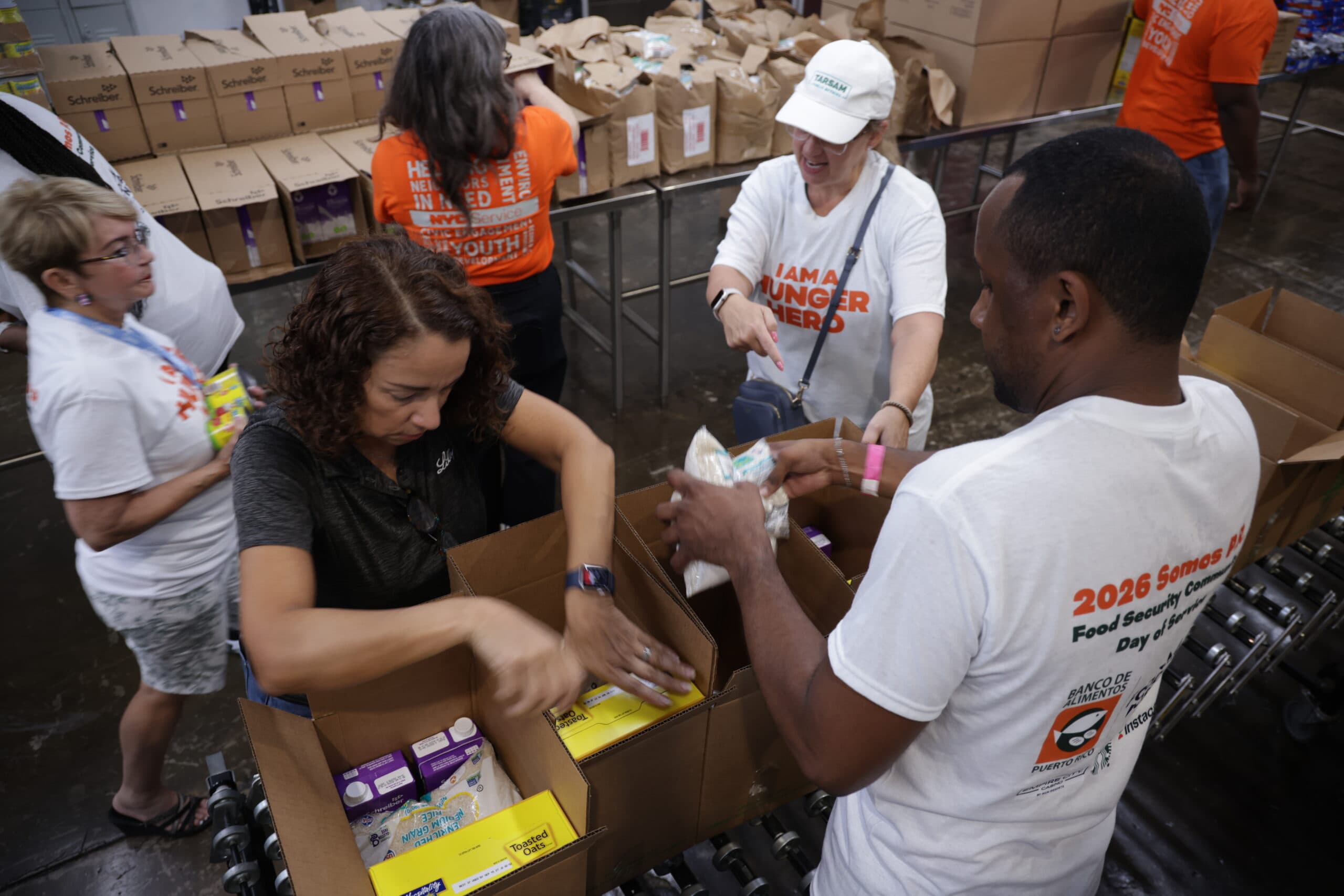
The question reached the island’s food bank on Friday, three days after the Nov. 3 midterm elections, when approximately 60 New York lawmakers and elected officials, including state assembly members, state senators and members of Congress, spent a volunteer shift at Banco de Alimentos de Puerto Rico in Carolina, packing food for families across the island.
Banco de Alimentos and Food Bank For New York City used the visit to call on newly elected and reelected leaders to protect SNAP and end Puerto Rico’s exclusion from it, according to a Nov. 6 announcement.
“The fact that New York leaders chose to spend this day in our warehouse packing food for our families says a great deal about their commitment,” said Mari Jo Laborde, president and CEO of Banco de Alimentos de Puerto Rico.
“Today, they saw firsthand how we fight hunger in all 78 municipalities. We ask them to take that experience back to New York and Washington, and to turn this year’s theme, Opening Pathways, into a pathway to SNAP for Puerto Rico.”
From left to right: Mari Jo Laborde, President of Banco de Alimentos de Puerto Rico; Johnny Méndez, Speaker of the Puerto Rico House of Representatives; Puerto Rico Senator Ada Álvarez Conde; Paula Fournier, representative of Resident Commissioner Pablo José Hernández; and Leslie Gordon, President of the FoodBank of New York City.
A New York delegation on the packing line
The officials were in Puerto Rico for the conference of Somos, Inc., held Nov. 4 to 7 at the Caribe Hilton in San Juan under the theme “Opening Pathways” (“Abriendo Caminos”).
Somos is a nonpartisan nonprofit that addresses the needs of New York State’s Hispanic community, and its twice-yearly conferences bring together legislators, academics, and business and labor leaders. Its Community Service Day was co-hosted in Carolina by Food Bank For New York City and Banco de Alimentos.
“Somos has always been a bridge between New York and Puerto Rico, and this Community Service Day demonstrates that,” said Leslie Gordon, president and CEO of Food Bank For New York City. “Our lawmakers did not come here for a photo opportunity. They came to work shoulder to shoulder with Banco de Alimentos de Puerto Rico volunteers.”
New York has its own pressures. About 1.6 million city residents, roughly one in five, experience food insecurity.
“For every meal a food bank provides, SNAP provides nine,” Gordon said. “We cannot close that gap through donations alone.”
The federal law known as H.R. 1, signed July 4, 2025, expands SNAP work requirements and shifts costs to states, and the food bank says more than 23,000 New Yorkers lost SNAP access this summer.
Why the federal fight matters on the island
Puerto Rico has been outside SNAP since 1982. It receives instead a fixed block grant, $2.98 billion in fiscal 2026 for about 1.42 million participants a month, according to the U.S. Department of Agriculture. The organizers said one in three Puerto Rico families experiences food insecurity, the highest rate in the nation.
Because the grant is fixed, NAP cannot expand automatically in a recession or after a hurricane, so benefits may have to shrink when more people need help. SNAP is an entitlement, in which the federal government pays benefits for every eligible person, higher in amount and more flexible in the terms of eligibility.
Banco de Alimentos distributed about 20.9 million pounds of food in 2024, up from 13.8 million in 2020, and its fuel costs are up more than 50% in six months.
“Our families are U.S. citizens,” Laborde said. “When a hurricane strikes or prices rise, their food assistance should grow with the need, just as it does in New York.”
What’s in it for business
The business case rests on how benefits circulate. A USDA Economic Research Service analysis of 2016 national data found that each dollar in additional SNAP benefits raised gross domestic product by about 1.5 times that total and supported roughly 13,560 jobs, the largest share in trade and transportation, a category that includes grocery stores and wholesalers. The food-industry trade association MIDA made a similar argument in 2019.
Resilience is the other business angle. After the volunteer shift, the officials joined a discussion titled “Food Security Is Community Resilience,” which covered a pathway to SNAP for Puerto Rico and investment in local farms, solar power and energy storage.
Banco de Alimentos presented its new resilience center, with solar panels and expanded emergency production capacity, as a model for operating through hurricanes and outages. “When the power goes out, our neighbors still need to eat,” Laborde said.
Honors, asks and the road through Congress
The event ended with the 2026 Hunger Heroes Award, given jointly by both food banks to leaders who advanced food security through public policy. The honorees were Resident Commissioner Pablo José Hernández, represented by Paula Fournier Del Valle; Puerto Rico House Speaker Johnny Méndez; Puerto Rico Sen. Ada Álvarez Conde; and Rachel Sabella, director of No Kid Hungry New York.
The organizers asked leaders in both places to protect SNAP in New York, support a federally funded path to SNAP parity for Puerto Rico, expand local food purchasing programs such as Nourish New York, and invest in disaster-ready food infrastructure.
Hernández filed the Puerto Rico Nutrition Assistance Fairness Act in September 2025 with four Democratic and four Republican cosponsors, proposing a 10-year transition with a five-year overlap and budget neutrality.
Sen. Kirsten Gillibrand’s Senate version gained Sen. Roger Wicker, a Mississippi Republican, in June. The new Congress, sworn in Jan. 3, will decide how much of SNAP’s cost states bear and whether Puerto Rico moves toward parity.
Senate Agriculture Democrats put Gillibrand’s bill in their 2024 framework with the transition deferred to 2034. The harder sell is the administration, which spent 2025 shrinking SNAP, and a farm bill needs 60 Senate votes and a presidential signature.
A CB review found no prominent campaign pledges from newly elected members, so the key votes belong to veterans such as Sen. Cory Booker and Reps. Darren Soto and Ritchie Torres.
The hunger argument that filled the Carolina warehouse has persuaded many Democrats, but the business argument may matter more for the Republican votes a farm bill will need in the Senate, because it speaks in retail sales, farm income and disaster recovery.