Puerto Rico Bill Would Give Spanish Investors Treaty-Level Dividend Tax Rates, Prompting Oversight Board Objection
H.B. 952 borrows the tax-incentive playbook that courted U.S. investors for a new market, but the Board says its cost, an estimated $383,100 per 1% of qualifying dividends, has no offset
A legislative proposal aimed at making Puerto Rico more attractive to Spanish investors has run into opposition from the Financial Oversight and Management Board, which argues the measure would reduce government revenues and conflict with the island’s fiscal plan.
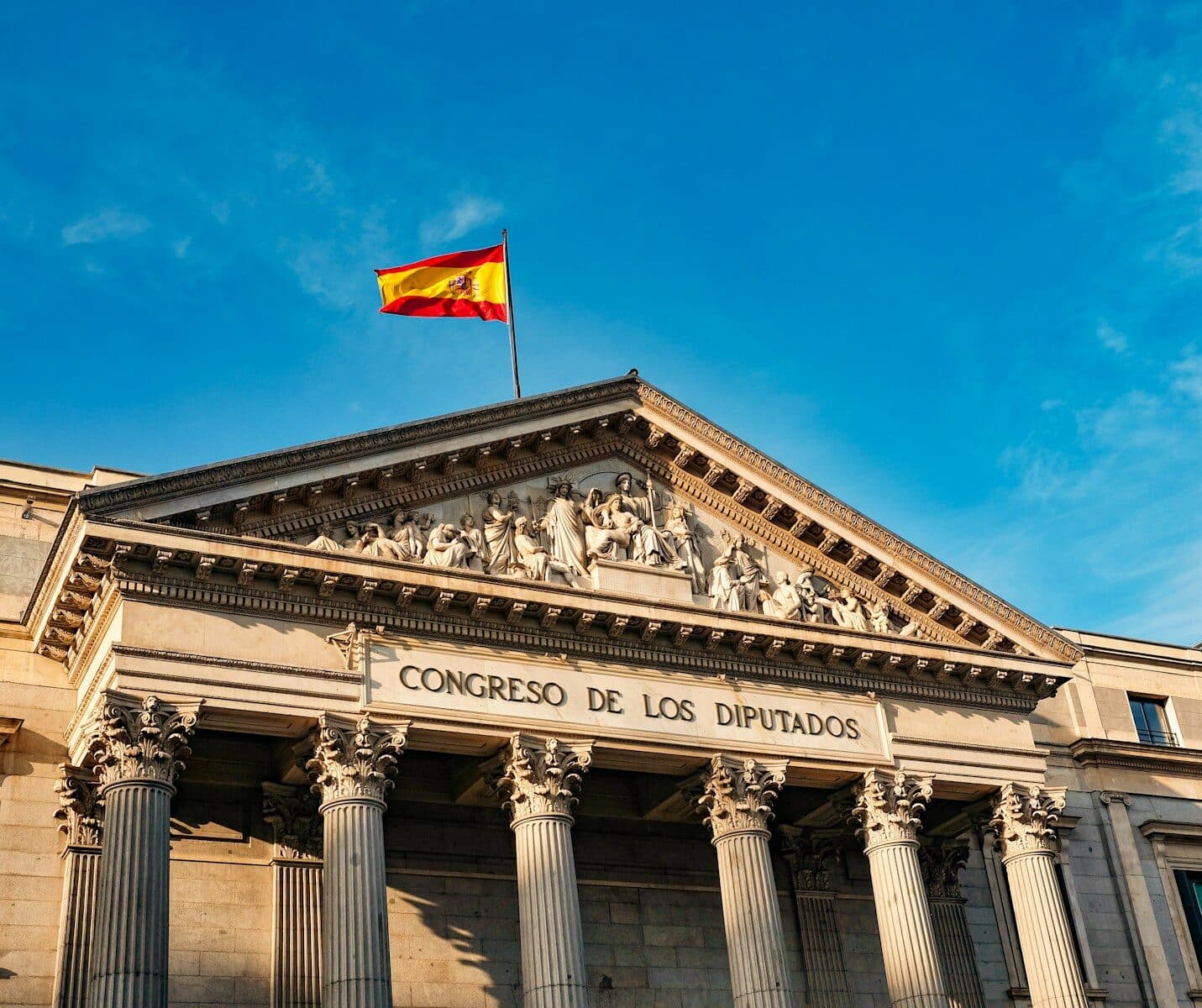
House Bill 952, authored by House Speaker Carlos “Johnny” Méndez Núñez and other legislators, would amend several sections of Puerto Rico’s Internal Revenue Code to extend to certain Spanish individuals and corporations tax treatment similar to that available under the Double Taxation Agreement between the United States and Spain.
The bill builds on a strategy Puerto Rico has used for more than a decade: offering tax advantages to draw outside capital.
Acts 20 and 22, since consolidated into the Act 60 Incentives Code of 2019, were designed to attract U.S. business owners and high-net-worth individuals who become bona fide Puerto Rico residents, with reduced rates on export-services income and exemptions on certain dividends, interest and capital gains, as the Internal Revenue Service describes them. H.B. 952 aims at a different audience, Spanish investors, and uses a different tool.
Instead of rewarding people who move to the island, it would lower the tax bite on dividends paid to investors who stay in Spain.
Only U.S. federal negotiators can bring Puerto Rico under the treaty, which leaves the local Legislature with a local workaround whose revenue cost the Oversight Board will measure against the fiscal plan.
The double-taxation problem behind the bill
The measure seeks to address what its sponsors describe as a competitive disadvantage for Puerto Rico in attracting foreign investment. According to the bill’s statement of motives, Spanish investors doing business on the island may face taxation both in Puerto Rico and in Spain when profits are repatriated, creating a deterrent to investment.
When a company pays a dividend to a shareholder in another jurisdiction, the payer’s jurisdiction usually withholds a tax before the money leaves, and the shareholder’s home country may tax the same income again, typically with a credit for what was already paid.
Tax treaties exist to cap the withholding rate and reduce that stacking. “Repatriation” simply means sending profits back to the investor’s home country.
Puerto Rico sits outside that protection. The U.S.-Spain treaty, signed in 1990, defines the United States as the states, the District of Columbia and certain maritime zones, and does not expressly include Puerto Rico, according to Spanish tax counsel writing in 2019.
The treaty’s protocol and a 2013 memorandum of understanding committed both governments to negotiate a Puerto Rico-specific solution, but no agreement existed as of 2019, and CB found no report of one since. H.B. 952 was filed in late October 2025. According to published reports, Gov. Jenniffer González Colón asked the U.S. Treasury Department weeks later, during a November 2025 trade mission to Spain, to address the double taxation between the island and Spain.
What the bill would change
Under the proposal, dividends paid by Puerto Rico entities to qualifying residents of Spain and eligible Spanish corporations would no longer be subject solely to the tax rates established under local law.
Instead, those taxpayers could benefit from the reduced rates or exemptions contained in the U.S.-Spain tax treaty.
Puerto Rico currently imposes a 15% tax on dividends paid to nonresident foreign individuals and a 10% tax on dividends paid to foreign corporations not engaged in a trade or business on the island. The bill would allow eligible Spanish recipients to be taxed under the treaty provisions rather than under those standard Puerto Rico rates.
The size of the benefit depends on who is receiving the dividend. As amended by a 2013 protocol that the U.S. Senate ratified in 2019, the treaty sets a 15% dividend rate in general, 5% when the recipient is a company holding at least 10% of the voting shares, and 0% when a company owns more than 80% of the voting shares for at least 12 months, subject to conditions, according to law-firm summaries of the protocol.
The legislation would direct Puerto Rico’s Treasury Department to issue guidance establishing eligibility requirements and applicable tax rates under the treaty framework.
Beyond the tax code amendments, the measure formally requests that the U.S. Department of State and the U.S. Department of the Treasury negotiate changes to the existing U.S.-Spain tax treaty to include Puerto Rico within the definition of the United States for treaty purposes or, alternatively, permit a separate tax agreement between Puerto Rico and Spain.
Supporters argue the changes would place Puerto Rico on a more equal footing with other U.S. jurisdictions that benefit from international tax treaties and could help attract new foreign capital to the island.
What PROMESA requires
However, the Financial Oversight and Management Board warned last week that the measure, as drafted, would violate provisions of the federal PROMESA law unless lawmakers identify ways to offset the revenue losses it would generate.
In a Nov. 4, 206, letter to Méndez Núñez, Oversight Board Executive Director Robert Mujica stated that PROMESA prohibits the Legislature from approving the bill unless it satisfies the requirements of Section 204(c), which requires fiscal consistency with the certified fiscal plan.
PROMESA’s Section 204 gives the Board a review role over island legislation. As the Board describes the process, a new law must be submitted with a formal estimate of its effect on revenues and expenditures, prepared by a government entity with budget expertise, and with a certification of whether the law is significantly inconsistent with the fiscal plan.
The Board has used that process before. It agreed, for example, that Act 224-2024, which extended pension benefits beyond what the Commonwealth’s plan of adjustment provides, was significantly inconsistent with the plan, and it has asked the government not to implement other laws until the Board agrees they comply with PROMESA.
The cost, and what the Board wants instead
The Board cited an analysis by Puerto Rico’s Office of Legislative Services and Budget indicating that the government would lose an estimated $383,100 in tax revenue for every 1% of dividend payments that qualify for the proposed exemption or preferential treatment. According to the Board, the legislation does not include any mechanism to replace the lost revenue.
The estimate is a per-point measure, so the cost grows in proportion to the dividends that qualify. In CB’s calculation, assuming the estimate scales proportionally, it implies about $38.3 million in annual collections on the dividend base the analysis used if all of it were exempted. The report as described does not specify that base, so the figure is an upper bound on what is at stake rather than a forecast of the bill’s cost.
Mujica said the fiscal plan requires tax policy changes to be revenue-neutral or accompanied by spending reductions or new revenue sources sufficient to offset their cost. As a result, he concluded that House Bill 952 is inconsistent with both the fiscal plan and PROMESA in its current form.
The Oversight Board also recommended that any changes to the taxation of dividends be considered as part of a broader tax reform effort after a comprehensive review of their fiscal impact and the identification of compensating revenue measures.
Competitiveness against constraint
The clash highlights the continuing tension between Puerto Rico’s efforts to improve its competitiveness for international investment and the fiscal constraints imposed under the federally mandated restructuring framework established by PROMESA.
If enacted without the Board’s certification, the measure could face legal challenges as an unauthorized budgetary action under federal law. For now, the proposal remains under legislative consideration while lawmakers weigh whether the economic development benefits touted by its sponsors can be reconciled with the fiscal safeguards demanded by the Oversight Board.
The dispute turns on an asymmetry that Act 60 did not face in the same form. The cost of H.B. 952 can be counted today, while the investment it might attract cannot, and no estimate of that upside has been made public as far as CB could determine.
The bill’s own request for a treaty fix also points to where the underlying problem sits: only federal negotiators can bring Puerto Rico under the treaty, which leaves the Legislature with a local workaround whose revenue cost the Board will measure against the fiscal plan.
CB Web Editor Alex Díaz contributed to this story.
The Mark E. Curry Family Foundation backs about 20 of the island’s 58 certified homes for children and women, aims to raise at least $800,000 at Oct. 23 event