The First Circuit Court of Appeals has delivered a significant win for Puerto Rico’s Financial Oversight and Management Board (FOMB), ruling that an $8.5 billion claim filed by PREPA bondholders must be subordinated under federal bankruptcy law, effectively eliminating any recovery from the Commonwealth’s restructuring plan.
In a decision issued September 23, 2026, the appellate panel upheld U.S. District Judge Laura Taylor Swain’s conclusion that the bondholders’ claim falls under Section 510(b) of the Bankruptcy Code, which requires that claims “arising from the purchase or sale” of a debtor’s or affiliate’s securities be paid only after all senior claims.
In bankruptcy terms, this means the bondholders will recover nothing until every other creditor category is paid in full, a nearly impossible scenario in Puerto Rico’s constrained financial environment.
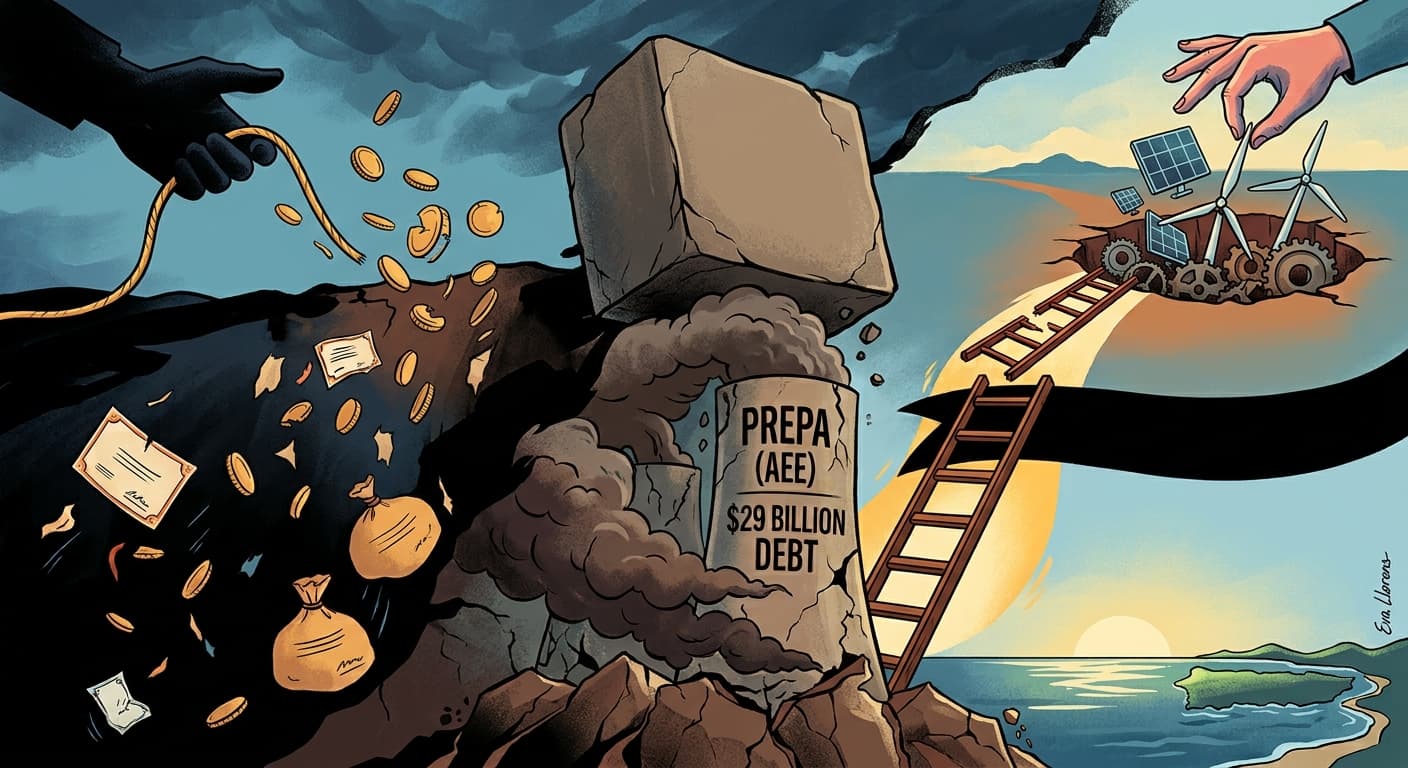
PREPA still faces a separate bankruptcy under Title III. Ruling does not resolve how it will finance its operations and capital improvements.
Because PREPA is a public corporation of the Commonwealth and its revenue bonds qualify as securities under federal law, the court found the trustee’s claim squarely within the statute’s reach.
The ruling leaves PREPA bondholders without recourse against the Commonwealth, though they continue to pursue claims in PREPA’s separate Title III restructuring, a parallel bankruptcy process for the utility itself.
Understanding the Stakes
U.S. Bank, acting as trustee for the bondholders, had filed the claim in the Commonwealth’s Title III case, arguing that Puerto Rico impaired PREPA’s ability to repay its bonds by restricting the utility’s rate-setting authority and violating statutory and constitutional protections.
The proof of claim asserted that the Commonwealth’s statutory covenant not to interfere with PREPA’s repayment powers served as a “material inducement for investors to purchase” the bonds. In other words, these were promises to investors that became part of the reason they bought the bonds in the first place. The appellate court viewed this as a direct link between the damages sought and the original securities transaction.
By classifying the claim as a Section 510(b) subordinated claim, the court preserved the structure of the Commonwealth’s Plan of Adjustment, which provides no distribution to Class 64 claims, which are subordinated.
To understand the magnitude, had the trustee’s claim been treated as a general unsecured claim in Class 58 (a category that includes unpaid suppliers, contractors, and other non-priority creditors), recoveries for other unsecured creditors would have dropped from roughly 20 percent to about 5 percent. In other words, letting the bondholders recover would cut other creditors’ repayment in half.
Bondholder groups argued that Section 510(b) should not apply because their claims stemmed from “post-sale malfeasance”—meaning wrongdoing that happened long after they purchased the bonds, not misconduct at the time of purchase itself.
The First Circuit rejected that interpretation, aligning with other federal circuits in holding that the statute covers claims with a causal connection to the securities transaction, even when the alleged wrongdoing occurs years later.
In this case, the court found that the promises made at the time of sale were the foundation of the entire claim, even though the alleged breach of those promises occurred in the years that followed.
Puerto Rico’s Energy Future
The ruling, while a legal victory for the oversight board, leaves Puerto Rico’s energy utility in an uncertain position.
It protects the terms of the Commonwealth’s Plan of Adjustment, confirmed by Judge Swain in January 2022 and in effect since that March, from a claim that would have cut recoveries for other creditors roughly in half. It does not resolve PREPA’s own separate Title III restructuring, still active in Judge Swain’s court, or the underlying question of how PREPA will finance its operations and capital improvements as it transitions away from fossil fuels and addresses decades of deferred maintenance.
The decision underscores the hierarchical nature of bankruptcy law, where some creditors recover pennies on the dollar, while others recover nothing. Bondholders, whose losses are now legally barred from recovery, face a stark choice: accept a recovery in PREPA’s separate restructuring, or receive nothing.
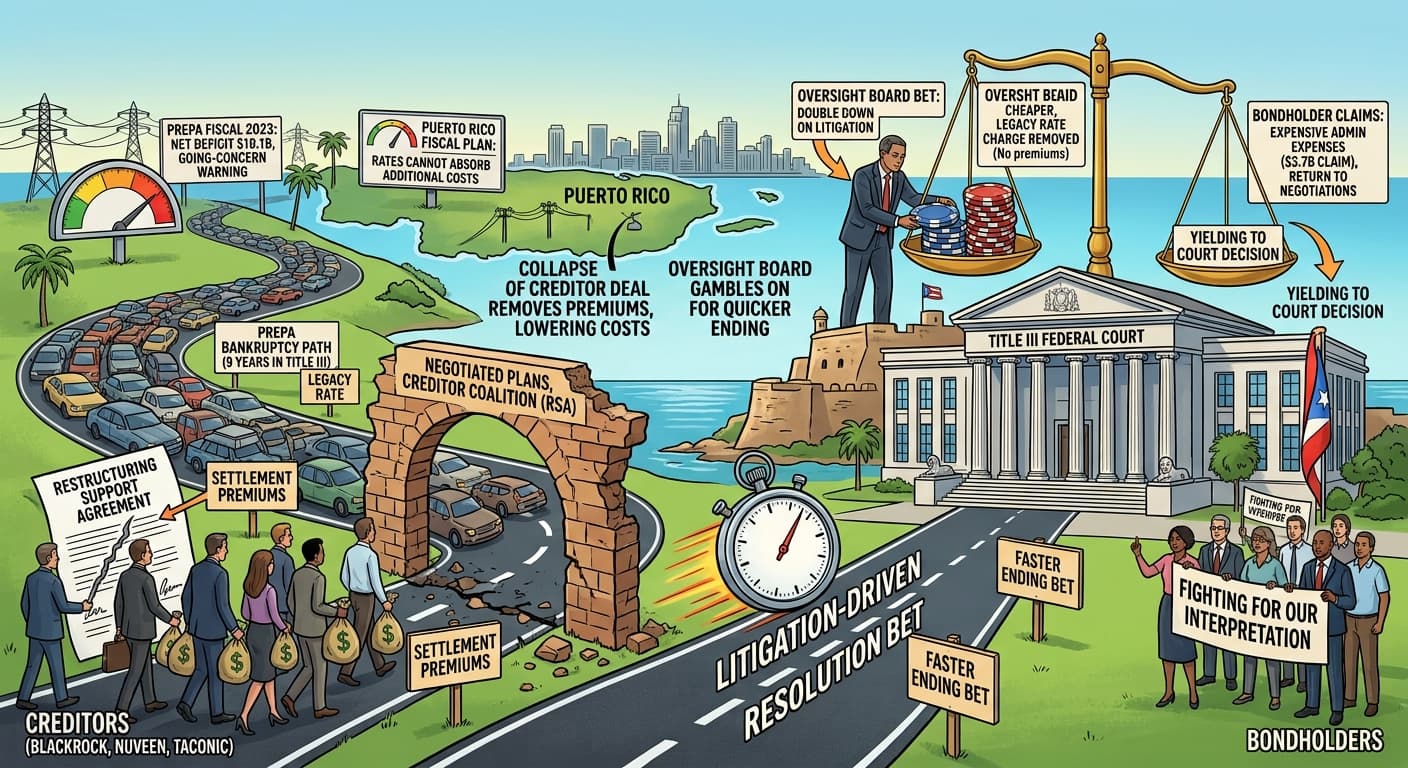
The court’s decision leaves that outcome to PREPA’s own bankruptcy process, now in active litigation in Judge Swain’s courtroom.
Creditors appear ready to let the courts decide, opening way for faster and cheaper resolution if courts validate the Board’s interpretation of bondholder rights