Customed’s $12 Million Fajardo Expansion Taps a Widening Gap in U.S. Medical-Device Sterilization Capacity
The investment adds sterilization capacity to Puerto Rico’s $6 billion medical device export industry at a moment when national sterilization regulations remain in flux
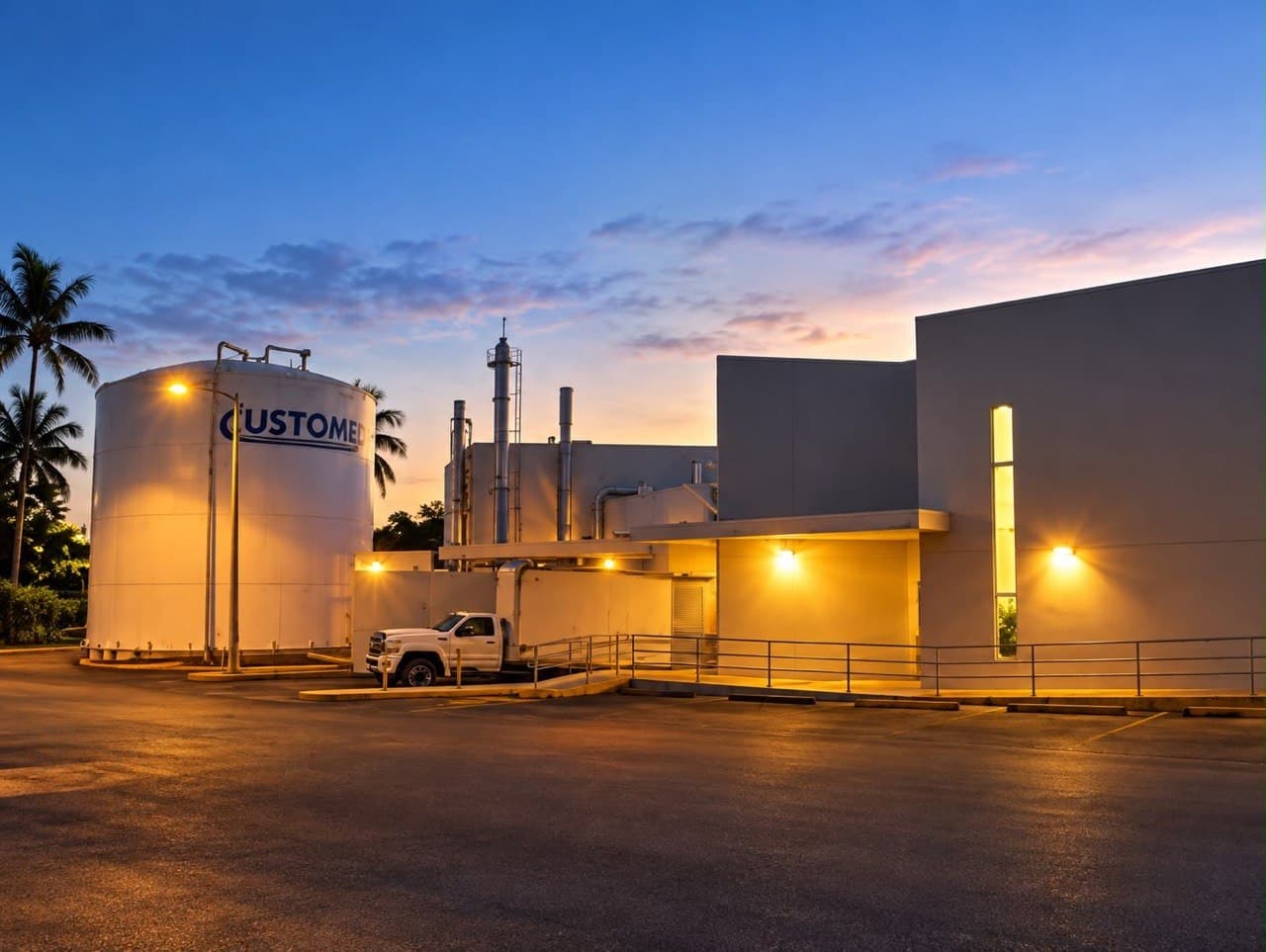
Puerto Rico’s government this week announced a $12 million expansion of Customed Inc.’s sterilization operations in Fajardo, a routine-sounding economic development story that sits atop a far larger and more contested national picture: the United States’ shrinking, increasingly uncertain capacity to sterilize the medical devices hospitals depend on.
Governor Jenniffer González Colón and Economic Development and Commerce Secretary Carlos J. Ríos Pierluisi announced the project this week, framing it as a vote of confidence in Puerto Rico from a homegrown company with more than three decades on the island.
The expansion will create 35 new jobs and add specialized infrastructure to expand Customed’s sterilization process for medical devices, an essential and highly regulated step in getting surgical kits, catheters and other equipment from factory floor to operating room.
Puerto Rico’s Role in Global Medical Devices
The Customed expansion comes in an industry that government officials frequently point to as a crown jewel of Puerto Rico’s economy.
Medical device manufacturing has operated on the island for more than 70 years, producing more than 2,500 different devices and contributing roughly 5% of Puerto Rico’s GDP, according to Puerto Rico’s Department of Economic Development and Commerce (DDEC).
In fiscal year 2024, medical device exports reached $6.024 billion, 9.2% of the island’s total $65.368 billion in exports, DDEC figures show.
Employment in the sector reached 13,317 workers across 77 establishments in 2024, up from 10,599 workers and 64 establishments in 2020, according to federal Bureau of Labor Statistics data compiled by DDEC.
Puerto Rico is home to 15 of the top 20 global manufacturers of Class III medical devices, the highest-risk category requiring the most rigorous federal oversight, and produces an estimated 90% of the world’s pacemakers, according to Invest Puerto Rico, the island’s economic development promotion agency.
Roughly 30 medical device companies operate 70 manufacturing plants across the island, generating some 20,000 direct jobs, the agency reports.
Why Local Sterilization Capacity Matters Now
That scale of manufacturing depends on a sterilization step that has become one of the most contested corners of federal regulatory policy.
Ethylene oxide, or EtO, the gas used to sterilize roughly half of all medical devices sold in the United States, some 20 billion devices annually, remains, according to the EPA and medical device industry groups, without a viable large-scale alternative for many device types. The industry, in addition, has faced numerous regulatory EtO challenges across the U.S., as confirmed by Caribbean Business research.
Against that backdrop of sustained national uncertainty, a Puerto Rico-based manufacturer with three decades of sterilization experience expanding its own capacity carries strategic logic beyond this week’s jobs and investment announcement and strengthens Puerto Rico’s position at a national level.
The Customed Expansion
The $12 million investment breaks down into three components: approximately $4.86 million in machinery and equipment, $4.916 million in infrastructure improvements, and $2.024 million tied to regulatory compliance, according to figures released by DDEC.
The new infrastructure includes additional sterilization chambers, pre-conditioning and aeration rooms, auxiliary systems infrastructure, and expanded storage and control areas.
Beyond the 35 new positions, the project builds on a base of 30 existing employees and projects an increase of approximately $1.39 million in annual payroll, bringing total estimated payroll to roughly $2.58 million a year, per the government’s announcement.
“This expansion represents a new chapter for Customed and reaffirms our confidence in Puerto Rico as a place to invest, manufacture and continue growing.”
Felix Santos, president
“This expansion combines a $12 million investment with 35 new jobs, but its strategic value also lies in the capacity it adds to our supply chain,” Ríos Pierluisi said, noting that expanding sterilization locally reduces the extent to which Puerto Rico’s medical device manufacturers must rely on sterilization capacity outside the island.
Built Over Three Decades
Customed is the manufacturing arm of Puerto Rico Hospital Supply, a third-generation, family-owned company led by president Félix Santos. Customed was established in 1989, specializing in the manufacture, assembly and sterilization of medical products, from surgical kits and trays to specialized products used in complex procedures, serving hospitals and thousands of healthcare providers across Puerto Rico.
The company’s resilience has been tested before. During Hurricane Maria in 2017, Puerto Rico Hospital Supply kept operating on generators, continuing to distribute essential medical supplies, syringes, tubes, catheters, when the island’s infrastructure collapsed around it, according to an account published in Babson College’s alumni magazine.
“This expansion represents a new chapter for Customed and reaffirms our confidence in Puerto Rico as a place to invest, manufacture and continue growing,” Santos said, citing the significance of doing so from Fajardo, generating jobs and strengthening the island’s supply chain.
Warmkraft launches $16M expansion in Mayaguez, tests civilian applications for its military uniform-treatment innovation, adding to growth of local textile cluster