COP31’s First Week: Climate Adaptation Emerges as a New R&D and Industrial Opportunity for Puerto Rico
With 81 national adaptation plans now filed and new resilience vehicles launching in the Turkey UN Conference, the market Puerto Rico could supply is taking shape…fast
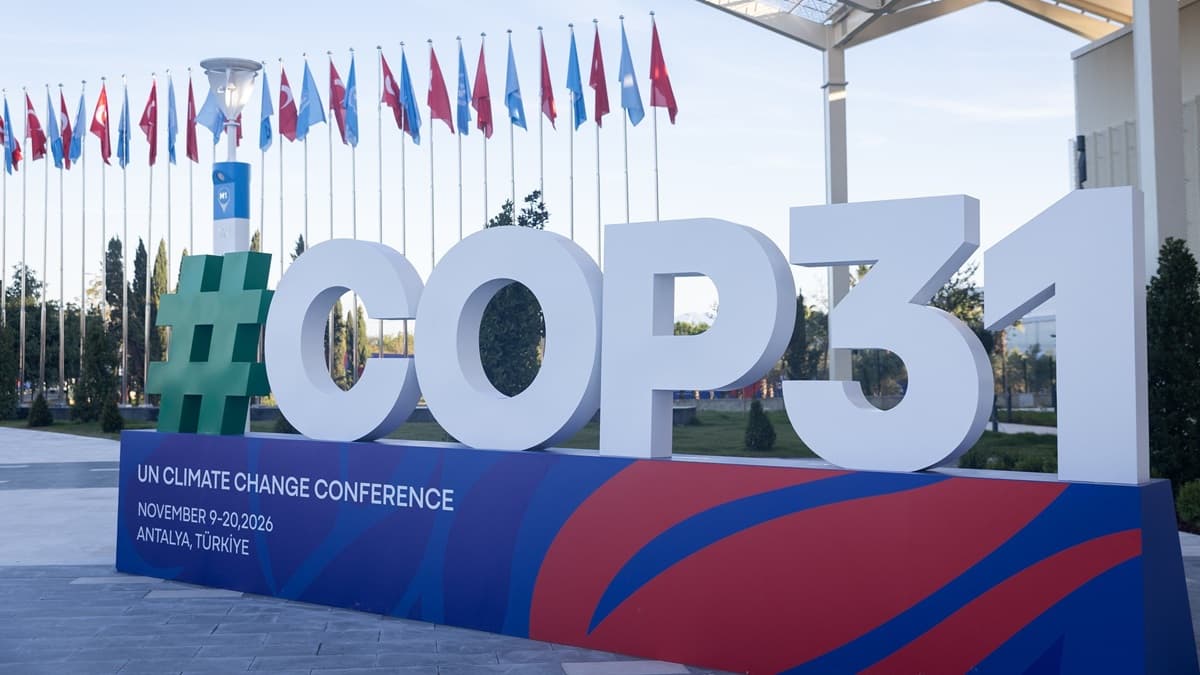
The first week of the United Nations climate conference in Antalya, Turkey, has produced a split screen for anyone tracking the business of climate adaptation. Inside the negotiating rooms, governments are fighting over who pays. Outside them, the institutions that turn adaptation plans into investable projects have been adding programs, partners and pipelines by the day.
Both matter to Puerto Rico. COP31, which opened Nov. 9 and runs through Nov. 20, is taking place with the U.S. no longer a party to the Paris Agreement and with no federal delegation in the space. But the island’s stake is far more about the world being on course for sharply higher temperatures, the need for local companies and government to prepare for it on time, and the chance to capitalize on the development and export of adaptation solutions the world will need for the consequences in the pipeline, turning climate change into an industrial opportunity.
Let’s start with those inconvenient temperatures, which from January through September averaged 1.47°C above pre-industrial levels, according to the World Meteorological Organization’s State of the Climate Update prepared for COP31. The growing consensus among scientists at COP31 is that businesses and governments should plan for a plausible high-risk path of 2°C by 2040 and 3°C in the 2050s.
Prudent risk management, that is, now requires being ready for that outcome, not because it is certain, but because it is increasingly mainstream and seen as likely.
To that end, all eyes at COP31 have turned to NAPs, or the National Adaptation Plans countries use to track and report the progress they’re making, as well as anchor the development of an entire local adaptation ecosystem moving them toward greater resilience.
As of Oct. 20, 81 developing countries had submitted a NAP, up from 67 at the end of September 2025, according to the UN climate secretariat’s progress report prepared for Antalya.
Fourteen countries filed their first plan during the period, and Brazil and Grenada submitted updated ones. Seventeen small island developing states are now on the list. Many more are in the pipeline; 144 of the 154 developing countries had formally begun the process as of Sept. 30, 2025, according to the UN climate secretariat’s 2025 progress report, which by CB’s calculation leaves 63 countries working toward a first submission.
Jurisdictions that position themselves now as places where adaptation solutions are invented, financed and exported will have a head start.
A NAP is a country’s medium- and long-term blueprint for reducing its vulnerability to climate impacts, sector by sector. Increasingly, it is also meant to work as an investment prospectus, the document a climate fund, development bank or private investor consults to see what a country needs built and at what cost.
Only 26 of 59 plans the secretariat reviewed put a price on individual adaptation measures. Of 2,263 projects financed by the main climate funds, 25% cite the relevant national plan, and only 19 cite a specific priority within it. The Green Climate Fund has approved $320 million to help 120 countries with adaptation planning, of which about 60% has been disbursed.
A sign of how far adaptation has come and the opportunity it represents for Puerto Rico is the emergence of the NAP Implementation Alliance, launched at COP30 in Belém, Brazil, with the UN Development Program, donor governments, climate funds and private partners. In Antalya, the alliance and its members are behind 46 side events, according to UNDP’s schedule, several aimed squarely at capital, including sessions on moving national plans “from plans to portfolios,” on an investors’ resilience coalition, and on private finance for resilient food systems.
Several are tied to FINI, the initiative launched in Belém by the Atlantic Council and the Natural Resources Defense Council to make national plans investable. In an informal note dated Nov. 13, the COP31 Presidency said parties reported “near universal uptake in adaptation planning.”
Measurement is advancing too. The 59 Belém Adaptation Indicators adopted at COP30, the first shared yardstick for the global goal on adaptation established in Article 7 of the Paris Agreement, are being piloted in Antalya by groups from Latin America and Africa and by specialists in water and agriculture, according to the same schedule.
Negotiators still have to settle who will write the technical methods behind the indicators, a dispute carried over from the June talks in Bonn, Germany, according to published reports.
The finance fight on the cover text
Money is another matter. At COP30, governments agreed to pursue efforts to at least triple adaptation finance by 2035 but did not say from what starting point. The African Group of Negotiators asked for a dedicated agenda item in Antalya to settle the baseline and the path. It was left off on opening day, when COP31 President Murat Kurum ruled that the subject could be handled under existing items.
“If you do not know the baseline, you cannot measure how much has come in,” the group’s chair, Antwi-Boasiako Amoah of Ghana, said at a Nov. 10 press conference.
The group is now pressing for the target to be spelled out in the cover decision, the political text adopted at the close of the conference. The Presidency’s Nov. 13 note records calls for a baseline, milestones and a time-bound pathway.
International public adaptation finance to developing countries was $28.2 billion to $31.7 billion in 2024, about $1 billion more than in 2023, according to the UN Environment Program’s Adaptation Gap Report 2026, released Nov. 4.
Developing countries will need roughly $305 billion a year by 2035. Even if the tripling goal is met, at $85 billion to $120 billion a year, it would cover only 20% to 29% of that need after inflation, UNEP said, but those figures alone show the size of the opportunity for folks in Puerto Rico who choose to jump in with projects, services and the Act 60 innovation hub.
To be sure, the trend in donor budgets is running the other way. New public climate-finance pledges from developed countries for the coming years are down more than 70% from recent levels, according to an analysis published Nov. 11 by Carbon Brief, a U.K.-based climate research site.
Negotiators also have yet to resolve how the Adaptation Fund, which raised about $135 million at COP30 against a $300 million target, will be governed once it serves the Paris Agreement exclusively. The fund has scheduled a contributor dialogue for Nov. 17.
New vehicles for private capital
While the public-finance debate stalls, the delivery side keeps building. On Nov. 12, the Climate Investment Funds named the first recipients of its resilience program, known as ARISE: Bangladesh, Haiti, Kyrgyzstan, Morocco and Sierra Leone, plus a regional initiative for Mozambique and Malawi.
Each country is in line for $30 million and the regional initiative for $40 million, with Germany, Ireland and Spain as donors.
Two details stand out for business readers. Some 40% of the program’s funding is earmarked for the private sector, and demand far exceeded supply.
“Seventy countries applied,” said Tariye Gbadegesin, the funds’ CEO, adding that the top 25 applications alone represent a $700 million portfolio of projects.
The multilateral development banks reported Nov. 13 that they provided $103 billion in climate finance to low- and middle-income economies in 2025, of which $35 billion was for adaptation, and mobilized another $35 billion in private capital. They used COP31 to present a joint Partnership for Adaptation and Resilience Investment.
Insurers are moving as well. The UN-backed Principles for Sustainable Insurance initiative released a white paper Nov. 13, reflecting 30 insurance and stakeholder organizations, on how the industry can price, reward and underwrite resilience.
“As physical climate risks grow, adaptation needs to move from ambition to implementation,” said Liz Henderson, global head of climate risk advisory at Aon.
A day earlier, six UN agencies launched a Disaster Risk Financing Platform that aims to secure more than $3 billion in pre-arranged risk financing to protect 75 million people by 2030.
Where Puerto Rico fits in
None of these opportunities requires a supplier to come from a country that signed a treaty. Development banks, climate funds and insurers buy technology, engineering, data and risk analytics from whoever can deliver them. U.S. states and cities understand this. The governors of California, New Mexico and Minnesota are in Antalya under the America Is All In coalition, whose pavilion program includes sessions on resilient infrastructure and locally led adaptation.
Roughly a quarter of the actions listed in national plans can be led entirely by private investment, UNEP found in its 2025 gap report, and that is where execution is thinnest and the opportunity is greatest. Call it the Adaptation Action Gap, as national plans race ahead of the companies that must carry them out.
The island has the ingredients to be on the supply side, by positioning itself as an Act 60 R&D hub and climate-adaptation lab for the world. It is a global adaptation economy that demands such resilience solutions as desalination and water reuse, controlled-environment agriculture, cooling materials and textiles, resilient construction materials, climate-health systems, emergency-management technology, and risk-transfer finance.
Act 60 already offers incentives for developing and exporting such solutions, principally through Chapter 6, which covers manufacturing and research and development, and Chapter 3, which covers export services.
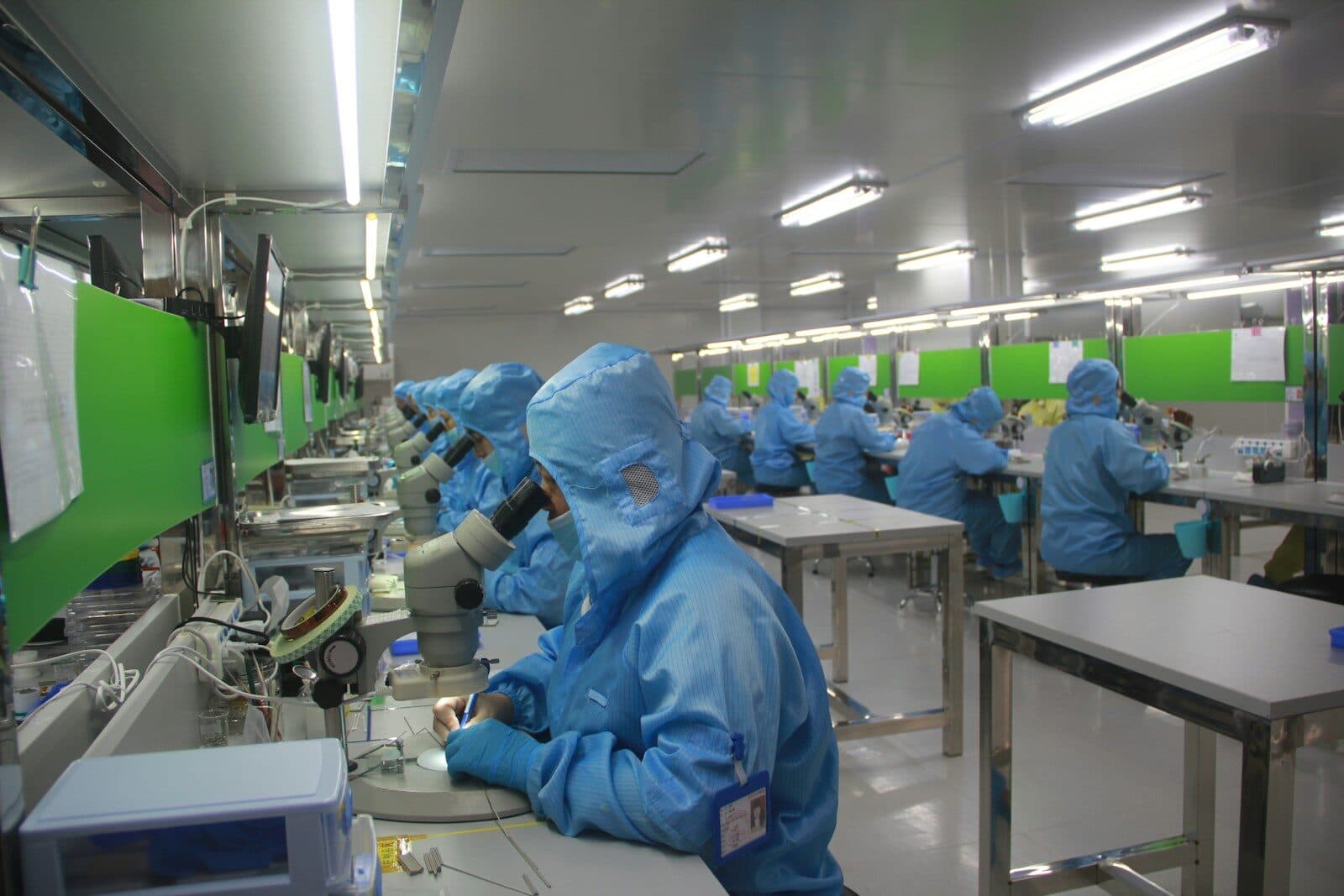
The precedent is the island’s own manufacturing base, which makes pharmaceuticals and medical devices for the world. The proposition is to do the same for adaptation: design, test and produce here, in a lab-island that lives with heat, drought, storms, sea-level rise, and a fragile grid. The starting-point target markets include the 81 NAP countries that have now written down what they need, plus the others in the works.
There is also a demand-side lesson for local resilience projects seeking capital. The Antalya numbers show that money flows to plans that are costed and to projects that are structured for lenders and insurers. Haiti’s selection for ARISE, Grenada’s updated plan, and the 17 island states with NAPs on file mean Puerto Rico’s Caribbean and LatAm neighbors are building that discipline in real time and could become customers.
The first week’s message is that plans are no longer a scarce commodity in adaptation. Costed projects, bankable structures and proven solutions are, which is precisely where Puerto Rico can step in.
During the second week of COP31, we’ll be watching whether public money follows this lead. Jurisdictions that position themselves now as places where adaptation solutions are invented, financed and exported will have a head start that no cover decision can grant or take away.
PRMA leaders point to $2.7 billion in new commitments and nearly 2,800 jobs, but warn an aging, shrinking workforce could stall expansion unless reshoring and talent policies take hold
At the Puerto Rico Manufacturing Summit 2026, industry leaders outlined a vision for the next decade built on artificial intelligence, research commercialization, workforce development and major infrastructure investments