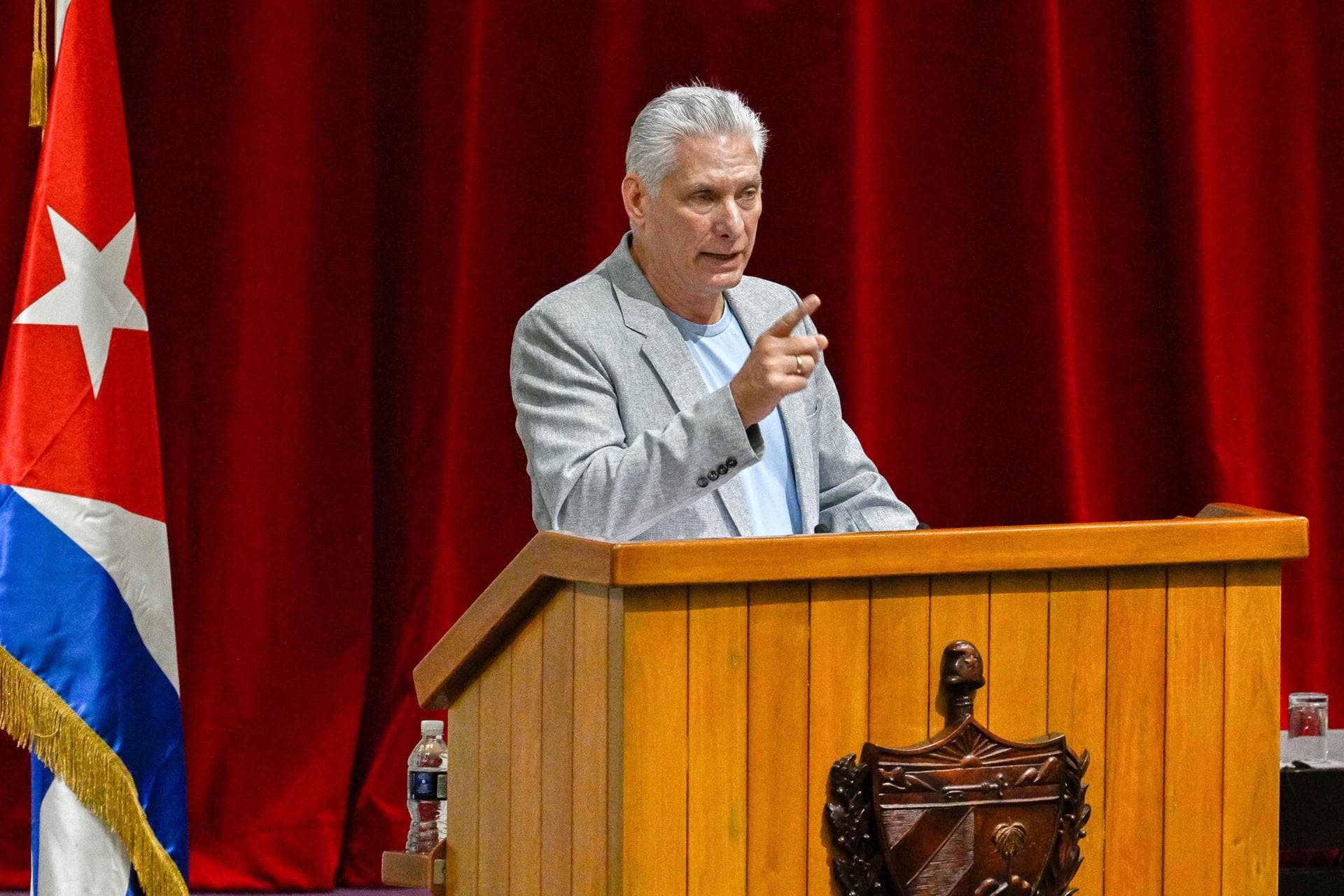
Havana (EFE) — Cuban President Miguel Díaz-Canel announced a sweeping package of economic reforms aimed at liberalization and decentralization, declaring that “these are times when change is necessary.”
Speaking to Cuban media in remarks broadcast on state television, Díaz-Canel said the changes must respond to “the demands of the current moment” — a reference to the country’s ongoing crisis — and not primarily to pressure from Washington for the island to undertake deep economic and political reforms.
“The country is not standing still. The country is intelligently confronting this entire situation. We cannot say everything so clearly because the enemy is watching everything we do. Our response must be one of unity,” the president added.
Among the measures announced is the entry of “new actors” into the tourism sector — once one of the country’s key economic engines — to “operate” the island’s hotel infrastructure following the recent full or partial withdrawal of major foreign companies seeking to avoid U.S. sanctions.
Díaz-Canel also spoke of reforming the real estate sector, pointing to changes in management and the pursuit of “new modalities” and “new actors,” without providing further details. The Cuban state controls large property rental enterprises.
He also announced plans to increase the “autonomy” of state-owned companies in areas including wages, profit reinvestment, imports and exports, partnerships with other economic actors, business plan design, and access to the foreign exchange market.
Liberalization will also reach agriculture, Díaz-Canel said, noting that farmers will be granted direct access to inputs, allowed to partner with different actors, hold “real” accounts (backed by cash), participate in the foreign exchange market, and benefit from streamlined bureaucratic processes made “as light as possible.”
The Cuban president announced the elimination of state import companies — which currently serve as mandatory intermediaries for all foreign trade — in order to make the sector “more dynamic.”
He stressed that the government wants to “incentivize” foreign direct investment and highlighted the role that Cubans living abroad could play, noting they will be granted the same conditions as their counterparts on the island.
On the private sector, he announced that more areas of the economy will be opened to non-state actors.
Díaz-Canel also addressed the state restructuring announced weeks ago, now formalized through a bill that would reduce the number of ministries from 27 to 20, with the goal of creating a “more agile” structure with “less bureaucracy.”
He added that the reforms also seek to resolve “contradictions” between central planning and the market, and between centralization and decentralization.
EFE