The Puerto Rico Manufacturers Association (PRMA) is urging the island’s Supreme Court to validate the 2022 extension of LUMA Energy’s public-private partnership (PPP) contract, warning that a ruling against the agreement would destabilize Puerto Rico’s investment climate and undermine confidence in the island’s institutional framework.
In parallel, LUMA itself has filed a stark warning: nullifying the extension would unleash more than $1.3 billion in financial liabilities, jeopardize billions in federal reconstruction funds, and force higher electricity rates or taxpayer-funded subsidies.
In its consolidated brief to the Court, LUMA detailed the financial fallout of a contract termination. The operator said nullification would impose “approximately $1.3 billion in quantifiable costs,” including at least $726 million in expenses that cannot be avoided even under a “perfectly planned” transition to a new operator.
If the Court upholds the contract, Puerto Rico sends a message of contractual stability and institutional reliability, a message that matters given the island’s fiscal constraints and dependence on private capital and federal reconstruction funds, says PRMA.
This breakdown includes the contractual termination fee, exit transition costs, onboarding expenses for a successor operator, and outstanding supplier payments.
LUMA emphasized a critical constraint: the Puerto Rico Electric Power Authority (PREPA), which would absorb these costs, lacks the liquidity to cover them. Current electricity rates, the operator argues, do not include reserves for a contract nullification.
Without new funding sources, LUMA said, “those costs would be borne by the People of Puerto Rico through the payment of higher rates, or by taxpayers in general.”
The implication: Puerto Ricans would pay either way, through their utility bills or their taxes.
In the balance: $6.17 Billion reconstruction funding
Beyond the immediate $1.3 billion liability, LUMA has flagged a larger risk: approximately $6.17 billion in obligated federal funds tied to 279 grid-reconstruction projects could be jeopardized if the operating framework changes abruptly.
Since 2021, LUMA has already invested around $2.2 billion in federal reconstruction funds. If a contract change triggers a shift in project administration, federal agencies could halt disbursements or even demand repayment, a scenario that would stall reconstruction across the island for years.
The timeline compounds the risk. Selecting and certifying a new operator through a competitive process could take two years; securing federal obligations for new projects under that operator would add another 18 months or more. During this limbo, critical grid-modernization projects would stall, leaving Puerto Rico’s electrical system, already fragile, in a prolonged state of uncertainty and vulnerability.
The government’s legal challenge hinges partly on the assertion that PREPA could temporarily assume control of the grid if the LUMA contract were terminated. LUMA disputes this directly, arguing that the public corporation lacks the personnel, infrastructure, and financial capacity to operate transmission and distribution systems immediately. This operational gap, if real, would create a dangerous void during any transition, risking blackouts and service disruptions while a new operator is onboarded.
Was the Extension Properly Authorized?
At its core, the Supreme Court case turns on procedure and authority. LUMA argues the 2022 extension was authorized under Section 7.1(a) of the supplemental contract and did not constitute a new agreement requiring legislative approval or renewed alliance certification.
To support this claim, the operator has asked the Court to take judicial notice of internal AAPP documents and an external legal opinion that, according to LUMA, supported the board’s decision to approve the extension.
LUMA’s chief legal officer, Ángel Rotger Sabat, framed the case in sweeping terms, saying that the Supreme Court has “the historic opportunity to preserve the legal certainty of agreements with the State,” and cautioning against “serious consequences” if the extension is invalidated.
This framing elevates the dispute beyond LUMA’s contract to a question about Puerto Rico’s credibility as a contracting partner.
Why Manufacturers Care
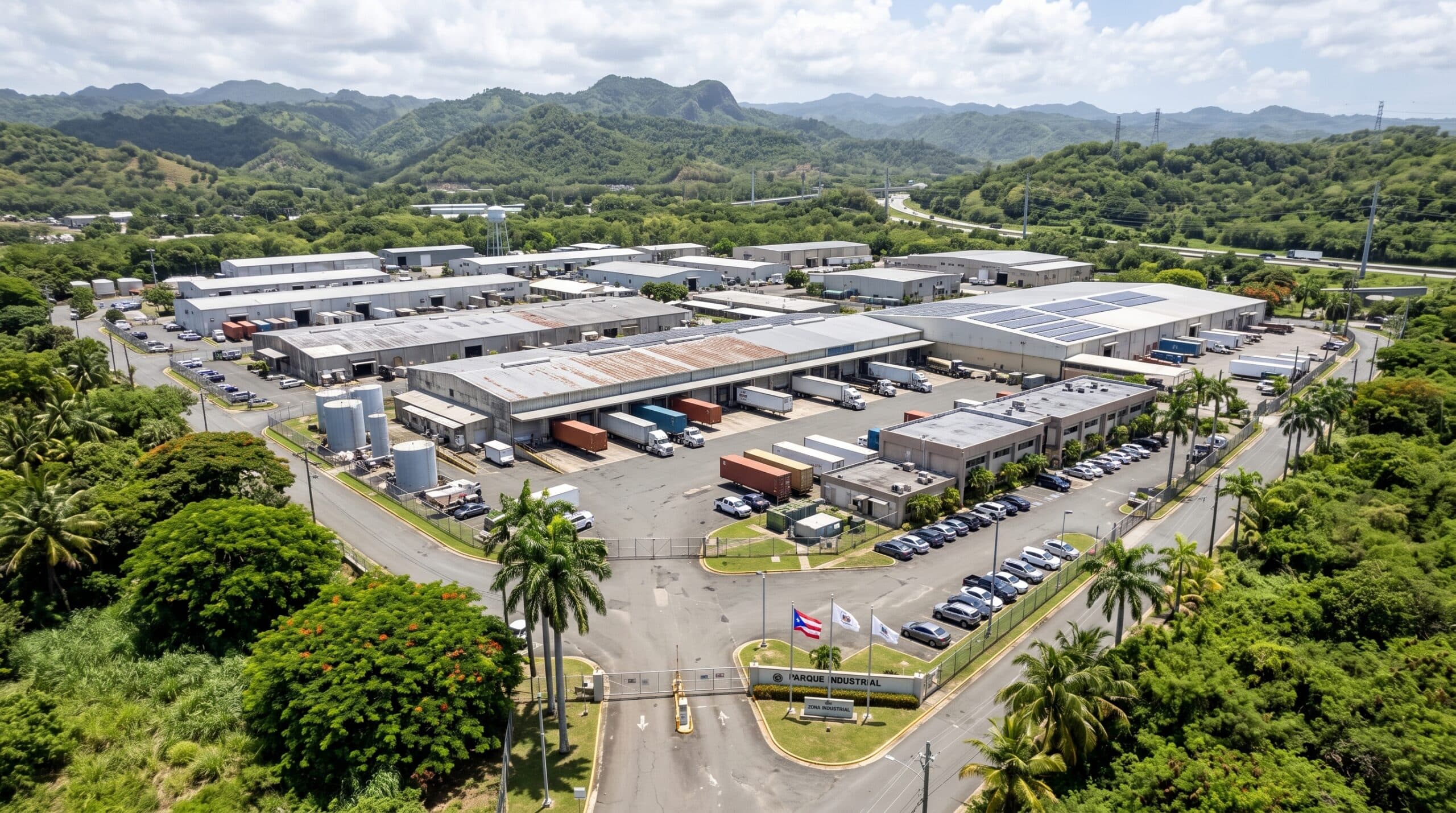
The PRMA’s friend-of-the-court filing brings the business community into the debate. Representing a sector responsible for roughly 45% of Puerto Rico’s gross national product, including pharmaceutical, biotech, aerospace, medical device, and food producers, the association emphasized that manufacturers depend on uninterrupted, reliable electrical service for regulated production processes.
A destabilized grid or uncertain operating regime threatens their regulatory compliance and operational continuity.
More broadly, the PRMA argued that the controversy “transcends the operation of the electrical system per se” and instead threatens the legal certainty required to attract long-term capital investment.
The association stressed that Puerto Rico’s fiscal constraints make PPPs indispensable for infrastructure modernization, and cited legislative intent behind both the PPP Act of 2009 and the Electric System Transformation Act of 2018, both designed to create a transparent and predictable legal framework for private participation in large-scale projects.
The PRMA’s warning was blunt: invalidating the extension would send ‘a devastating message’ to investors by suggesting that Puerto Rico may not honor contracts even when private partners have complied with all requirements.
The association referenced guidance from the International Monetary Fund and World Bank, which stress that PPP success depends on political commitment, good governance, and legal stability.
A Procedural Battle
Both LUMA and the PRMA emphasized an important distinction: this dispute is not about LUMA’s operational performance. The original PPP contract contains mechanisms for addressing operational deficiencies through performance metrics, cure periods, and termination clauses.
The Supreme Court could theoretically hold LUMA accountable for service failures without invalidating the 2022 extension. Instead, the current controversy centers on a procedural challenge to an extension the government itself executed, a narrower but no less consequential legal question.
Both LUMA and the PRMA concluded their filings with appeals to the Supreme Court’s role in shaping Puerto Rico’s future. For LUMA, the case is about validating the 2022 extension and affirming that “the extension was validly executed and remains essential to maintaining stability in the electrical system during PREPA’s bankruptcy.”
For the PRMA, it’s about reinforcing “Puerto Rico’s commitment to honoring its contractual obligations.”
In essence, both parties are arguing that the Court’s decision will have lasting consequences for Puerto Rico’s credibility among investors and its ability to modernize critical infrastructure.
If the Court invalidates the extension, manufacturers and investors signal that contracts with the Puerto Rico government are vulnerable to legal challenge even after execution, a chilling effect on future capital investment.
If on the other hand the Court upholds it, Puerto Rico sends a message of contractual stability and institutional reliability, a message that matters given the island’s fiscal constraints and dependence on private capital and federal reconstruction funds.
Ex-PREPA, LUMA and Genera executive Daniel Hernández says the island lacks options, not fuel; his six-point plan faces a costly gas contract, stalled financing, a frozen procurement and a deficit of up to 850 MW