PRISA Presents Leads Next Stage of Local Visitor Economy, Starting With Cirque du Soleil Residency
Inspired by Stephen Ross’ Miami playbook, Federico Stubbe Jr. launches unit to bring new generation of iconic tourism events, right on time for the industry’s inflection moment
The storyline seems straight out of a movie. During a recent visit to Miami, Federico Stubbe Jr., CEO of PRISA Group, met with sports and events icon Stephen Ross, and in one of those moments that make us all fall in love with entrepreneurship, Stubbe was struck by a vision.
Ross is no ordinary host. The founder and chairman of Related Companies, the real estate firm behind Manhattan’s Hudson Yards, with more than $60 billion in assets owned or under development, Ross took control of the Miami Dolphins in 2009 and has since put more than $1 billion of private investment into Hard Rock Stadium and its surrounding properties. Under his watch, the stadium has hosted Super Bowl LIV in 2020, the College Football Playoff national championships of 2021 and 2026, the 2024 Copa América final, FIFA Club World Cup matches in 2025 and FIFA World Cup matches this summer.
Ross, recalls Stubbe, said he had an excess inventory of stadium seats and calendar time he could fill with events during the months when the Dolphins weren’t playing, in addition to events in the city unrelated to the stadium. So he partnered with independent producers and brought in the Miami Open tennis tournament, which moved to the stadium grounds in 2019; the Formula 1 Miami Grand Prix, raced since 2022 on a circuit built around the stadium; and, through his Relevent Sports, the International Champions Cup, which brought Europe’s top soccer clubs to stadiums across the United States, including a Barcelona-Real Madrid Clásico in Miami in 2017.
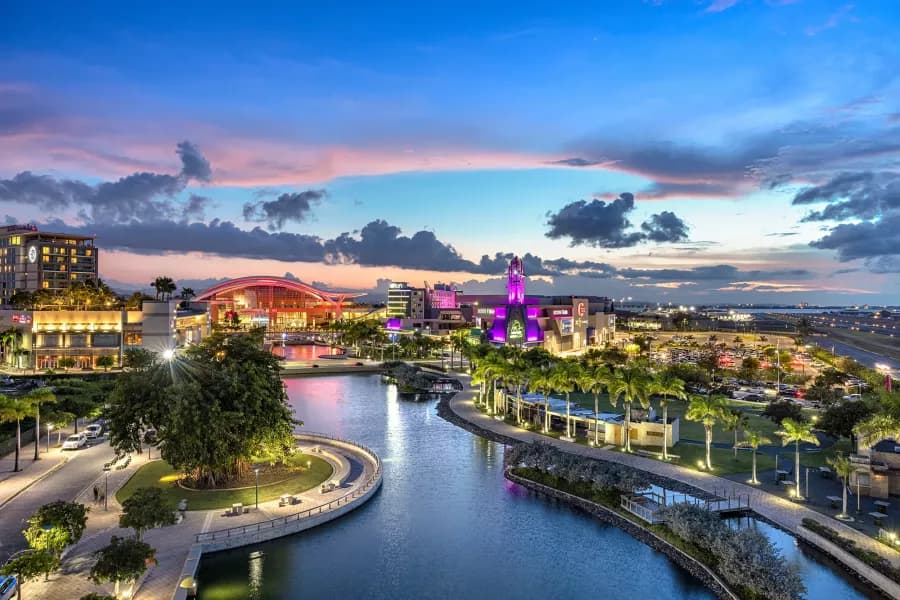
T-Mobile District
“That’s when I said to myself, hey, I have a fantastic venue in the T-Mobile District and around the Convention Center, where we have the Music Hall, hotels, restaurants, the Popular Plaza, plus venues in some of our other properties. And yes, we do lots of events there all the time, but if there’s one thing Puerto Rico needs to boost tourism, it’s to go bigger with a series of truly world-class events that attract outside visitors in addition to locals. And we at PRISA have developed the ecosystem to build on, just like Steve and so many others have done elsewhere.”
A call from Cirque, as the industry booms
About a year later, Fede, as he’s known informally (cariñosamente, as we say in Spanish), received a call from Cirque du Soleil.
“Next thing I know, I’m in a video call discussing details with Cirque’s chairman himself. My heart burst with pride. For a company like Cirque du Soleil to tell me they want to do a show about Puerto Rico, because they are in love with our culture, our music and how hot we are right now in the world, that they had done their research and had decided they wanted to do it with us. That’s huge.”
Shortly thereafter, PRISA Presents was born. And as fate would have it, it’s an idea Jon Borschow could not have scripted any better.
Known as the dean of the island’s visitor economy and a famed local entrepreneur in his own right, Borschow founded Foundation for Puerto Rico (FPR) in 2011, after his last corporate exit and a brief try at retirement, to boost the island’s development with a model anchored on tourism.
His efforts led to the creation of Discover Puerto Rico in 2018, the destination marketing organization singularly responsible for taking what had become a stable industry and turning it into one of the primary drivers of local growth.
The Rebook coalition of independent hotels is spearheading an organized ecosystem of its own in Puerto Rico to build an integrated network of spots, shops and inns offering the sort of authentic, homegrown “small” attractions, in every nook and cranny of the island, to draw visitors throughout.
Last year, FPR launched the Visitor Economy Performance (VEP) model to track and better inform the growth of the industry. It places employment at more than 100,000 in direct leisure and hospitality jobs, and up to 115,000 once visitor-dependent work in transportation, retail, tours and culture is counted.
Using best-practice behavioral data and local prices rather than departure-gate counts, the model also places daily per-visitor spend at $264 in 2024 and $280 in 2025, higher than other counts. The number of visitors is projected to grow from today’s roughly six million a year to eight million in 2030, with total spend rising from more than $8 billion today to about $12 billion in four years. Truly historic numbers and unprecedented growth the industry in Puerto Rico.
The visitor economy is in the midst of a historic growth curve. Source: Foundation for Puerto Rico, Visitor Economy Performance model. Figures for 2024 onward (dashed) are projections.
The visitor economy, that is, has become one of the biggest success stories and sources of hope in the economy today. In response, two significant organizations have stepped up with initiatives that seek to galvanize the ecosystem and aim higher: Rebook and the Chamber of Commerce, as you can read in this CB story from two weeks ago and this one last week.
Such has been the boom, and so rapid, that the risk now is becoming victims of our own success. So much of the visitation goes to essentially the same spots, mainly Old San Juan, Condado, El Yunque and the like, that industry leaders have turned up the volume on calls to add new, innovative, exciting attractions and things for visitors to do, and to do so across the entire island, in effect decentralizing visitation and spending and turning Puerto Rico into a more vibrant visitor experience than it has ever been. It has been Borschow’s outcry since FPR began.
The Ciudadela (Santurce) NGO is stepping up its crusade several notches, with a regional approach that seeks to establish a more structured, organized and collaborative system to boost outcomes one region at a time, starting with the east, including enhancements to the visitor experience in transportation, communication, professionalized service, infrastructure, attraction visibility, collaborative governance and more.
Not just about selling tickets
Which brings us back to PRISA Presents. Just as the industry is coalescing around this inflection point and asking for a new class of big attractions, Fede and his team burst onto the scene with exactly that.
“This is not just about selling tickets to shows,” he said when I interviewed him for this article. “This is about enhancing the tourist experience in Puerto Rico. We won’t be doing the typical, like bringing singers and such. I’m not a producer in that sense. Those shows, important as they are, we leave to others. Our focus is tourism, with world-class, truly different events that will draw new visitors to Puerto Rico and provide them with genuinely unique experiences. And we’re not reinventing the wheel here; this is done in lots of places around the world. The time has come to do it here, and we’re starting with Cirque du Soleil Le Lo Lai.”
Fresh off the ultra-successful 31-concert residency by reggaeton and tropical-sounds superstar Bad Bunny last year at the Puerto Rico Coliseum, an explosion that generated an estimated $713 million in economic activity, according to a survey by Gaither International, and catapulted the hot-commodity moment the island is enjoying, Cirque will follow in 2027 with a 30-show residency of its own, from Feb. 12 through April 4 at the Coca-Cola Music Hall in Fede’s T-Mobile District.
The image that captures the cultural spirit of the residency. Source: Cirque du Soleil website.
And just as Bad Bunny anchored his residency on a celebration of his native Puerto Rico, Cirque’s musical and cultural proposition will also be a rousing celebration of puertorriqueñidad. Cirque, naturally, will bring its iconic acrobatics, but wrapped around the music of Cucco Peña and rich local-culture elements by a star-studded Puerto Rican team.
“We’re hiring Cirque as producers, so they can come and put on the show. The risk is ours, not Cirque’s. We’re bringing them here, covering the expenses and investing in this show,” he said. The investment runs to more than $10 million, with support from the Puerto Rico Tourism Company, and the direct benefit to PRISA will include visitor spending in the broader T-Mobile District, in addition to the show’s contribution to the whole visitor economy.
The ecosystem PRISA built
That district is the ecosystem Stubbe has in mind. Distrito T-Mobile opened in August 2021 next to the Puerto Rico Convention Center and now draws an estimated 3.4 million visitors a year, about 70% of them locals and 30% tourists, while sustaining some 1,200 jobs in regular operations, as CB reported in August.
Its venues include the Coca-Cola Music Hall, Popular Plaza, Medalla Arena, Caribbean Cinemas, the ToroVerde Urban Park and some 10 restaurants and bars. The hotels came first: the Hyatt House (126 suites) and Hyatt Place (149 rooms), begun around 2014, as CB reported, are PRISA properties, joined by the 177-room Aloft San Juan, the first Aloft in the Caribbean.
Counting the hotels and residences built around it, PRISA has developed a $550 million entertainment ecosystem. Recent additions include One Distrito Residences, with 38 luxury residences and 109 Marriott-branded units, and a 257-room dual-branded Hampton by Hilton and Homewood Suites opening this month, roughly 475 new keys in all. Next up is a $20 million sports building.
Adding the production’s investment of more than $10 million, much of it spent locally on cast, crew and services, plus the indirect and induced activity that spending sets off, the residency’s total economic footprint would likely land between $50 million and $70 million, bookmarking Cirque’s $63 million expectation.
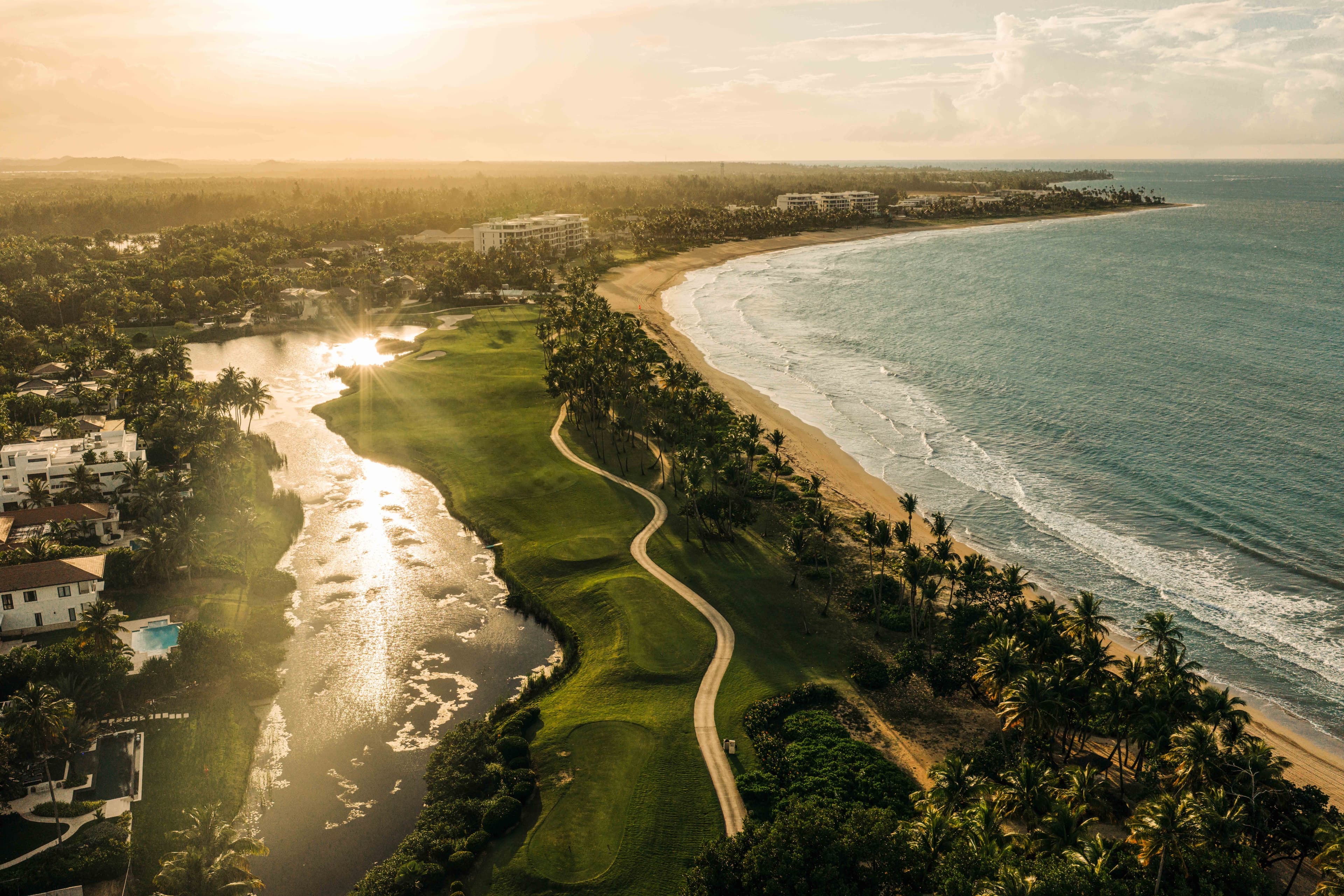
Beyond the district, PRISA Group, a family-owned developer, builder and owner founded in 1989, employs more than 4,300 people in Puerto Rico and Florida. Its portfolio includes Dorado Beach, a 2,000-acre, $2 billion master-planned community anchored by Dorado Beach, a Ritz-Carlton Reserve; four Hyatt hotels (the two in the district plus others in Bayamón and Manatí); Fairfield by Marriott Luquillo; Marriott-branded properties in Orlando and Tampa; and residential communities such as Sabanera Dorado.
Economic impact
More than its impact on the audience, the show promises a significant economic impact on the island, estimated by Cirque management at $63 million.
“We have very interesting measurements of similar projects in other regions of the world where we see a huge economic impact of people coming for two, three or four nights,” Bayle-Labouré said, explaining why the PRTC has been critical to the project.
As he sees it, the residency will benefit local hotels and restaurants, as visitors drawn by the production spend on accommodations, dining and other experiences during their stay, creating a ripple effect across Puerto Rico’s broader tourism economy.
The average length of stay for visitors to the island used to be 2.6 nights and is now 4.1, said Stubbe, who expects it to keep rising. Foundation for Puerto Rico’s Visitor Economy Performance model puts it even higher, at about five nights, with average daily spending of $280 per visitor in 2025.
An analysis by Caribbean Business validates Bayle-Labouré’s projection. Cirque’s own track record offers a guide. In Andorra, the 2015 production Scalada Stelar drew more than 107,000 spectators over 22 performances. Some 85% were tourists who stayed overnight, an average of 2.33 nights, and Andorran officials put the economic impact at 21.3 million euros, about nine times the event’s net cost of 2.5 million euros, Andorra Business reported. Since 2013, the Andorra shows have drawn more than 900,000 people, 83% of them from abroad, according to the trade publication Blooloop. In Trois-Rivières, Quebec, this summer’s Tribute Series show sold out all 23 performances to 78,473 spectators, 78% of them from outside the region.
The Bad Bunny residency became the model for Cirque du Soleil Le Lo Lai.
Applied to Puerto Rico, those benchmarks point to a meaningful impact, though on a much smaller scale than the Bad Bunny phenomenon. Le Lo Lai‘s 30 performances at 2,500 seats add up to 75,000 tickets. If 85% to 95% of seats sell, and 30% to 50% of buyers come from off the island and stay three to five nights at the daily spend in the Foundation for Puerto Rico model, attendees would spend roughly $16 million to $50 million on lodging, dining and other experiences, with about $30 million the most likely figure.
Adding the production’s investment of more than $10 million, much of it spent locally on cast, crew and services, plus the indirect and induced activity that spending sets off, the residency’s total economic footprint would likely land between $50 million and $70 million, bookmarking Cirque’s $63 million expectation.
Timing will matter. The show runs from February through early April, the height of the winter season, when San Juan hotels already run near capacity, so part of the spending would replace that of other visitors rather than add to it. Bad Bunny’s residency, by contrast, filled hotels during the slow summer months.
That estimate is roughly a tenth of the $713 million most often cited for Bad Bunny’s residency, a gap that reflects scale more than appeal. That figure comes from a survey by Gaither International, which counted about 600,000 attendees and tallied all of their spending: about $126 million by Puerto Rico residents, $507 million by visitors from the U.S. mainland and $80 million by international visitors. It is a measure of gross spending rather than new money brought into the island, since 55% of attendees lived in Puerto Rico, and economists at Advantage Business Consulting have noted that the venue’s capacity points to closer to 450,000 attendees.
Other studies, using more conservative methods, put the residency’s impact at about $200 million (Discover Puerto Rico and economist Indira Luciano), about $380 million (Advantage Business Consulting, for the Municipality of San Juan) and $400 million (Moody’s Analytics). Scaled to Le Lo Lai‘s 75,000 seats, the full range of those studies implies an impact of $25 million to $90 million, bracketing CB’s estimate.
Spreading the wealth
For Fede, the Cirque Le Lo Lai residency is but the launch of a PRISA Presents business sure to hold a long series of unique, experience-driven shows and attractions for years to come, spread across this diverse venues menu.
At first, given that these properties sit in the extended San Juan metro area, that’s where Fede expects to place the firm’s events. But he’s open to branching out to island-wide locations later, in line with the industry’s bigger imperative to spread the wealth.
“We’re all in on that, always exploring and analyzing what the market needs at any given time, and more so as we move to consolidate the industry’s vision and organize ourselves accordingly. Some of us are already in conversations to place Discover in the lead of a process to take the visitor economy where we’re convinced it can go.”
Bigger than a series of events, perhaps next in line for Puerto Rico, is development of large-scale tourism projects like Sentosa Island in Singapore, Sunway Lagoon in Malaysia, The Land of Legends in Turkey, and Sandos Caracol Eco Park in Playa del Carmen, Mexico.
And that, as the world has seen in numerous destinations and as FPR’s research has shown, is how the best visitor destinations are built. As PRISA Presents pioneers the iconic, must-see event-experience front and other producers surely follow, destination developers will pop up on other fronts, perhaps building theme parks like Sentosa Island in Singapore, Sunway Lagoon in nearby Malaysia, The Land of Legends in Turkey, or Sandos Caracol Eco Park in Playa del Carmen, Mexico.
The Rebook coalition of independent hotels is spearheading an organized ecosystem of its own in Puerto Rico to build an integrated network of spots, shops and inns offering the sort of authentic, homegrown “small” attractions, in every nook and cranny of the island, to draw visitors throughout.
If Puerto Rico is to reach and surpass the $12 billion visitor-spend mark in the coming years, with ever more tourists gracing our town squares, mountain adventures, quaint spots and venues, making the visitor economy the new go-to dream job and profession to keep the population here at home and inspire a new generation of destination innovators, that seems like the journey to pursue.
Canada-based company calls it one of its most ambitious shows ever; Le Lo Lai will consist of live music and acrobatic performances, with local talent making up a large part of the cast and crew