The 48-hour rotation affects seven municipalities, while authorities warn restrictions could expand if conditions worsen.
SAN JUAN/TRUJILLO ALTO — More than 500,000 people in Puerto Rico began facing water rationing Friday as the government implemented scheduled service interruptions due to critically low levels at Carraízo Reservoir, the main water source serving at least seven municipalities.
Residents entered the rationing period after storing as much water as possible in preparation for the cuts.
Carraízo, located in Trujillo Alto near San Juan, has fallen below 38 meters, placing the reservoir within the level classified as requiring operational adjustments. Puerto Rico is experiencing its first major drought since 2015.
The government and the Puerto Rico Aqueduct and Sewer Authority (PRASA) implemented a 48-hour rotation affecting San Juan, Trujillo Alto, Carolina, Canóvanas, Loíza, Gurabo and Juncos.
The affected area includes approximately 183,000 residential and commercial accounts, representing an estimated half-million people.
Drought Conditions Affect 80% of Puerto Rico
Drought conditions now affect approximately 80% of Puerto Rico, with parts of the south-central and western regions experiencing extreme drought.
The island recorded its driest July since records began in 1899, receiving just 0.54 inches of rainfall — about 9% of the normal amount.
“I have a feeling this is going to last a long time,” metropolitan-area resident Elena Cabrera told EFE after leaving a supermarket where she purchased bottled water for two elderly neighbors.
Cabrera said she had stored and purchased water before rationing was announced and blamed years of what she described as poor decisions involving Puerto Rico’s water system.
Customers Divided Into Two Rationing Zones
To manage the situation, PRASA established 35 water distribution points, known locally as oases, in San Juan, Carolina, Trujillo Alto, Loíza and Canóvanas.
Customers were divided into Zone 1 and Zone 2.
Zone 1 is scheduled to have water service Friday and Saturday before losing service Sunday, while water service for Zone 2 was interrupted at 6 a.m. Friday.
However, some Zone 1 residents did not see service restored as scheduled. PRASA said a pipeline failure from the previous week meant storage tanks first had to refill before potable water could reach customers.
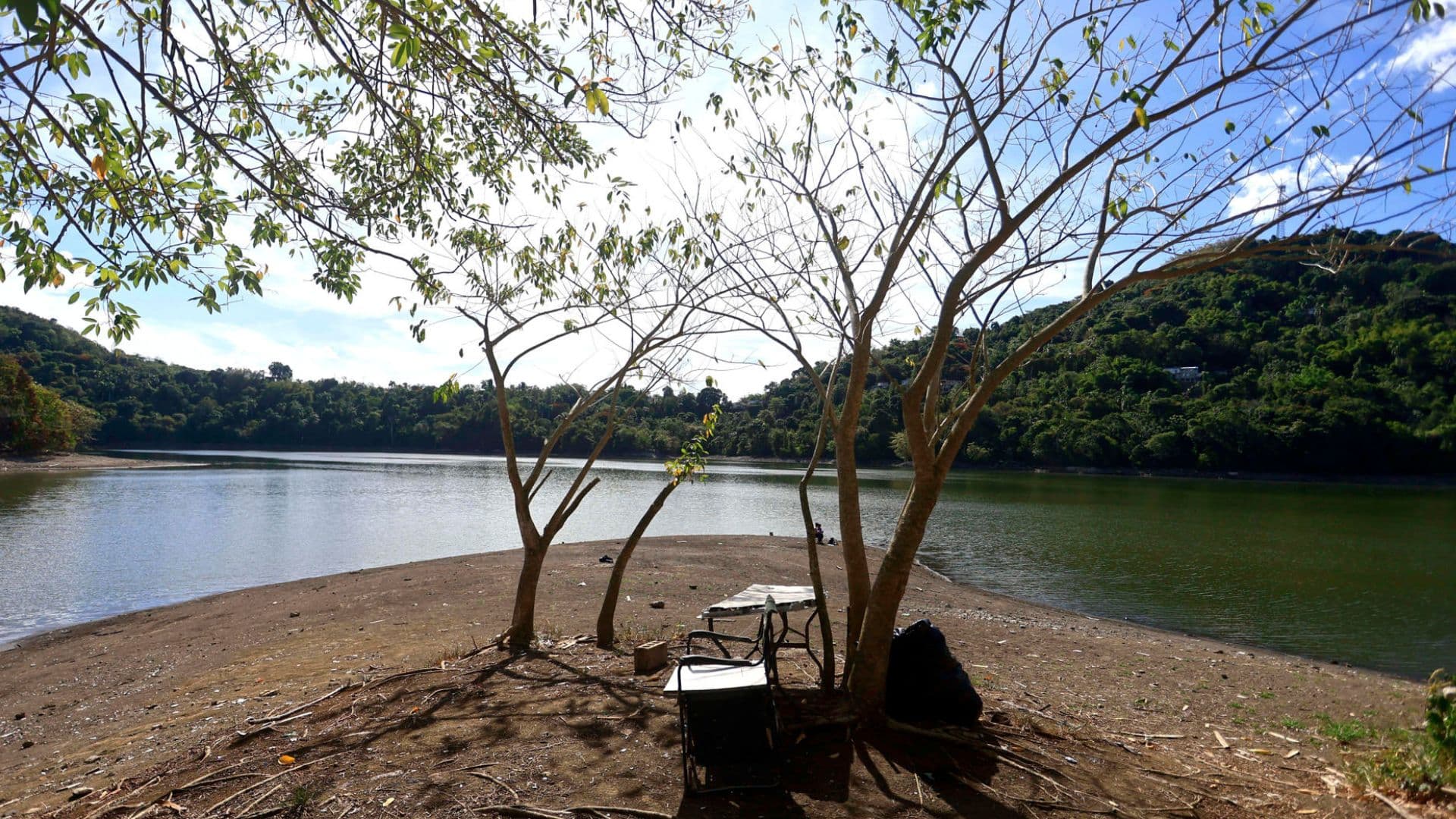
The drought’s impact is also visible at Carraízo, where dead fish have appeared along the shoreline and falling water levels have exposed rocks hundreds of meters from the reservoir’s gates.
Yadalis González Meléndez, who was fishing along the exposed rocks, told EFE she was concerned about the reservoir’s declining level and had noticed fewer fish in the area.
Rationing Could Expand
Puerto Rico’s government has warned that scheduled water interruptions could eventually extend to additional municipalities if drought conditions continue.
The government declared a state of emergency over water use in late July.
In addition to Carraízo, the Cidra Reservoir has required operational adjustments, while five other reservoirs are under observation and could face similar measures.
The rationing plan itself has two stages.
Phase 1, which began Friday, establishes scheduled interruptions every 48 hours. Under Phase 2, customers would receive water for only one day followed by three days without service.
The drought is occurring amid El Niño conditions, which are associated with higher temperatures and are expected to intensify between August and October, potentially affecting rainfall patterns, according to the World Meteorological Organization.
Schools and Businesses Also Face Disruptions
The water shortage extends beyond households.
Businesses and schools must also adapt to scheduled service interruptions. Schools affected by rationing are expected to operate on reduced schedules on days without water.
Officials have not ruled out a transition to virtual classes if conditions deteriorate, similar to remote-learning arrangements implemented during the COVID-19 pandemic.
With rainfall remaining limited and several reservoirs under observation, authorities have cautioned that Puerto Rico’s water rationing measures could become both more restrictive and more widespread if drought conditions persist.