Puerto Rico’s transportation infrastructure strategy is entering a new phase, one driven less by privatization and more by direct public investment in ports and airports, according to the head of the Puerto Rico Ports Authority, who says the government is pursuing hundreds of millions of dollars in maritime and aviation projects while resisting calls for additional public-private partnerships involving key facilities.
In a wide-ranging interview, Norberto Negrón Díaz, executive director of the Puerto Rico Ports Authority, laid out an ambitious agenda that spans everything from transforming Ponce and Mayagüez into cruise destinations and rebuilding aging cargo piers in San Juan, to expanding airport infrastructure across the Island, reviving aerospace ambitions in Ceiba, strengthening cargo security and finding a new economic purpose for the underutilized airport in Humacao.
At the center of this vision is a philosophy that Puerto Rico should retain ownership and control of its maritime assets even as it continues working with private operators under existing arrangements.
“We already have those two,” the executive director said, referring to the concessions governing San Juan cruise operations and Luis Muñoz Marín International Airport. “The airports and piers, while I am director, belong to Puerto Rico.”
The official said Gov. Jenniffer González Colón has directed him to focus on ensuring that existing partnerships comply with their contractual obligations rather than pursuing additional concessions.
While he acknowledged that individual facilities may continue to use private operators or concessionaires, he emphasized that the administration is not seeking to relinquish control over additional maritime infrastructure.
That policy comes as the agency oversees what amounts to one of the largest transportation infrastructure programs currently underway in Puerto Rico.
Authority documents show major investments advancing simultaneously across cruise terminals, cargo facilities and regional airports, with projects in various stages of design, procurement and construction.
Aerospace Ambitions Paused by Military Presence in Ceiba
One of the most intriguing projects discussed during the interview involves the long-term effort to develop aerospace operations in Ceiba and Roosevelt Roads.
Negrón confirmed that plans to establish aerospace-related activities, including commercial space operations, remain part of the governor’s policy agenda. However, he acknowledged that those efforts have largely been put on hold because of the expanded U.S. military presence in Ceiba.
Prior to the military deployment, the Ports Authority had been in discussions with aerospace company Firefly about potential operations at the Ceiba airport. The authority also commissioned studies related to environmental and regulatory requirements needed for aerospace development and space-launch activities.
“Firefly was interested at one point,” he said. “The military presence put those initiatives on hold.”
Negrón stressed that the plans remain alive and that the government is prepared to reactivate them whenever conditions permit.
“If the military leaves tomorrow, we can move forward with all those initiatives,” he said.
Cruise Lines Eye Ponce and Mayagüez
While aerospace projects await greater clarity, efforts to expand Puerto Rico’s cruise sector appear to be moving forward.
The executive director disclosed that major cruise operators have expressed strong interest in bringing ships to Ponce, potentially creating a second major cruise destination outside San Juan.
“There is great interest in bringing cruise ships to Ponce,” he said. “I would not be surprised if next year there are one, two or three cruise ships calling there.”
Although the Ports Authority does not directly control the Port of Ponce, the official said he has participated in discussions with cruise operators and has actively promoted the southern port.
Interest is also emerging in Mayagüez, where officials are evaluating opportunities to receive cruise vessels and integrate maritime tourism with broader economic development initiatives underway in western Puerto Rico.
Those conversations coincide with efforts to expand ferry and maritime connections between Puerto Rico and the Dominican Republic through Mayagüez, creating what officials hope can become a broader transportation and tourism hub.
Behind those ambitions is an extensive package of cruise-terminal investments in San Juan Bay. Authority project documents show a planned $104 million redevelopment of Pier 1 in Old San Juan that would create a new 1,105-foot cruise pier, a new home-port cruise terminal, expanded ground transportation facilities and commercial areas.
Additional rehabilitation work is planned at Pier 4, while an expansion project at Piers 11 and 12 calls for a new 1,350-foot seawall and another terminal designed for home-port cruise operations.
Cargo Modernization Extends Throughout San Juan Harbor
The Ports Authority currently has more than $140 million worth of maritime projects underway or in development, much of it focused on facilities that have not undergone significant rehabilitation since the 1970s.
The flagship project remains the rehabilitation of the Outfitting Pier at Pier 15 in San Juan.
“If you look at it today, the entire pier is condemned,” Negrón said. “It cannot be used for anything.”
The rehabilitation, estimated at approximately $10 million, will restore a facility that has been unusable for years and will add two much-needed cargo berths to one of the Caribbean’s busiest ports. The project also includes structural rehabilitation and installation of a fire-suppression system for hazardous cargo storage areas. Authority documents indicate the project is already about 95% through the design phase.
The cargo side of San Juan Harbor is undergoing even broader modernization. Nearly $100 million has been earmarked for structural rehabilitation of sections C, D and N-O at the Puerto Nuevo cargo complex, while another project will add a new fire-suppression system to the facility. Meanwhile, an $86 million reconstruction project is advancing at the Army Terminal, one of the largest cargo-infrastructure investments currently on the authority’s books.
The agency is also evaluating the construction of three additional multipurpose piers in either Cataño or Toa Baja. A feasibility study now being procured will analyze construction costs, environmental requirements, financing options and operational models.
The study will examine whether the facilities should remain publicly owned, be concessioned or be developed through another structure.
In Yabucoa, the agency is also moving forward with a project involving Puerto Rico Concrete to establish a specialized import-export terminal for construction materials while preserving government access to the facility if additional cargo capacity becomes necessary.
Defending the End of Cargo Scanning
Negrón devoted considerable attention to defending the government’s decision to terminate Puerto Rico’s cargo-scanning contract with S2 Services Puerto Rico.
According to the official, the authority remains engaged in litigation with the former operator and has withheld nearly $15 million in payments while the court case proceeds.
“Since June of last year, not a single payment has been made to the company,” he said. “All of that money is here at the Ports Authority.”
The executive director repeatedly cited findings by Puerto Rico’s comptroller as justification for ending the arrangement, which he described as deeply flawed. He argued the system billed based on cargo manifests rather than the actual number of containers processed, and failed to generate meaningful law-enforcement results despite operating for roughly 15 years.
To address concerns about security following the scanners’ removal, the authority has created a new Port Police force consisting of nine officers, with additional recruitment underway. Officers are empowered to inspect facilities, issue citations and make arrests.
“My intention is that it become like the Port Authority Police in New York,” Negrón said.
Aviation Investments Spread Across the Island
The largest concentration of airport investment is taking place in Aguadilla.
More than $450 million is being invested in Rafael Hernández Airport, including runway reconstruction, terminal upgrades, security enhancements, parking improvements and rehabilitation of the control tower.
Negrón said the government views Aguadilla as having the potential to evolve into both an international tourism airport and a major cargo platform for Puerto Rico’s manufacturing sector.
Project records show that investment includes a $265 million runway reconstruction program currently underway, a second $44 million runway and taxiway phase, a proposed $75 million terminal expansion that would add four passenger boarding bridges and a larger departures hall, a new Customs and Border Protection facility for international arrivals, security enhancements and rehabilitation of the air traffic control tower.
“We recognize that Aguadilla has the potential not only to be an international tourism airport but also a cargo airport,” Negrón said.
The government has established an interagency working group to explore ways of transforming Aguadilla into a major air-cargo platform serving Puerto Rico’s manufacturing sector and supporting the Island’s broader logistics ambitions.
The airport recently secured additional international service, including new flights to the Dominican Republic.
Beyond Aguadilla, airport investments extend throughout the Ports Authority system.
At Luis Muñoz Marín International Airport, a $60 million FEMA-funded cogeneration project is being designed to provide resilient backup power capable of sustaining airport operations and tenant services for up to seven days during emergencies.
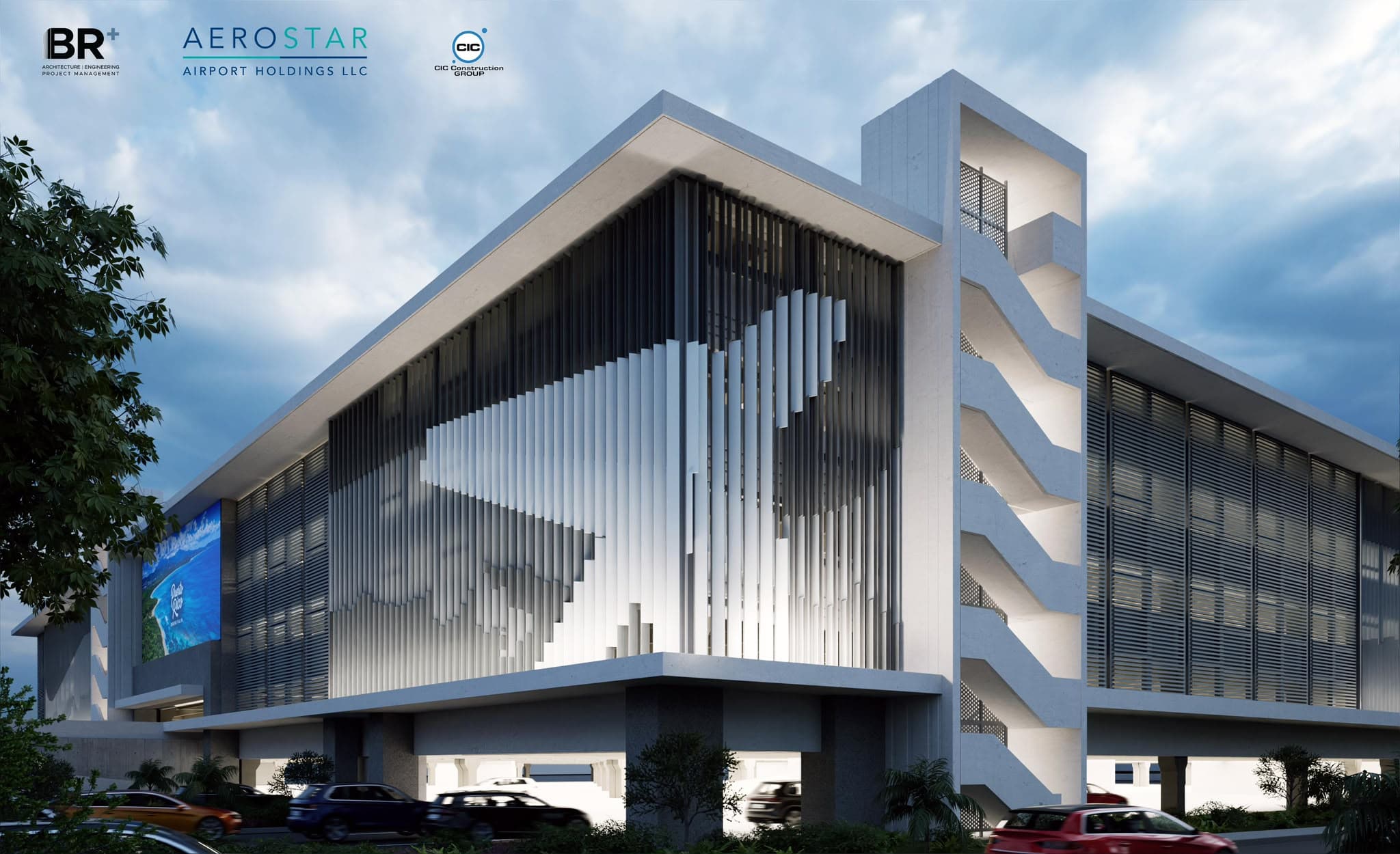
The 2,600-space structure at Luis Muñoz Marín responds in part to rising parking demand, even as airport traffic dips and lodging and visitor spending climb
A neighboring company says the expansion into a protected buffer zone should not be validated through a permit renewal, as a court-ordered review moves to the agency
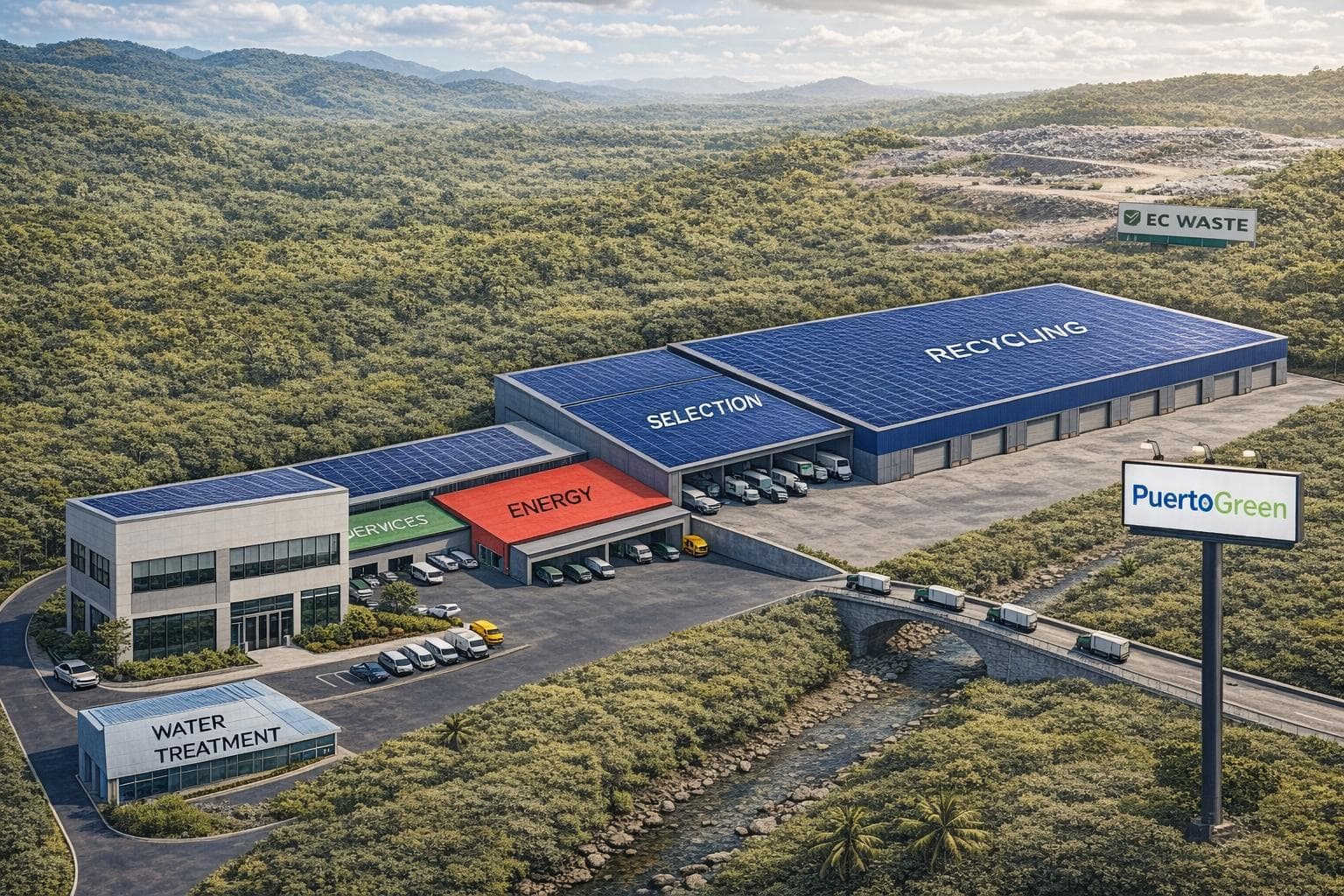
After decades missing the 35% mandate, Puerto Green’s $210 million, incineration-free complex in Humacao will lift the island to 20%, advance circular economy, include $100 million in federal funds