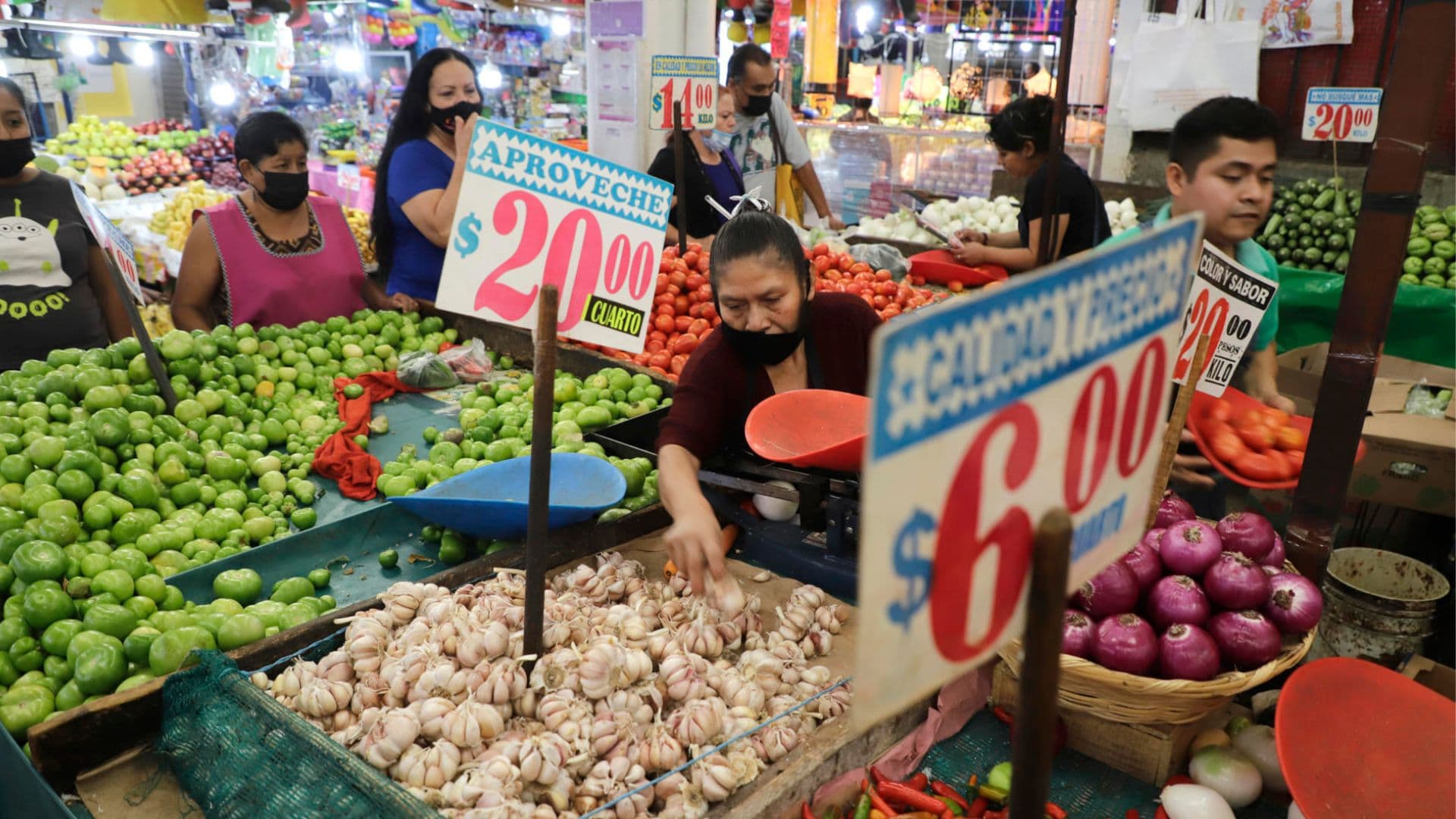
Puerto Rico’s grocery shoppers are fundamentally changing their buying habits. They are making fewer supermarket trips, cutting fill-in visits nearly in half and planning purchases with greater discipline than a year ago. At the same time, they are reshaping their baskets—spending more on fresh meat and produce, less on processed foods, and increasingly opting for protein supplements and zero-calorie beverages as health shifts from a personal aspiration to a decisive purchasing factor.
Those behavioral shifts are the central finding of MIDA’s 2026 Consumer Radiography, presented Wednesday before more than 2,000 food industry executives at the Puerto Rico Convention Center. The study — conducted through 1,600 in-person household interviews across the island between February and April, supplemented by ethnographic home visits and in-store shop-alongs in May — was presented as the opening session of the MIDA Conference & Food Show. MIDA President Félix Aponte described the gathering as the Caribbean’s largest food industry convention. The event runs through Saturday at the Puerto Rico Convention Center and features more than 550 exhibitors from Puerto Rico, along with international pavilions representing the United States, the Dominican Republic, Costa Rica, Ecuador, Spain and Mexico.
Fewer trips, smaller baskets, more deliberate decisions
The numbers are concrete. The share of consumers making four or more large shopping trips per month fell 11 percentage points compared to 2025. Fill-in shopping trips declined from an average of three per month to two. Among respondents earning less than $10,000 annually — 21 percent of the sample — most reported making only one shopping trip per month.
Average monthly food spending fell five percent, or roughly $19, settling at $363. Household product spending fell even more sharply — 14 percent, or about $18. These declines are happening even as Puerto Ricans already spend a disproportionate share of their income on food: 12.7 percent, compared to the 8.1 percent national average in the United States.
The consumer has responded by becoming more strategic before ever leaving the house. The share of shoppers who verify what they already have at home before making a list rose from 86 percent in 2025 to 92 percent in 2026. Seventy-three percent bring a written list. Sixty-nine percent plan the meals they intend to cook from the purchase, up from 66 percent. Half of respondents compare prices across multiple supermarkets before deciding where to shop; 43 percent check supermarket websites before leaving home. Overall shopper use — print or digital — was reported by 72 percent of respondents.
“The planning is no longer an advantage for the consumer — it has become a necessity,” said Félix J. López of Econo. “And the more economic pressure a household faces, the more strategic each purchasing decision becomes.”
The basket is being reorganized
What goes in the cart is also changing. Fresh and frozen meat remains the most consistent item across all consumer profiles: 93 percent buy chicken, consuming it three to four times per week; 68 percent buy beef; 61 percent purchase seafood or fish; and 54 percent buy pork. The share of consumers who include meat in their primary shopping trip rose from 64 percent in 2025 to 76 percent in 2026 — the category’s strongest showing in the study’s recent history. Thirty-two percent of respondents, however, said they have changed the amount or type of meat they buy due to prices, while 57 percent said they continue buying the same.
The single largest year-over-year basket gain was fresh vegetables, which rose from 33 percent in 2025 to 43 percent. Water rose from 25 percent to 33 percent. Rice fell from 64 to 62 percent of main-trip baskets; eggs from 48 to 47 percent.
In the fill-in basket — the smaller, more frequent run — bread and eggs led, but refrigerated milk edged down while UHT milk rose from 16 to 20 percent. In market data, refrigerated milk sales declined while half-and-half, lactose-reduced and specialty milks grew.
In beverages, the shift away from sugar is measurable and sustained: regular soda declined 7 percent in volume between 2024 and 2026; zero-calorie soda grew 55 percent; prebiotic soda grew 70 percent. Still water grew 1 percent and sparkling water 14 percent.
Protein is the clearest growth story in the basket. Twenty-eight percent of respondents said they increased protein consumption over the past 12 months. Consumers report eating protein-rich foods an average of six times per week. Thirty-eight percent said they recently bought or consumed protein supplements — most commonly ready-to-drink shakes (59 percent), yogurt (48 percent) and protein bars (33 percent). Units sold of high-protein yogurts and shakes grew from 220,582 for the 12 months ending April 2024 to 623,612 for the 12 months ending April 2026.
Forty-four percent of respondents said they read nutritional labels before buying — a figure that rises to 73 percent among health-oriented shoppers.
Why the shift: income pressure and the psychology of uncertainty
The structural explanation is straightforward. Forty-five percent of respondents reported annual household incomes below $20,000, with 21 percent earning $10,000 or less — average household income in the sample was $27,115. More than 61 percent of monthly budgets flow to three line items: transportation ($677), housing ($581) and food and household products ($472).
The macro data reinforces the pressure consumers are describing. Treasury figures cited in the study showed IVU collections fell 3.33 percent, food import revenues dropped 14.44 percent, energy consumption fell 2.8 percent and alcohol excise taxes fell 9.7 percent. Total imports for the first four months of 2026 fell 9.2 percent compared to the same period in 2025 — a gap of $1.76 billion. DDEC data showed retail sales fell 1.2 percent this year overall, while supermarkets and beverage stores managed 0.8 percent real growth.
Fifty percent of respondents said their household economic situation is the same as a year ago; 30 percent said it is worse. Looking ahead, 27 percent expect conditions to get somewhat worse over the next year, and 9 percent expect conditions to get much worse.
“When people experience prolonged high inflation and receive constant news of future uncertainty — wars, tariffs, reductions in federal funds — they change their behavior,” said Manuel Reyes Alfonso, MIDA’s executive vice president. “It could trigger a contraction in spending, a form of preventive saving, because consumers don’t know if prices will keep rising, if there will be shortages, or whether the situation will lead to a recession.”
Federal programs: the undercurrent in every purchasing decision
Beneath the behavioral data runs a current of anxiety over federal assistance programs. The study found that 43 percent of respondents receive Nutritional Assistance Program (PAN/SNAP) benefits — a program that delivers more than $3 billion annually to 1.2 million people across more than 700,000 households, 58 percent of them headed by women, with 35 percent of recipients age 60 or older.
Among PAN recipients, 46 percent said reductions would affect them gravely — making it difficult to buy food and meet basic health needs. Among those who said they would be impacted, 24 percent said they would switch to cheaper food; 23 percent would buy less; 22 percent said they would need to find additional work; and 17 percent would reduce or eliminate meals outside the home.
On Medicare, 25 percent of all respondents — not just recipients — said reductions would affect them gravely. Women expressed the highest concern, at 30 percent.
“There is uncertainty, and a clear awareness of how important these programs are for thousands of Puerto Rican households,” said Diana Rodríguez of Lighthouse Strategies, the firm responsible for the study.
Thirty-three percent of respondents said they have considered leaving Puerto Rico within the next one to three years, a figure that climbs to 60 percent among Generation Z and 57 percent among Millennials. The primary stated reason: a better quality of life (28 percent).
Brands, channels and the $50 million Amazon gap
The reorganized basket has implications for brands and retailers. Four private-label brands appeared among the most-purchased by consumers this year, with Great Value and Econo leading in food and frozen categories, and Member’s Mark and Kirkland gaining ground in snacks.
Brand loyalty, the study found, does not break because of competition — it breaks when a brand stops delivering on its specific promise to a specific consumer profile. Budget-oriented shoppers leave when prices rise too sharply; health-conscious shoppers leave when benefits are not communicated clearly; convenience shoppers leave when a product is unavailable. “The preferred brand is not always the purchased brand,” was a finding the study framed as the aspirational gap between consumer desire and purchasing reality.
For store selection, price remains the top attribute but fell from 25 to 23 percent. Product variety rose from 11 to 17 percent, and fruit and vegetable quality jumped from 7 to 12 percent. Econo leads in traffic (50 percent), followed by Walmart (38 percent), Sam’s Club (33 percent), Selectos (28 percent) and Costco (19 percent).
Online grocery purchasing rose from 16 percent in 2025 to 19 percent in 2026, led by Gen Z and Millennials. Amazon tied Econo ToGo at 22 percent of online food shoppers — up from 17 percent in 2025 — with 46 percent of Amazon food buyers citing price and 43 percent saying they cannot find the products at local supermarkets. Top Amazon categories: crackers, pet food, sauces, protein powder, coffee and nutritional shakes.
“If we analyze these categories, it could represent an opportunity cost of $50 million,” said Doris Pastoriza of Contáctica. “There is an invitation for local retailers to examine whether those categories are available and visible in local stores.”
One in four respondents (25 percent) reported purchasing at least one product based on digital influence — TikTok, Instagram Reels or YouTube Shorts — and 68 percent of those said the product was food. The “Hecho en Puerto Rico” seal retains broad resonance: 97 percent of respondents buy locally made products, with 77 percent identifying them by the seal.
The health imperative reshaping GLP-1 households
The study’s health findings converge on a consumer who says they want to take care of themselves and is spending in that direction. The main obstacle: cost, cited by 47 percent of respondents. Average monthly wellness spending — including gym memberships, vitamins and serums — was $95. Twenty percent of respondents reported using some form of wellness treatment in the past 12 months, including GLP-1 medications, vitamin injections or IV serums.
GLP-1 adoption stands at 8 percent overall. Households with at least one user are cutting food spending by 6 to 9 percent, primarily in chips, chocolate, cookies and soft drinks — and increasing protein consumption to preserve muscle mass. KPMG estimates a $48 billion reduction in global food and beverage spending attributable to GLP-1 use by 2034.
“There is a consumer who wants to take care of themselves and is spending in that direction,” said Víctor Curet of Farmacias Caridad. “Whoever understands that will gain ground.”