Record Heat Drained the World’s Rivers and Reservoirs; Puerto Rico’s Summer Drought Was a Preview
A new Science study on 2023-2024, a first-ever run of days above 2°C and a historic El Niño, all point to more stress on the island’s reservoirs, making water the first test of its adaptation agenda
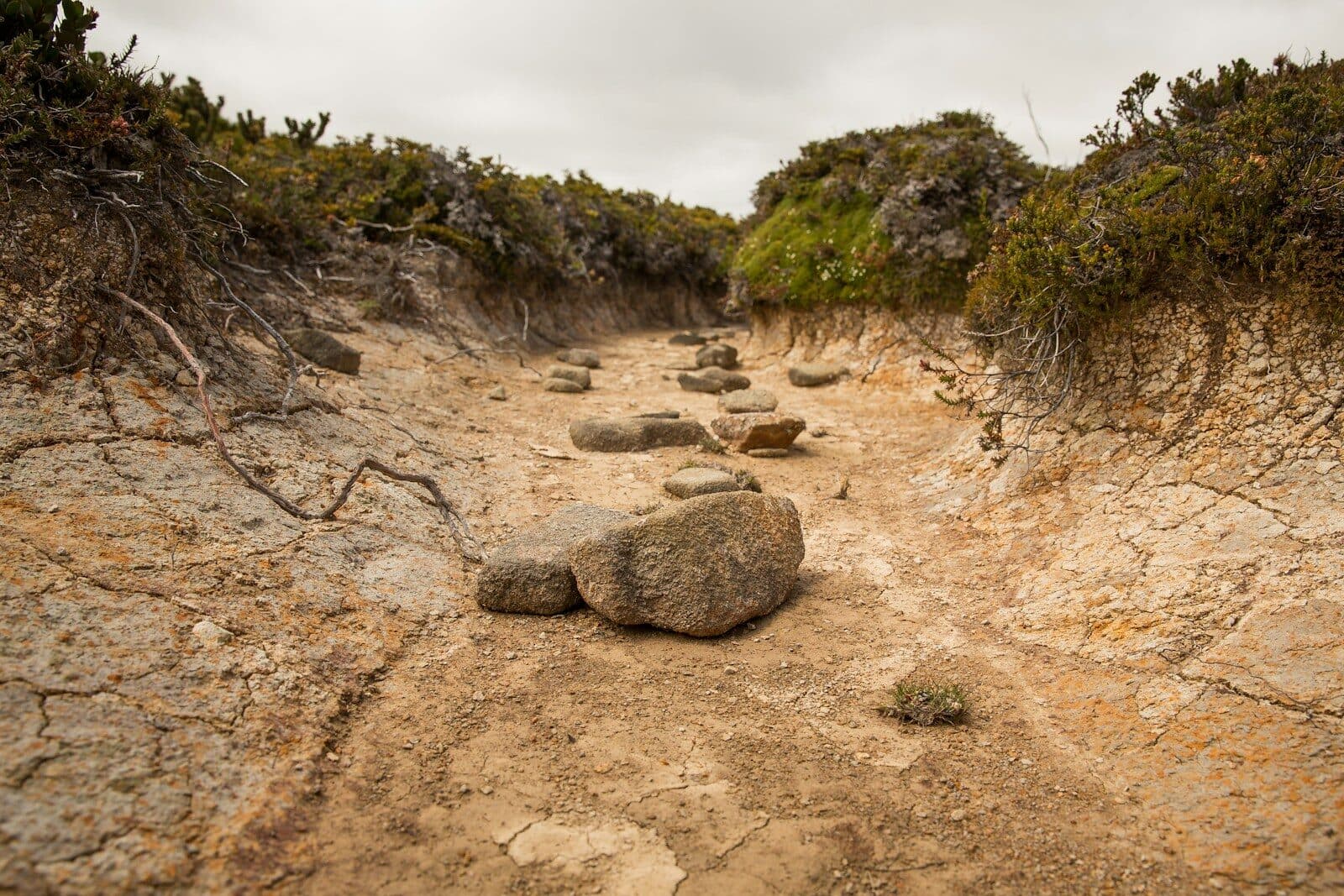
The two hottest years on record did something climate science did not fully anticipate: they drained the planet’s surface water, even in humid regions.
A study published Thursday in the journal Science and reported by Agencia EFE found that during the extreme heat of 2023 and 2024, global river discharge fell about 5.7% and the active water stored in lakes and reservoirs dropped 9.5%, compared with the 1991-2020 average.
The study published the same week the planet ran hotter than ever measured. From Nov. 18 to 23, daily global temperatures stayed more than 2°C above pre-industrial levels, the first such streak on record, according to the European Union’s Copernicus Climate Change Service.
And it came three months after Puerto Rico rationed water to about 180,000 customers because its largest metropolitan reservoir was running dry.
Taken together, the three facts make a case that this newspaper laid out on Nov. 23, after the COP31 climate summit collapsed in Turkey: temperatures are headed higher, and adaptation is now Puerto Rico’s main climate agenda. Water may be where that agenda is tested first.
The island can keep reacting one emergency order at a time, or it can make water security the first deliverable of its adaptation agenda while the reservoirs are still recovering.
What the study found
An international team including Yongqiang Zhang of the Chinese Academy of Sciences combined streamflow records from 150 major river basins with satellite data on more than 1.2 million lakes and reservoirs, covering 1991 to 2025.
They found three phases: wide fluctuations from 1991 to 2006, relative stability from 2007 to 2022, and then an abrupt break in 2023 and 2024, the largest decline in their record. River flows began to recover in 2025.
South America was hit hardest, with streamflow down 17.8% and surface storage down 16.5%, according to the journal’s summary of the study. The Amazon and La Plata basins recorded their lowest flows in four decades. North America and Africa followed in severity.
The cause, the authors said, was an unusual combination of El Niño in the Pacific and record warmth in the tropical North Atlantic, which together pulled moisture away from land.
Two findings matter most for an island. The first is that more rainfall did not mean more usable water. Moisture was redistributed toward the oceans and away from continents, and higher temperatures raised evaporation and dried out soils.
The second is a warning: a warmer Atlantic may make severe El Niño-related droughts more likely, even if El Niño events themselves do not get stronger.
Antonio Collados, a scientist at the Spanish Geological and Mining Institute, added a third point in a reaction to the study. Aquifers act as strategic reserves that cushion droughts, he said, so a prior decline in groundwater could have amplified the losses in surface water during those exceptionally hot years.
Six days above 2 degrees
The November heat streak sharpened the point. The daily global temperature peaked at 2.24°C above the 1850-1900 average on Nov. 23, a new daily record, beating the previous high of 2.05°C set in November 2023, according to Copernicus data. Before this month, the 2°C mark had been crossed only on scattered days in late 2023 and early 2024.
“For the first time, the world has spent six consecutive days with a temperature that exceeds pre-industrial levels by 2°C,” said Samantha Burgess of the European Centre for Medium-Range Weather Forecasts.
Part of the cause is in the Pacific. NOAA’s Climate Prediction Center gives a strong-to-very-strong El Niño better than a 79% chance of lasting through March, with a meaningful chance it becomes the strongest since 1950.
Forecasters say it could help make 2027 the hottest year on record, which matters for Puerto Rico because the conditions the Science study blamed for 2023-2024, a strong El Niño and a hot tropical Atlantic, are the ones the Caribbean faces again.
Puerto Rico’s dress rehearsal
The island has already lived the scenario. On July 31, Gov. Jenniffer González signed executive orders declaring a water emergency and activating the National Guard. On Aug. 7, the Puerto Rico Aqueduct and Sewer Authority (PRASA) began a 48-hour rationing plan for about 180,000 customers served by the Carraízo reservoir in San Juan, Carolina, Trujillo Alto, Loíza, Gurabo, Juncos and Canóvanas.
At the peak, more than 44% of the island was in extreme drought, according to the U.S. Drought Monitor, and the U.S. Department of Agriculture expanded its drought disaster declaration.
The crisis exposed management strain as well as weather. The chairman of PRASA’s board resigned in August, saying rationing had never been discussed with the board, and the governor said she was evaluating dry dredging of Carraízo.
PRASA’s president said the utility was counting on late-summer rains, noting the island’s climate history in El Niño years. Rationing was paused and resumed as the rains came and went before the governor ruled out restarting it in early October.
The recovery is real but incomplete. As of Oct. 8, about 2.3 million residents lived in areas under some level of drought. By Nov. 5, extreme drought had disappeared after heavy rains, though 51.6% of the island remained abnormally dry or in drought.
On Nov. 17, PRASA reported that La Plata, the other major metropolitan reservoir, was still in its “operational adjustments” category, the level that precedes rationing.
Why the island’s water bodies are exposed
Puerto Rico’s water system starts with a structural handicap. Most reservoirs were built in the early and middle 20th century, and the island’s steep, rainy terrain fills them with sediment quickly.
Surveys by the U.S. Geological Survey found storage losses of 12% to 81% in 14 principal reservoirs, averaging 35%. Carraízo itself had lost more than half its original capacity by 1985, falling from 21,700 to about 10,100 acre-feet, before later dredging.
Every percentage point of storage lost to silt is water that is not there when the rain stops.
The climate outlook adds pressure. A 2021 study by USGS and U.S. Forest Service scientists, using high-resolution models, projected a robust drying pattern for Puerto Rico by 2041-2060, with annual rainfall reductions of up to 25% in some of the island’s ecological zones and the largest declines in the afternoon and evening storms that feed reservoirs.
A 2025 study of the Luquillo Mountains, which supply eastern Puerto Rico, projected falling rainfall, more consecutive dry days and depleted soil moisture through the end of the century.
The Science study suggests those projections may understate the problem in hot years. If heat redistributes moisture toward the ocean and dries out soils, an island with small, silted reservoirs and short rivers has little buffer.
Higher temperatures also raise evaporation from reservoir surfaces and demand from customers at the same time.
Groundwater is the other buffer, and Collados’s point applies here. Coastal aquifers supplement reservoir supply in parts of the island, but pumping during droughts and rising seas raise the risk of saltwater intrusion. A depleted aquifer turns a dry year into a crisis.
From enduring droughts to preparing for them
The COP31 analysis argued that the global process can no longer be counted on to keep temperatures down, so places like Puerto Rico should plan, as some scientists now advise, for 2°C by 2040 and 3°C by the 2050s.
In water, planning means treating 2026 as the baseline for a normal bad year rather than an exception.
For government and PRASA, that points to a capital agenda: restoring reservoir capacity through dredging and watershed protection, cutting losses in the distribution network, interconnecting systems so one reservoir can back up another, protecting aquifers, and building drought triggers and communication plans that work before the board, the customers and the National Guard learn about them.
For companies, it means water-risk audits. Pharmaceutical and medical device plants, hotels, hospitals, food processors, small businesses, and commercial facilities, all depend on reliable water, and a drought disrupts them just as surely as an outage on the grid.
It also points to the opportunity the COP31 analysis identified. Water management, reuse, leak detection, desalination, sensors and drought analytics are among the adaptation markets the world will need, and Puerto Rico now has firsthand experience of the problem.
An island that learns to manage water under 2°C conditions has a product to sell to a planet that is entering the same conditions.
The lesson of the study, the heat streak and the summer drought is the same. The water cycle Puerto Rico built its system around is changing faster than the system itself.
The island can keep reacting one emergency order at a time, or it can make water security the first deliverable of its adaptation agenda while the reservoirs are still recovering.
U.S. corporate giving flattened, as most companies cut back; in Puerto Rico, a PRMA forum Dec. 1 will make the business case, and companies like Wendy’s are undeterred
Cancer treatment is entering a new era, as advances in immunotherapy, cellular therapies and precision medicine reshape how physicians approach the disease