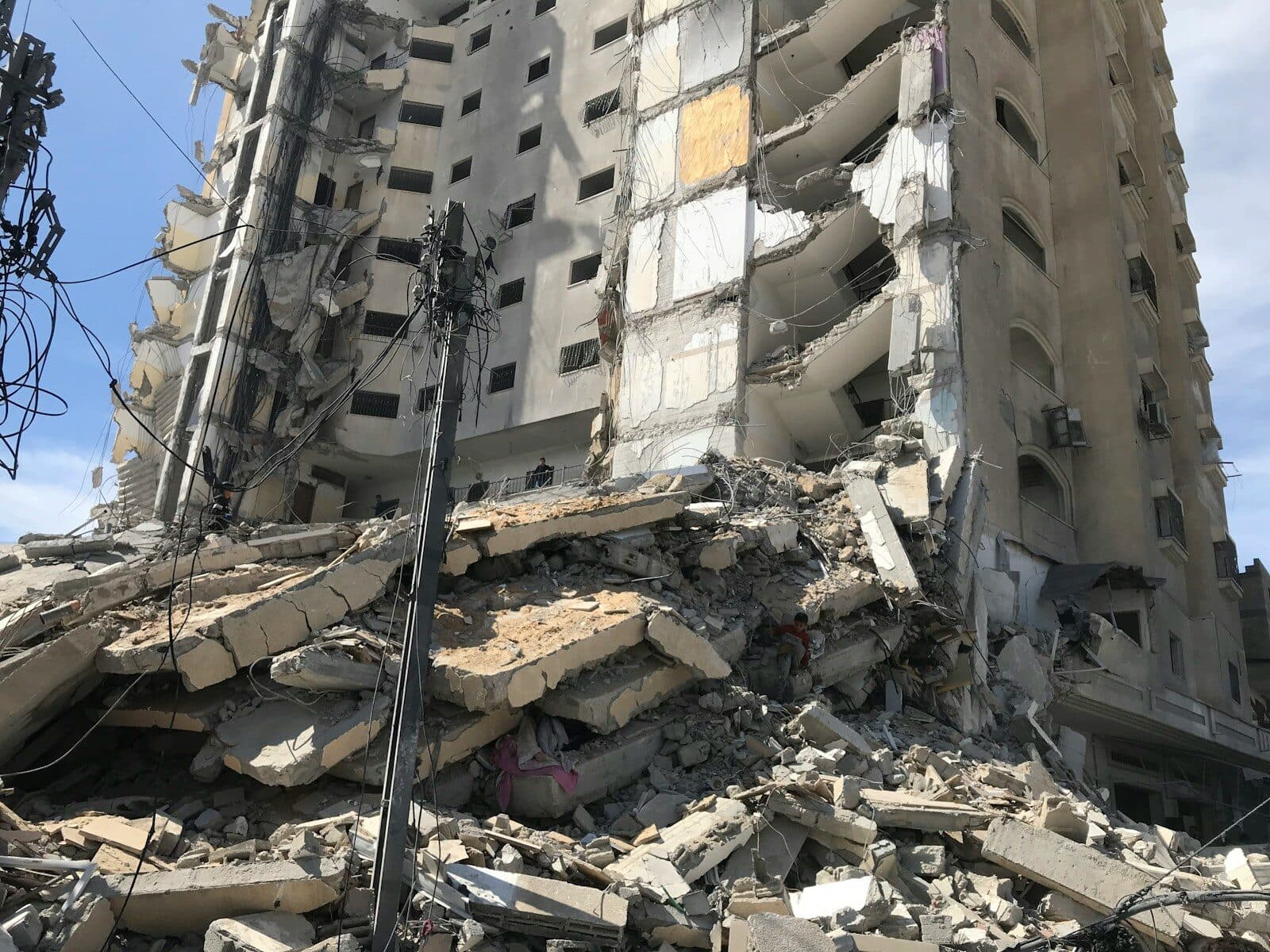
This has been a brutal year for the ground beneath us. In June, back-to-back earthquakes magnitude 7.2 and 7.5 struck western Venezuela within thirty seconds of each other, and in La Guaira 80% of buildings collapsed. More than 6,500 people are confirmed dead.
Seven weeks later, on August 10, a magnitude 7.4 quake tore through Colombia’s Chocó department, killing more than 330 people and collapsing over 600 structures across the country. And these are only the catastrophic examples nearest to Puerto Rico. The world has been rocked with many others.
On the island, we lived through our own deadly seismic swarm in January 2020, when a magnitude 6.4 earthquake centered off Guánica killed a man in Ponce, collapsed a school, and left thousands sleeping outdoors for weeks, afraid to walk back into their own properties. The fault lines that produced that swarm have remained active every single day since then, as we wait for the next Big One to strike.
Now add hurricane season, which reaches its climatological peak this month, kept relatively passive by El Niño. NOAA’s forecasters give the Atlantic and Caribbean a 75% chance of finishing below normal, the mildest outlook of the past decade. But NOAA’s own director said it best when the agency released that forecast:
“It only takes one storm to make for a very bad season.”
Puerto Rico’s building stock, much of it decades old, does not get to opt out of that scenario because this season has been quiet so far. El Niño is now. The future resumes next year, when we’ll be back to normal annual vulnerability and hurricane frequency. The smart move is to prepare your structures, if you haven’t yet, starting TODAY.
Disasters are also structural, not just natural
Earthquakes and hurricanes are the disasters that make headlines. But a structure does not need a fault line or a storm surge to fail.
In July, two structural columns buckled inside a 37-story Manhattan office tower at 235 East 42nd Street, the former Pfizer headquarters, mid-conversion into one of the largest office-to-residential projects in the country. Floors sagged, streets closed, thousands evacuated. No one was hurt, and the building was stabilized, but the cause is still under investigation, and union leaders have called it far more serious than the developer’s own language suggested.
That episode is a useful reminder that structural risk is not only a nature story. It is also a story of conversion stress, aging materials, deferred maintenance, and construction defects, the kind of slow-building failure that has nothing to do with weather and everything to do with time and insufficient inspections.
The inspection gap
For decades, the standard tool for catching that failure has been the human eye: a scheduled inspection, a hard hat, a clipboard. Eyes are good at spotting cracks after they appear. They are not good at catching the millimeter-scale shifts, the subtle vibration changes, or the load redistribution that often precede a structural problem by days, weeks or months.
That is the gap that can only be detected early enough to matter by only continuous structural health monitoring (SHM). Just as automation has reshaped manufacturing, healthcare, logistics, finance and frankly just about any field we can think of, it is now reshaping how we inspect buildings, bridges, ports, power plants, mines, and frankly just about any structure we can think of.
Because when you automate inspections, sensors catch everything that happens in an instant. When you receive the next inspector visit, he/she combines the human eye with the SHM data, and you get the total picture.
Sensors mounted directly on a structure read all vibrations and stress in real time, paired with satellite radar imagery that tracks ground and structural movement from space, all processed by AI software built to flag anomalies before they become emergencies.
Think of it as the difference between an annual physical and a continuous EKG. One captures a moment. The other watches the heartbeat as it happens. Neither replaces the doctor (in this case the structural engineer or inspector), whose judgment remains the final word.
What monitoring adds is earlier, more precise information, so that judgment has better data, and better outcomes follow. Early detection also allows you to fix the problem before it gets worse and more expensive, without having to wait for the inspector visit.
How Estructura gets it done
This is the model Estructura has built its practice around, and it did not require inventing new physics. It required integrating two technologies that, until recently, operated separately.
On the ground, Estructura deploys GeoSIG, a Swiss, ISO-certified instrument maker with more than 30 years designing precision sensors for earthquake and structural monitoring, as the Americas distributor and a Platinum Partner.
GeoSIG’s accelerometers and seismometers measure acceleration, velocity, displacement, strain and tilt, feeding continuous data into GeoSMART, a software layer that adds live 3D structural views, frequency analysis and automated threshold alerts, in effect turning raw sensor data into an early-warning system.
From above, TerraIntel supplies the layer that ground sensors cannot: a satellite radar system, known as InSAR, that detects ground deformation down to one or two millimeters a year, critical movement that is invisible to the human eye.
Where GeoSIG watches the asset itself, TerraIntel watches the ground around it, catching the kind of subsidence that can undermine a foundation long before a crack ever shows indoors. Multispectral and thermal imagery add soil-water stress and thermal-anomaly tracking, while AI can access decades of satellite archives to separate a structure’s normal seasonal movement from an actual failure trend.
Combined, the two systems cover the fault modes that matter most in structural monitoring: cracking, differential settlement, corrosion, connection loosening, and fatigue. Ground sensors carry most of that load directly; satellite radar adds the regional context that a single instrumented building cannot see on its own.
A high ROI
The lesson of the Champlain Towers South collapse in Surfside, Florida, which killed 98 people, is instructive here. A 2024 radar study later found nearby buildings had been subsiding for years, yet no satellite signal preceded the collapse itself, which investigators attribute to concrete deterioration and design flaws.
For property owners and managers, including vital infrastructure in every city on the planet, the return on that combination tends to follow a predictable curve. Across the airports, hospitals, ports and industrial facilities where this kind of monitoring has been studied, predictive maintenance programs typically cut maintenance costs by 18% to 25% and equipment downtime by 30% to 50%, and a repair made proactively, once a fault is caught early, commonly costs four to five times less than the same repair made after failure.
Most Estructura clients recover their initial investment in roughly two years, factoring in avoided emergency repairs, shortened closures and reduced insurance friction, with the ROI compounding well beyond that as the asset ages.
It is not always someone else’s disaster
None of this means Puerto Rico needs to brace for the next Venezuela or the next Colombia to justify paying attention. It means recognizing that the island sits at the intersection of the three risks this piece has described, seismic, climate and structural, on a building stock that is, on average, older than the towers making headlines elsewhere.
What happened in La Guaira, in Chocó, and seven years ago in Guánica can feel distant until, without warning, it is not. Continuous monitoring will not stop an earthquake or steer a hurricane. What it can do is make sure that when the ground moves, or a structure simply reaches the limits of its own materials, a sensor and a satellite already knows, in time to act rather than to count the cost afterward.
Fernando Neris is co-founder and president of Estructura.