Ten years ago, when Elizabeth Plaza and a small group of executives helped launch the Women’s Chapter of the Puerto Rico Manufacturers Association (PRMA), they were trying to solve a problem they could see unfolding in boardrooms across Puerto Rico.
More women were earning college degrees, building careers and climbing corporate ladders, yet they remained scarce in the places where the biggest business decisions were being made. Around the Association’s Board table, women occupied only a handful of seats. Across manufacturing, pharmaceuticals and medical devices, executive positions were still overwhelmingly held by men. Former Association President Rodrigo Masses recognized the problem and encouraged efforts to bring more women into leadership roles.
A decade later, the chapter’s leaders believe they were addressing something much bigger than mere representation.
Puerto Rico now faces a challenge touching nearly every industry: a shortage of talent, future leaders and skilled professionals capable of driving economic growth.
And the solution they identified in 2016 remains largely the same: support more women.
“If we don’t facilitate that women become involved in the workforce and assume positions of greater leadership, then we cannot talk about economic development in Puerto Rico,” Plaza said during a recent conversation marking the chapter’s 10th anniversary.
That statement captures the evolution of a group that began as a mentoring initiative and is increasingly positioning itself as a voice in workforce development, leadership succession and economic policy.
Today, the chapter has grown to roughly 300 members and recorded a 64% increase in membership between 2024 and 2025, according to current President Cindy Cardona. “This has been the year of expansion for our chapter,” she said.
But numbers tell only part of the story.
“If we don’t facilitate that women become involved in the workforce and assume positions of greater leadership, then we cannot talk about economic development in Puerto Rico.”
Elizabeth Plaza, Founding President Women’s Chapter of the Puerto Rico Manufacturers Association
More Than Mentorship
The chapter’s first decade is ultimately a story about women who doubted themselves, accepted opportunities that frightened them, left secure jobs to launch businesses, relocated their families across borders and, in the process, built a network that now sees itself as part of the solution to some of Puerto Rico’s most pressing economic challenges.
One of the founders remembers a moment that still shapes her understanding of leadership.
Years ago, while working for Johnson & Johnson, Plaza was offered the opportunity to relocate to Italy to help establish a newly formed validation department. The timing could hardly have been more complicated. She had two adolescent children. She was building a business. Employees depended on her.
By every practical measure, saying no would have been easier.
Instead, she went home and thought about the opportunity. “This is not going to happen again,” she recalled telling herself.
She said yes.
The assignment exposed her to global operations and opened doors that would shape the rest of her career. Looking back, she sees the experience as an example of something many women struggle with: fear often disguises itself as responsibility.
“Why not?” she said. “I managed it. I negotiated it. We have to take risks if we really want to create transformation.”
That philosophy eventually became the foundation of the chapter’s mentoring program, which members describe as the organization’s beating heart.
The concept was straightforward: pair women who had already navigated executive leadership, entrepreneurship, promotions and relocations with women trying to determine how far they could go. The objective was not simply career advice.
It was confidence.
“The question was always, how do we get these women to dare?” recalled former Chapter President Georyanne Ríos. “How do we get them to believe in themselves enough to try?”
The answer can now be found throughout Puerto Rico’s manufacturing landscape.
“We’re already instilling in these young women what it means to be a professional woman and what they should aspire to. Universities increasingly seek partnerships with the chapter because they see it as a bridge between students and industry.”
Cindy Cardona, President, PRMA Women’s Chapter
The Power of Seeing Yourself in Someone Else
Perhaps no story better illustrates the chapter’s impact than that of Cardona herself.
She first entered the mentoring program as a mentee participant.
After leaving the corporate world and exploring entrepreneurship, she sought guidance from women who had already traveled that road. Through the program, she connected with senior executives, absorbed every lesson she could and gradually became one of the chapter’s most active members.
Years later, she occupies the leadership seat once held by the women who mentored her.
“I am the product of the product,” Cardona said.
Her experience is hardly unique.
The women recount the story of an executive who once admitted she was too timid to lead people. Today, they say, she manages teams throughout Latin America. They point to women who have risen to top leadership positions at major manufacturers, including Johnson & Johnson and Bristol Myers Squibb. They tell stories of members who left secure corporate careers to become entrepreneurs and build successful businesses of their own.
Again and again, the stories return to the same theme.
Someone took a chance.
Someone helped her believe she could.
Even women who have already reached the top continue seeking guidance.
“We have women who are at the highest levels professionally but still want mentors in certain areas,” Cardona said. “The chapter has helped with that.”
The Barrier That Hasn’t Disappeared
Yet what makes the chapter’s perspective particularly noteworthy is what its leaders do not blame.
At a time when conversations about women in leadership often focus on discrimination or glass ceilings, the women interviewed repeatedly pointed somewhere else.
The greatest challenge, they said, is caregiving.
“The first obstacle is ourselves,” Plaza said. “The first obstacle is the social myths imposed on women.”
Those expectations are reinforced by practical realities. Executive positions often require travel, relocation and around-the-clock availability. At the same time, women continue to shoulder a disproportionate share of caregiving responsibilities.
One exchange during the interview captured the tension perfectly.
A member whom chapter leaders see as a future president had recently been asked whether she wanted to lead the organization someday.
“I dream of it,” she replied. “Let my son grow up first.”
No one questioned her ambition.
The issue was not desire. It was support.
The conversation eventually turned to childcare, an issue many of the women see as central to Puerto Rico’s workforce challenges. Several years ago, members explored a proposal to convert closed public schools into childcare facilities supported by nearby industries and municipalities. Inspired by employer-sponsored childcare initiatives operating at some manufacturing companies, the idea sought to provide working parents with a support system that could enable greater workforce participation.
The initiative never materialized.
But the lesson endures.
Talent shortages, they argue, cannot be separated from childcare, caregiving and family support.
“These are the future generations of Puerto Rico. We have to continue evolving.”
Former President of the PRMA Women’s Chapter Georyanne Rios. SUPPLIED
Building Puerto Rico’s Next Generation of Leaders
The chapter’s second decade is increasingly focused on a different question: who comes next?
Puerto Rico’s declining birth rate worries them.
So do shifting workplace expectations.
Several members pointed to studies suggesting that Generation Z (people born in the late 1990s to early 2000s) is less interested in leadership roles than previous generations.
“There are studies that show Generation Z doesn’t want leadership roles,” Ríos said. “They don’t want the responsibility.”
For women who spent decades fighting for opportunities to lead, the possibility that future generations may choose not to pursue those opportunities presents an entirely new challenge.
That concern gave rise to one of the chapter’s newest initiatives: the Corporate Outreach Committee.
Originally created to build stronger connections between industry and academia, the committee reaches students long before they enter the workforce. What began with outreach to a handful of college campuses has grown into a broader islandwide effort involving universities, STEM programs and professional schools.
Chapter members regularly visit campuses, sharing stories of entrepreneurship, international careers and executive leadership while introducing students to career opportunities in manufacturing, business, engineering and pharmaceuticals.
For the women behind the initiative, the goal is not recruitment alone.
It is succession planning.
“We’re already instilling in these young women what it means to be a professional woman and what they should aspire to,” Cardona explained. Universities increasingly seek partnerships with the chapter because they view it as a bridge between students and industry.
The committee reflects how the organization’s mission has evolved. Ten years ago, the focus was helping accomplished women advance. Today, it is helping prepare the next generation of leaders before they even enter the workforce.
“These are the future generations of Puerto Rico,” Ríos said. “We have to continue evolving.”
From Mentorship to Influence
That evolution helps explain why the chapter is increasingly stepping into public policy.
Ten years ago, its primary goal was mentoring.
Today, the organization has established a Government Relations Committee and begun engaging lawmakers and the Puerto Rico Women’s Advocate on issues ranging from workforce participation to economic development. Leaders speak openly about influencing legislation, building partnerships and advancing solutions that can strengthen both business growth and labor-force participation.
“This is not a social group,” Ríos said. “This is a working group seeking to create impact across Puerto Rico.”
Its mission now extends to artificial intelligence, workforce training, entrepreneurship and regional expansion.
Through a new initiative called EXPANDE, the chapter is establishing leadership representation throughout the Association’s seven regions, extending opportunities beyond the San Juan metropolitan area. Members are also embracing artificial intelligence, bringing experts into chapter programs and encouraging women to view the technology as a tool that can enhance productivity rather than simply replace workers.
Viewed individually, mentorship, childcare advocacy, university outreach, artificial intelligence and public policy may seem unrelated.
Together, however, they tell a larger story.
The Women’s Chapter began as an effort to help more women enter rooms where decisions are made.
Ten years later, its leaders are asking a broader question:
Can Puerto Rico afford not to make use of all its talent?
In an economy grappling with labor shortages, sharp demographic decline, technological disruption and leadership succession challenges, they believe the answer is obvious.
What began as a women’s leadership initiative has become, in many respects, a conversation about Puerto Rico’s economic future.
And after spending a decade pulling out chairs for others, the women of the chapter are no longer focused solely on earning seats at the table.
They are working to ensure there will be future leaders ready to occupy them.
Cover photo caption
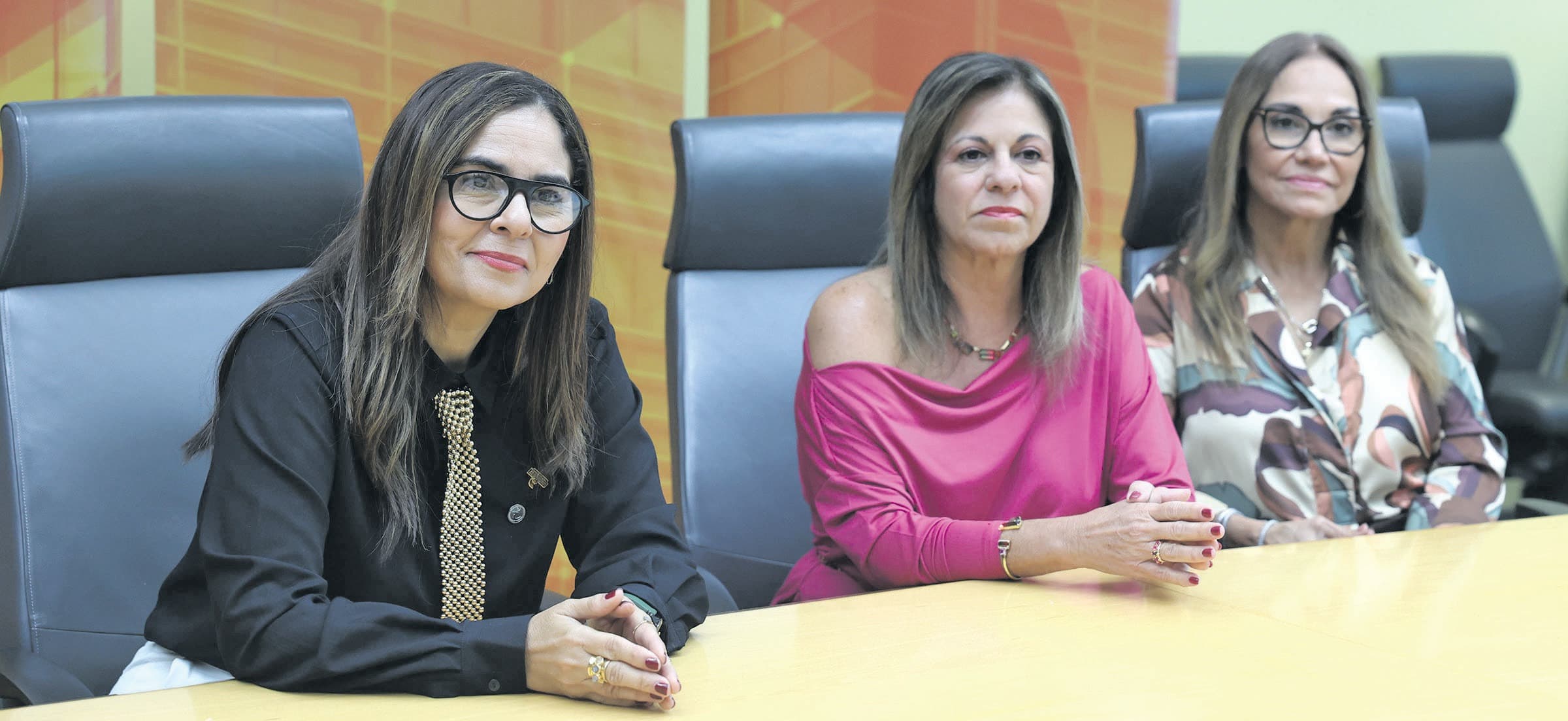
From left to right: Cindy Cardona, president I Wish Corp.: Georyanne Ríos, CEO Pathfinder Inc.; Elizabeth Plaza, founding president PRMA Women’s Chapter and president of ProQuality Network Strategic Consultants International. Caribbean Business photo by Vanessa Serra.
With 81 national adaptation plans now filed and new resilience vehicles launching in the Turkey UN Conference, the market Puerto Rico could supply is taking shape…fast
PRMA leaders point to $2.7 billion in new commitments and nearly 2,800 jobs, but warn an aging, shrinking workforce could stall expansion unless reshoring and talent policies take hold
At the Puerto Rico Manufacturing Summit 2026, industry leaders outlined a vision for the next decade built on artificial intelligence, research commercialization, workforce development and major infrastructure investments