The same day Puerto Rico announced a $217 million expansion by global biopharmaceutical company AbbVie, Gov. Jenniffer González Colón and Economic Development and Commerce Secretary Carlos Ríos Pierluisi used the occasion to underscore what they described as one of the island’s most pressing competitiveness challenges: the failure to approve a sweeping permit reform bill during the most recent legislative session.
Speaking at a news conference in La Fortaleza, González argued that Puerto Rico cannot afford to make the permitting process more cumbersome at a time when it is competing aggressively against other U.S. jurisdictions and international locations for advanced manufacturing projects.
“I cannot create a more complicated framework with more procedures and more agencies issuing permits,” the governor said, expressing hope that lawmakers and the administration can reconcile differences and approve a revised version of the measure when the Legislature returns in January.
Ríos echoed that message, saying the administration’s priority is to ensure the eventual reform standardizes and streamlines the process for both communities and private-sector investors. He noted that major manufacturing projects deemed to have significant socioeconomic impact could potentially move through the system much faster under the proposed framework.
The debate over permit reform has become increasingly important for the business sector. Chamber of Commerce President José “Che” Julio Aparicio recently argued that permitting certainty has become a greater concern for investors than even Puerto Rico’s energy challenges.
Speaking in an interview with Metro Puerto Rico, Aparicio said companies evaluating investments often already assume they will need backup generation and cogeneration systems.
What concerns lenders and investors, he said, is uncertainty over how long it will take to secure permits and begin operations.
“The issue is certainty in obtaining permits because that affects financing,” Aparicio said. “Banks want to know what the timetable is, what the pipeline is, how cash flow will move.”
He welcomed additional time to refine the legislation, saying the business community wants a final version that is better than the current system and resistant to legal challenges that could delay projects in the courts.
The comments provided important context for Wednesday’s announcement that AbbVie will invest $217 million to modernize and expand its Barceloneta operations, creating 100 jobs while retaining the company’s existing workforce of 1,214 employees.
The project is part of AbbVie’s broader strategy to invest more than $100 billion across the United States over the coming decade in research, development, manufacturing and capital improvements. Puerto Rico was selected as one of five key locations receiving significant investment, alongside sites in states including North Carolina, Illinois, Massachusetts and Arizona.
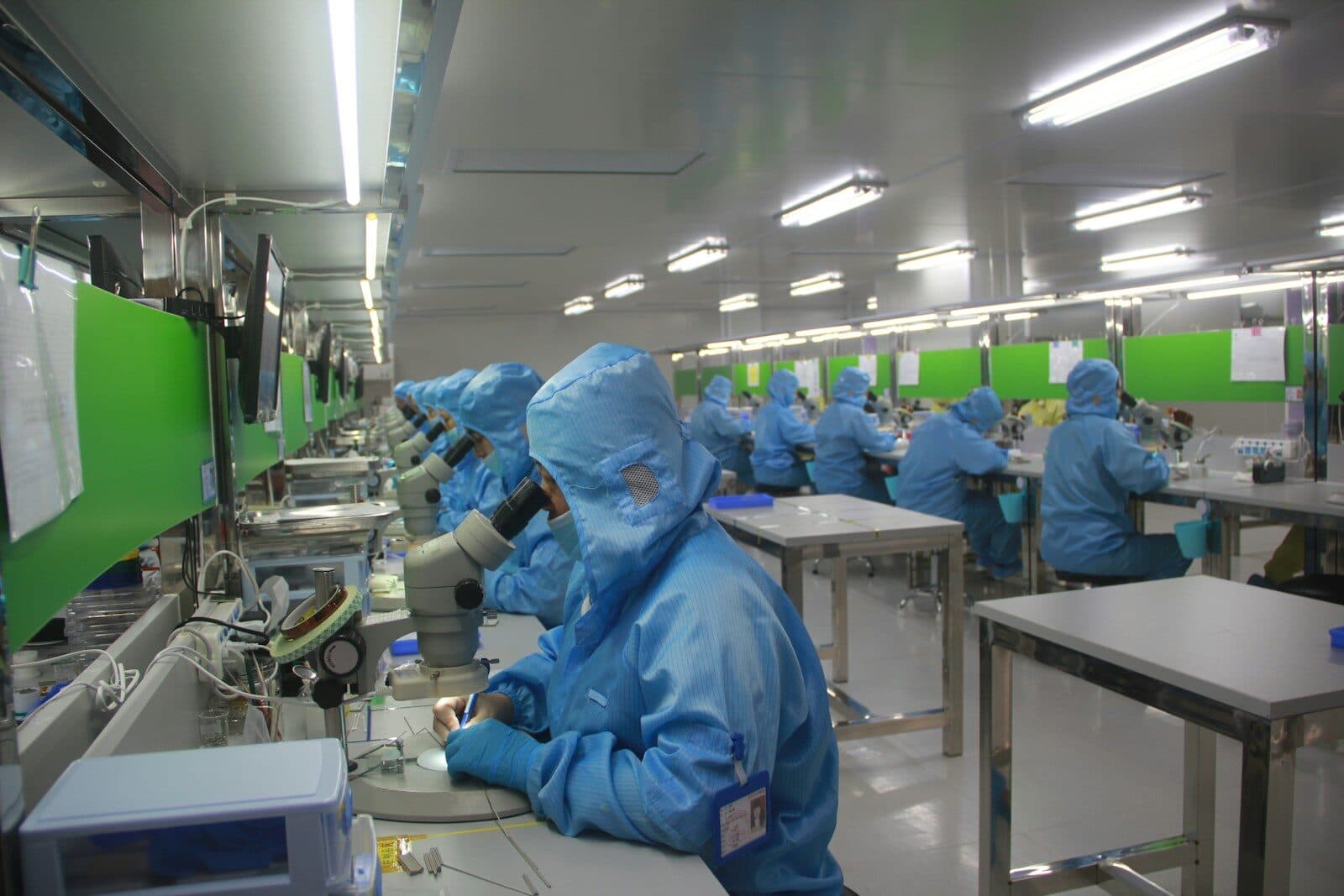
According to company officials, the Barceloneta investment will support new manufacturing capabilities in immunology and neuroscience while incorporating advanced manufacturing systems and artificial intelligence technologies.
Construction is expected to begin this year, with the upgraded facilities projected to become fully operational by 2030.
As part of the project, the Department of Economic Development and Commerce has committed up to $45.9 million in incentives, primarily tied to investments in equipment, technology and infrastructure.
AbbVie plans to use the expanded facilities to install advanced manufacturing systems and artificial intelligence-driven technologies that will support the production of both existing medicines and future therapies in its immunology and neuroscience portfolio, strengthening the Barceloneta site’s role within the company’s U.S. manufacturing network.
Carlos Martis, AbbVie’s site head in Puerto Rico, said the island successfully competed internally with other AbbVie locations to secure the investment.
“There is always competition,” Martis said. “We continue to bet on our workforce and our track record.”
AbbVie executives emphasized that Puerto Rico’s highly experienced workforce was a decisive factor. The company has operated on the island for decades and manufactures biologic medicines used to treat complex conditions including autoimmune diseases, cancer and other chronic illnesses.
The company also addressed concerns frequently raised about Puerto Rico’s electric grid. Martis said AbbVie has spent years preparing for potential power disruptions and is effectively energy self-sufficient.
“We are energy self-sufficient,” he said. “We have redundancy in our power systems, our own generators and the infrastructure necessary to switch between our own generation and the public electric system.”
The governor used that response to argue that Puerto Rico should not underestimate its competitiveness because of infrastructure challenges.
While acknowledging ongoing issues involving generation, transmission and distribution, González said companies have repeatedly told government officials that Puerto Rico’s recovery capabilities and experienced workforce often outweigh those concerns.
The administration also highlighted the scale of the economic impact. Of the $217 million investment, approximately $121 million will be spent on machinery, equipment and technology, while another $96 million will be dedicated to construction and infrastructure improvements.
The Department of Economic Development and Commerce plans to provide $45.9 million in incentives tied to the project.
Officials noted that AbbVie’s annual payroll already exceeds $118 million and that the company spends more than $150 million annually with local suppliers and contractors.
The governor said Puerto Rico today is competing less with traditional pharmaceutical manufacturing hubs such as Singapore and more directly with places like North Carolina, Costa Rica, the Dominican Republic, Ireland and Panama.
The island’s advantages, she argued, include its U.S. jurisdictional status, decades of manufacturing expertise and a highly skilled workforce.
Barceloneta Vice Mayor Lisandro Reyes said the announcement reinforces the municipality’s longstanding role as one of Puerto Rico’s leading pharmaceutical and biotechnology hubs.
Reyes credited the expansion to the quality of the island’s workforce, noting that AbbVie has continued investing in Puerto Rico for decades because of the talent available locally and the support provided by economic development officials.
He argued that while advanced technology and infrastructure are important, the company’s greatest asset is the workforce behind its operations.
“AbbVie invests here because of the talent we have here,” Reyes said, pointing to generations of engineers, technicians and manufacturing professionals who have supported the company’s growth.
The AbbVie expansion, administration officials said, demonstrates that those advantages continue to resonate with multinational companies evaluating where to deploy billions of dollars in new manufacturing investment.
Just as importantly, they argued, it highlights why permit reform remains a central economic development priority as Puerto Rico seeks to attract the next wave of biopharmaceutical and advanced manufacturing projects.