Ríos Pierluisi tells Caribbean Business permitting reform should move in August, but the current bill still falls short — and inventory tax repeal likely won’t happen this year.
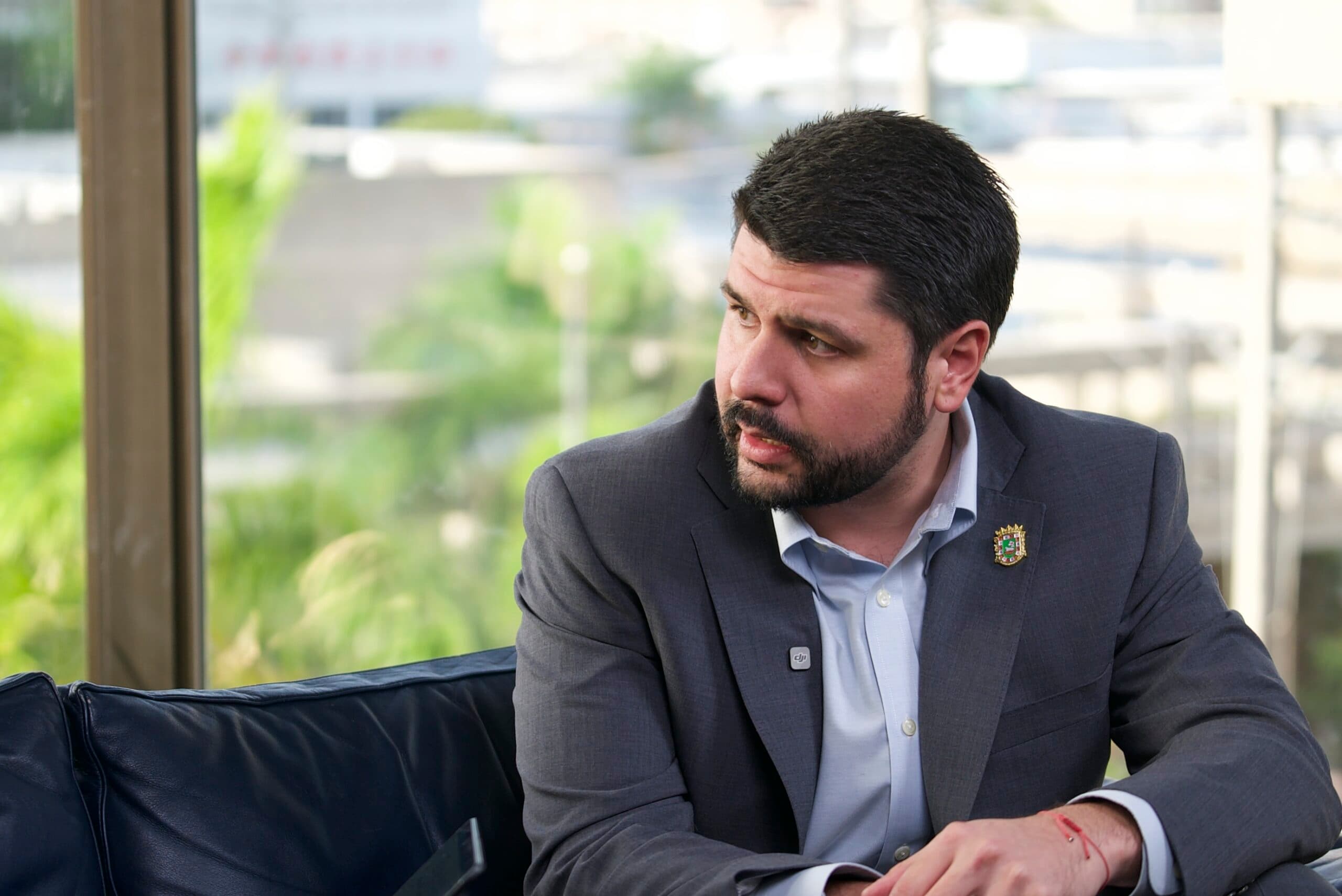
Among the regulatory reforms currently pending before the Puerto Rico Legislature, permitting reform is the closest to becoming a reality, Economic Development and Commerce (DDEC by its Spanish initials) Secretary Carlos Ríos Pierluisi told Caribbean Business. Still, he acknowledged that the bill has yet to reach a stage where it can earn the private sector’s full support.
“The Senate’s intention is to have a new bill published by the beginning of the session,” Ríos Pierluisi told Caribbean Business, in alignment with public statements from La Fortaleza. Senate President Thomas Rivera Schatz, consolidated his own measure, Senate Bill 1173, with the administration’s permitting reform proposal, Senate Bill 1183, into a 793-page substitute bill establishing a new Planning and Permitting Code, which was introduced on June 23.
Although lawmakers had expected to bring the measure to the floor before the summer recess, the vote was postponed until the Aug. 17 session. Jean Peña Payano, La Fortaleza’s secretary of Public Affairs, has said the administration expects the reform to pass once lawmakers reconvene.
Ríos Pierluisi was direct about the substitute bill’s current shortcomings. “Even though it has a lot of virtues, it has a lot of areas of opportunity,” he said. “I do not think it’s a bill that the private sector is ready to fully support. So, I’m sure that a lot of conversations still remain.” When asked what specifically concerns the business community, he named three things: “lack of uniformity, lack of standardization, and lack of a guarantee of continuity” in how permits move through the system — factors that, he said, actively work against agility rather than promote it.
For Ríos Pierluisi, the shortcomings of the permitting system become clear the moment someone tries to open a business. “Most people are going to say permit process,” he said when evaluating what problems a business owner opening a shop in Puerto Rico would encounter first. That reality is why DDEC is pursuing “a complete overhaul of the process to achieve the goals that the private sector is asking that we achieve,” rather than incremental changes, he argued.
Inventory tax: on the agenda, but not this year
On the other major private-sector demand — full repeal of the inventory tax, which the Centro Unido de Detallistas has pushed for over a year — Ríos Pierluisi confirmed it remains part of the governor’s platform and this next legislative session’s agenda but poured cold water on any near-term timeline. “All taxes are burdensome on entrepreneurs and small and medium businesses,” he said. Asked whether repeal could happen before December, his answer was blunt: “Probably not,” citing the crowded legislative calendar, with permitting reform taking precedence.
“China fired, Puerto Rico hired”: Hell, yes!
On pharmaceutical investments, Ríos Pierluisi described a continuation of DDEC and Invest Puerto Rico’s existing reshoring strategy, saying the agencies have negotiated with between 20 and 25 companies over the past 18 to 19 months, several tied to reshoring, and secured commitments across pharma, bioscience, medical devices and biotech.
When asked about the phrase “China fired, Puerto Rico hired” — the rallying cry then-White House trade czar Peter Navarro used in 2020 to push reshoring of pharmaceutical manufacturing to the island amid the COVID-19 supply chain crisis — Ríos Pierluisi didn’t hesitate: “Hell, yes!”
That enthusiasm tracks with a string of publicly announced deals over the past year. Eli Lilly announced in 2025 it would invest more than $1.2 billion to expand and modernize its Lilly del Caribe manufacturing site in Carolina, a project expected to create roughly 1,000 construction jobs and 100 new manufacturing positions while retaining more than 1,000 existing roles. Amgen separately committed $650 million to boost production at its Juncos facility, and PharmaEssentia formalized a $46 million investment in March 2026. The push traces to Executive Order 2025-012, which created a Reshoring Task Force built around faster permitting through a One-Stop Investment Window and expanded workforce training for pharmaceutical manufacturing — tying the reshoring strategy directly back to the same permitting bottleneck driving this year’s reform push.
“We are doing everything that we can… to promote Puerto Rico as the most cost-effective destination inside the U.S. for American manufacturing,” Ríos Pierluisi said, pointing to Eli Lilly as evidence the strategy is working. “That’s big for Puerto Rico. And we have a couple other announcements along those lines in the upcoming months.”
DDEC controversy and institutional credibility
Ríos Pierluisi’s assurances that “nothing has changed” and that investment commitments are “safe” and “intact” come amid one of DDEC’s most significant governance controversies in recent memory. Governor’s Chief of Staff Francisco Domenech filed complaints, supported by sworn statements and documentary evidence, with the Office of Government Ethics and the Department of Justice against former DDEC Secretary Sebastián Negrón Reichard, alleging at least five conflicts of interest involving $74.1 million in tax decrees and incentives awarded to clients of the law firm Reichard & Escalera, where Negrón Reichard’s grandfather, Héctor Reichard de Cardona, is the principal partner. The complaints also allege that Negrón Reichard appointed Ernesto J. Zayas García to lead DDEC’s Incentives Office just three days after he left the same law firm. Negrón Reichard has denied the allegations and filed his own complaints against Domenech. Reichard & Escalera has also rejected the allegations, saying the tax decrees are not government procurement contracts but statutory economic development incentives granted to private companies in exchange for investment and job creation. The firm said it has advised businesses participating in Puerto Rico’s incentive programs for decades under multiple administrations and expressed confidence that the matter will be resolved through the appropriate legal forums. For investors, the episode isn’t just political noise: it touches the integrity of the decree-approval process that draws investment to the island in the first place, which is precisely why Ríos Pierluisi — inheriting an agency under scrutiny — has been so pointed in insisting existing commitments, like the ones from Big Pharma, remain firm.