Banks Say Measure Threatens Credit Access and Investor Confidence in Puerto Rico
A controversial Senate measure that would rewrite Puerto Rico’s rules governing negotiable instruments has triggered near‑unanimous opposition from the island’s financial sector, which warns the proposal would make Puerto Rico the only U.S. jurisdiction to impose such restrictions—potentially chilling investment and constraining access to credit.
Senate Bill 1103, filed on February 24 by Sen. Carmelo Ríos Santiago, seeks to amend Sections 2‑302 and 2‑306 of Act 208‑1995, the island’s version of the Uniform Commercial Code governing negotiable instruments such as promissory notes, checks, and mortgage notes. The bill is the fourth iteration of a proposal previously introduced in 2019, 2022, and 2025, each time failing to advance amid strong industry resistance and, most recently, a negative report from the Senate Judiciary Committee in 2025.
What the bill would change
Under current law, a purchaser of a negotiable instrument qualifies as a “holder in due course” if the instrument is acquired for value, in good faith, and without notice of defects or claims. That status shields the holder from most defenses the original debtor might raise.
SB 1103 would add a new requirement: the holder must also have acquired the instrument without knowledge that the original debtor was facing “extraordinary economic circumstances,” including an active foreclosure, bankruptcy, natural disaster, job loss, catastrophic illness, government moratoriums, or ongoing loss‑mitigation processes under Act 169‑2016.
The bill would also shift the burden of proof to the holder, who would need to demonstrate compliance with all requirements in any judicial proceeding. It introduces a presumption of notice of defects when an instrument is purchased after maturity or at a steep discount—rebuttable only through evidence of reasonable commercial diligence. Remedies for debtors would expand to include compensatory damages, legal costs, interest on improperly collected amounts, and injunctions halting collection while claims are pending.
Supporters argue the measure codifies and expands principles recognized by the Puerto Rico Supreme Court in Soto Solá v. Registradora de la Propiedad (2013), which held that acquiring an instrument after maturity constitutes constructive notice of irregularity.
A proposal shaped by Puerto Rico’s debt crisis
The bill’s statement of motives ties the proposal to the island’s fiscal crisis, during which banks sold large volumes of delinquent debt to investment funds “characterized by their strategy of acquiring distressed debt at substantially discounted prices and later demanding full payment through aggressive litigation.” Sen. Ríos argues that the law must prevent entities that “do not qualify” as good‑faith holders from obtaining judgments without considering legitimate debtor defenses. “If you are going to claim good faith, you must prove it,” he said.
Industry opposition: ‘An unreasonable restriction’
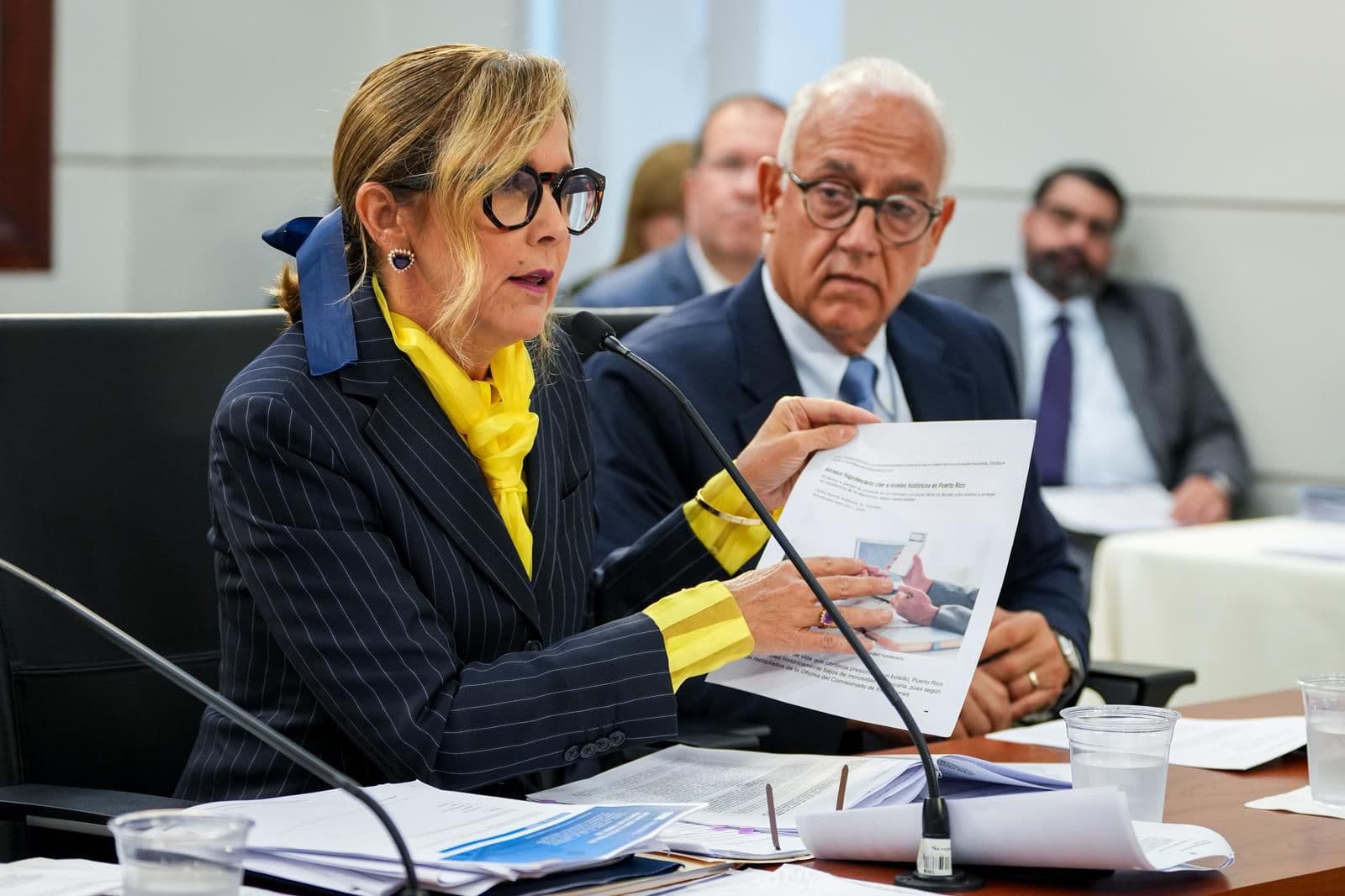
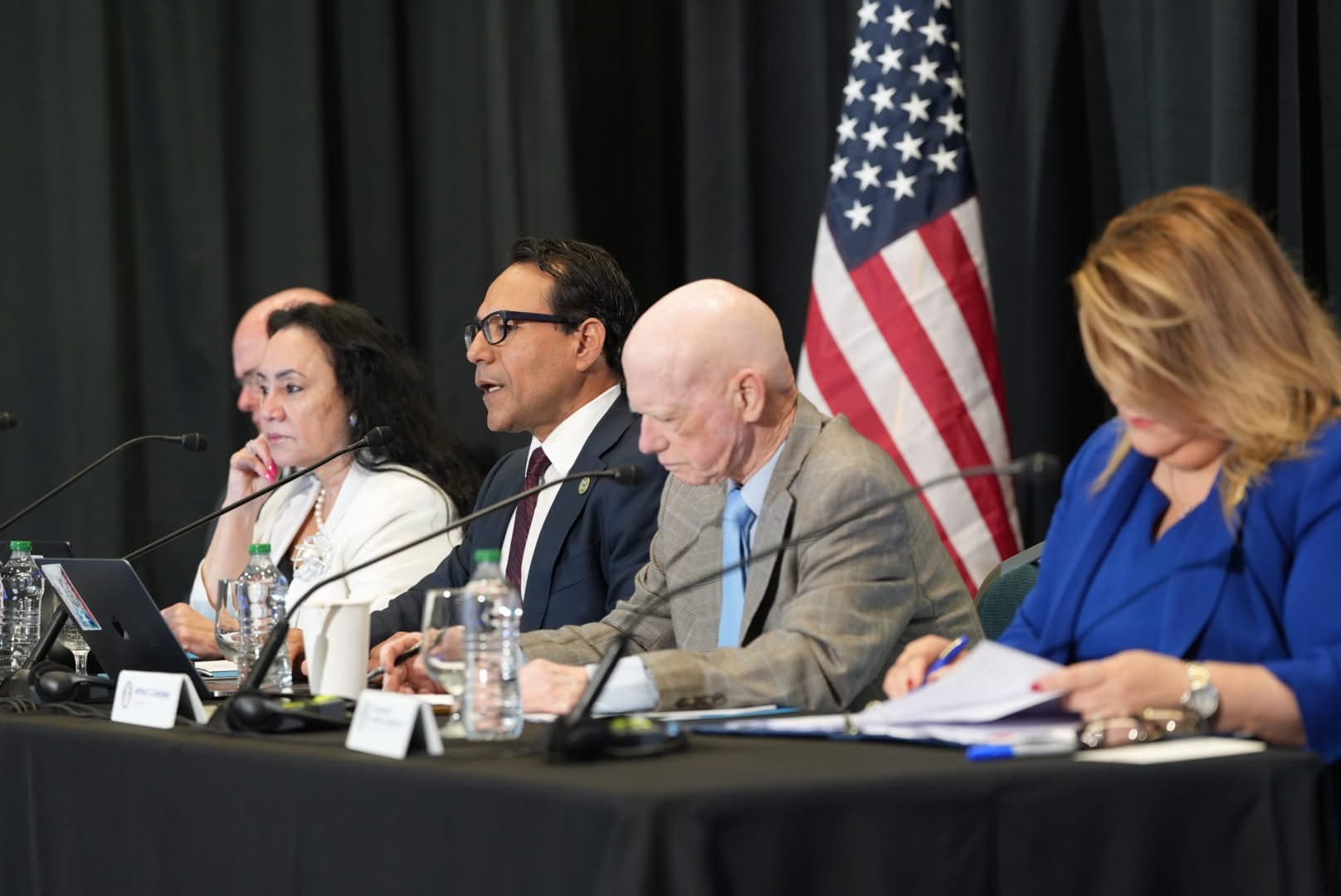
At a public hearing held by the Senate Committee on Economic Development, Banking, Commerce, Insurance and Cooperativism, the island’s major financial institutions and regulators lined up against the bill.
The Puerto Rico Bankers Association called the measure an “unreasonable restriction on the free flow of goods and credit” that would isolate Puerto Rico from the uniform commercial framework used across the United States. Representing the Association, attorney Zoimé Álvarez Rubio argued that the bill misdiagnoses the problem and undermines the purpose of commercial law: “Act 208 seeks to ensure the rapid, effective, and secure negotiation of negotiable instruments.”
The Mortgage Bankers Association (MBA) cited data from the Office of the Commissioner of Financial Institutions (OCIF) showing that foreclosures in Puerto Rico fell to a historic low in 2024—just 1,171 cases, a 49.4% drop from the previous year. Former MBA president Pedro Torres warned that the bill would damage relationships with secondary‑market investors. “Puerto Rico would be the only jurisdiction in the Nation where credits acquired by an investor could be subject to proving by preponderance of the evidence that the acquisition was made in good faith,” he said.
OCIF itself declined to endorse the bill. Commissioner Mónica Rodríguez Villa cautioned that deviating from the U.S. commercial framework “could generate uncertainty in the markets and discourage investor participation,” with potential consequences for capital availability and credit access.
The Association of Cooperative Executives echoed those concerns, warning that increased burdens on holders would reduce cooperatives’ ability to sell loan portfolios, depress asset values, and raise borrowing costs for members.
Supporters: consumer protection and housing stability
The Puerto Rico Housing Finance Authority (AFV) backed the bill’s intent, saying it aligns with its mission to protect low‑ and moderate‑income families from displacement. Executive Director Ricardo Álvarez Barreto said the measure “protects debtors and brings order to the mortgage instrument market by reducing speculative practices.”
COSSEC, the public corporation overseeing cooperatives, called the bill “meritorious” but recommended clarifying that regulated institutions acting in the ordinary course of business would not be presumed to lack good faith, and that claims of “extraordinary economic circumstances” require documented evidence.
Neutral positions and procedural concerns
The Department of Justice found no legal impediment to the bill but urged lawmakers to further evaluate its practical impact to maintain a balance between debtor protections and commercial certainty.
The Judicial Branch, through Administrative Director Sigfrido Steidel Figueroa, raised concerns about language limiting courts’ ability to dismiss claims on procedural grounds, warning it could create ambiguity in cases where procedural rules serve essential functions.
A recurring structural tension
The debate highlights a long‑standing tension: whether commercial law—designed for efficiency and negotiability—can be used as a vehicle for consumer protection in a jurisdiction still grappling with the aftermath of a decade‑long fiscal crisis and repeated natural disasters.
Opponents argue existing tools already protect debtors, including Act 169‑2016’s mandatory loss‑mitigation process, Article 1220 of the 2020 Civil Code on the retraction of litigated credit, and established good‑faith‑holder doctrine. Supporters counter that inconsistent application of these principles has allowed entities to obtain holder‑in‑due‑course status “in questionable circumstances,” leaving vulnerable families without effective recourse.
Next steps
Committee chair Sen. Nitza Morán Trinidad confirmed that the bill will not be brought to a vote during the current session. Its evaluation will resume in August when the Legislature reconvenes.