‘Fomento Local’ Seeks to Rebalance Development Policy Toward Pymes. The Energy Cost Squeeze Is Testing the Plan.
Two months after Alan Taveras laid out the CUD’s 2026-2028 agenda for easier business, Caribbean exports and succession, the emergency over electricity costs has forced a detour from a model still built around outside investment
Alan Taveras argues that for roughly seven decades the island has courted outside investment with tax incentives, while the locally owned businesses that employ most of its workers have had to fight for the same benefits.
Two months after taking over the Centro Unido de Detallistas (CUD), he is trying to shift that balance with Fomento Local, a 2026-2028 agenda that puts small and medium-sized businesses (SMEs, or pymes in Spanish) at the center of the island’s growth strategy. In an exclusive interview with Caribbean Business, he provides an update and lays the ground work for how to do that.
The energy emergency did force him to take a detour. CUD’s own energy study warned that as many as 12,000 businesses could close, what we at CB have coined the Pymes Power Cliff. How far the longer-term agenda gets will depend on whether the cliff leaves room for the Fomento Local structural changes.
If it does and CUD prevails, Puerto Rico is in for a major shift. For starters, after decades prioritizing foreign investment through tax incentives, Taveras believes Puerto Rico must reconsider how it supports its locally owned businesses.
“For approximately 70 years, Puerto Rico has relied heavily on tax exemptions to attract outside investment. This strategy has placed local businesses lower on the economic development agenda,” he said.
But Puerto Rico, Taveras argues, has lost some of its competitiveness in attracting outside capital, as other destinations may offer more attractive business incentives. The time has come, he posits, for the island to recalibrate its priorities.
The initiative represents more than a new set of programs, he added. It is a call to redefine Puerto Rico’s economic development priorities by placing locally owned businesses at the center of the island’s growth strategy.
“Puerto Rico cannot depend exclusively on government action or outside investment to strengthen its economy. It needs to re-center its focus on SMEs as the island’s main economic driver. Fomento Local seeks to do that through exports, more accessible incentives and business continuity.”
A comprehensive plan
The three components Taveras described in the interview are but the most visible parts of the plan. According to published reports on the agenda’s presentation, Fomento Local is a 2026-2028 roadmap built on three axes: Facilidad para Hacer Negocios, or ease of doing business; Caribe Unido, which aims to expand and create regional markets; and Economía Plateada, the silver economy, which centers on business succession and preserving existing capital. The CUD says it represents more than 6,000 pymes.
The first axis includes revitalizing urban centers (cascos urbanos), with a proposal to eliminate the sales and use tax (IVU) there; automatic incentives for pymes, so they can obtain tax benefits without legal processes that now favor businesses with more administrative capacity; and a comprehensive reform of the permit system, which Metro Puerto Rico, a CB sister newspaper, reported the private sector sees as one of the areas of broadest consensus.
According to figures cited in Puerto Rico’s Act 175 of 2025, 53% of CUD members are business owners age 50 or older, which means that in 15 to 20 years, a great number of Puerto Rican businesses may be in jeopardy, underscoring the importance of succession planning.
Taveras told Metro the measures are being drafted with the CUD’s legislative advisors and should be ready by the end of this session or early in the next. No bill numbers have been published.
The plan also has an outreach arm. A College Tour takes entrepreneurship content to university campuses, and each month the CUD visits one municipality to share information on financing, permits and legal matters, so entrepreneurs outside San Juan do not have to travel to the capital, according to the Metro report.
Two different sides of the same coin
For Taveras, who until recently was one of the Invest Puerto Rico officials tasked with attracting companies to the island, the local economy can be divided into two separate focal points: the foreign-investment-driven economy and the locally owned-business economy.
Foreign businesses that come to Puerto Rico to establish export-oriented operations create jobs and contribute tax revenue, but Taveras argues that a substantial portion of the capital generated does not remain in the local economy.
Photo by CUD
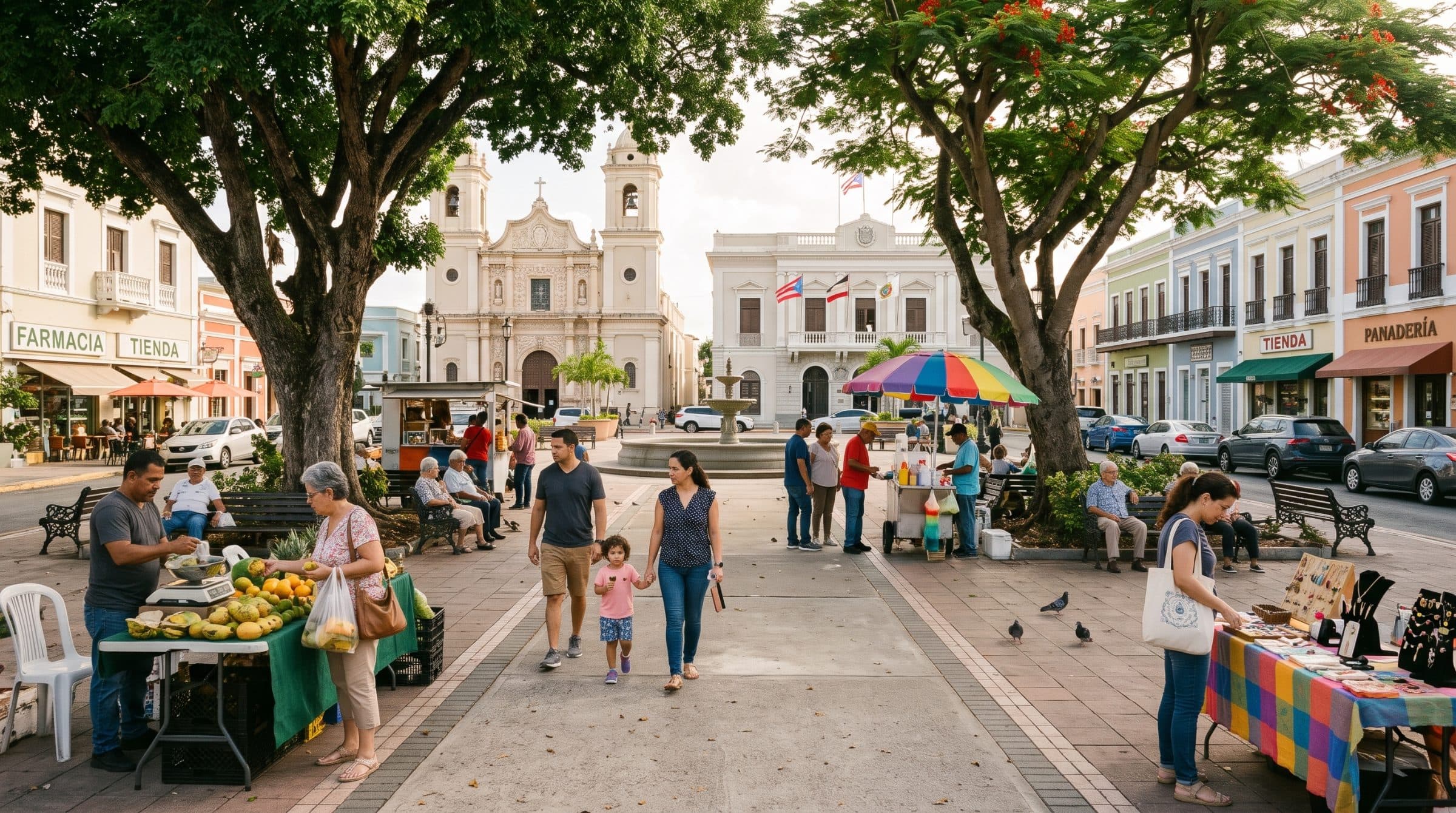
According to the president, Puerto Rican SMEs support a substantial share of local employment and economic activity, with approximately 300,000 local jobs sustained by locally owned businesses, and they face higher barriers to accessing incentives and financing.
For smaller businesses, the upfront costs they must pay CPA firms to obtain an Act 60 tax incentive decree, for example, can undermine the financial benefits of applying. That is why Taveras is calling for amendments that would allow qualifying businesses to access certain incentives without having to obtain an individual decree.
Export focus
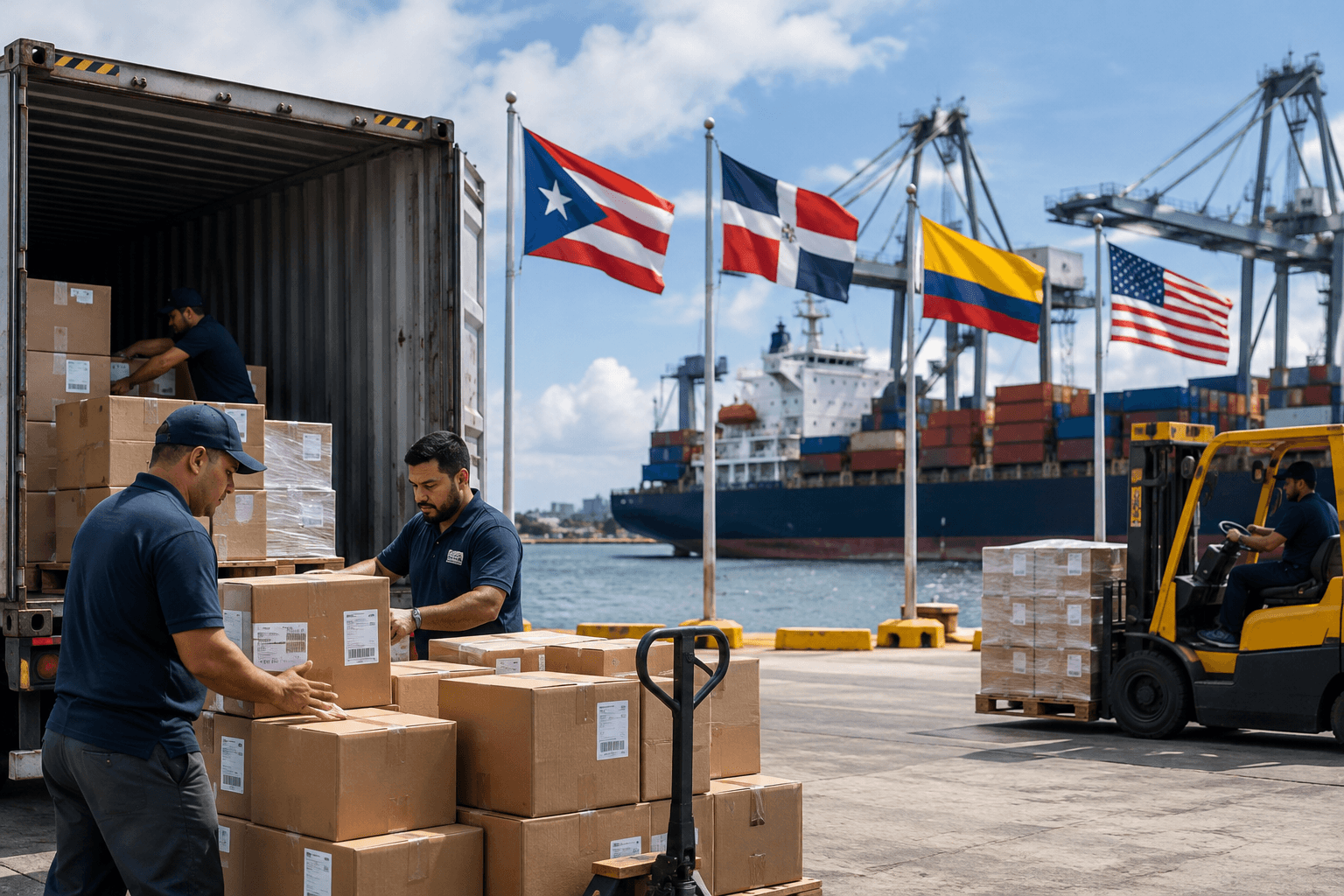
Taveras believes Puerto Rico’s strategic geographic location gives the island a competitive advantage in expanding business opportunities and strengthening commercial ties with neighboring Caribbean markets. He argues that exporting can bring new capital into Puerto Rico and help businesses offer more competitive employment.
That is why in March 2027 the CUD will hold its first women-led trade mission to the Dominican Republic, where approximately 15 entrepreneurs will have the chance to make connections and explore business opportunities in the country. The initiative will focus on the health and beauty industries through the CUD’s women’s committee.
Taveras also mentioned exploring Colombia’s development as a technology hub as another example of regional opportunities and economic transformation, as well as the U.S. mainland for commercial representation and cross-border e-commerce.
According to published reports, Caribe Unido’s tools include trade exchanges, connections to distribution chains and cross-border e-commerce, aimed mainly at the Dominican Republic, Colombia and the United States.
Puerto Rico’s aging entrepreneurs
The third, and perhaps most alarming, of Taveras’ concerns is that around half of Puerto Rico’s entrepreneurs are reaching retirement age, and, to make the landscape more complicated, about 53.3% of surveyed entrepreneurs in Colmena66’s 2024 business community report said they were unprepared for business succession, meaning no plans are in place to establish operational continuity among their businesses.
According to figures cited in Puerto Rico’s Act 175 of 2025, 53% of CUD members are business owners age 50 or older, which means that in 15 to 20 years, a great number of Puerto Rican businesses may be in jeopardy, underscoring the importance of succession planning.
Academia Vende tu Negocio is Fomento Local’s proposal to attack this problem: a business succession academy intended to help business owners develop succession plans, prepare their companies for potential sales and achieve financially secure retirements. The first cohort is expected to begin in February 2027, while the curriculum is being finalized.
The academy is meant to support both owners and potential buyers, with participation from the financial sector, universities and government, according to published reports. Metro described the axis’s goal as preserving existing capital, a framing that treats an aging owner base as a risk to the island’s stock of local enterprise and not only as a retirement issue.
In a related story, CUD joined this year’s Cómprale al de Aquí campaign by Empresarios por Puerto Rico, as we reported this morning. The campaign is not part of Fomento Local, but it rests on the same thesis, that local businesses belong closer to the center of the island’s economic strategy.
Local spending keeps more money and jobs on the island, but research shows that the places around the world moving the needle far more pair campaigns with procurement rules, public data and supplier capacity
The Toa Baja expansion buys 3 km of fiber, new dispatch systems, inspection tech, tracking global shift in which forecast accuracy and real-time visibility set limit on parts availability, a critical constraint for an island supplied by ocean freight
Five finalists in an accelerator run by Plaza Las Américas and Banco Popular show how small local brands try to scale from the island to export markets