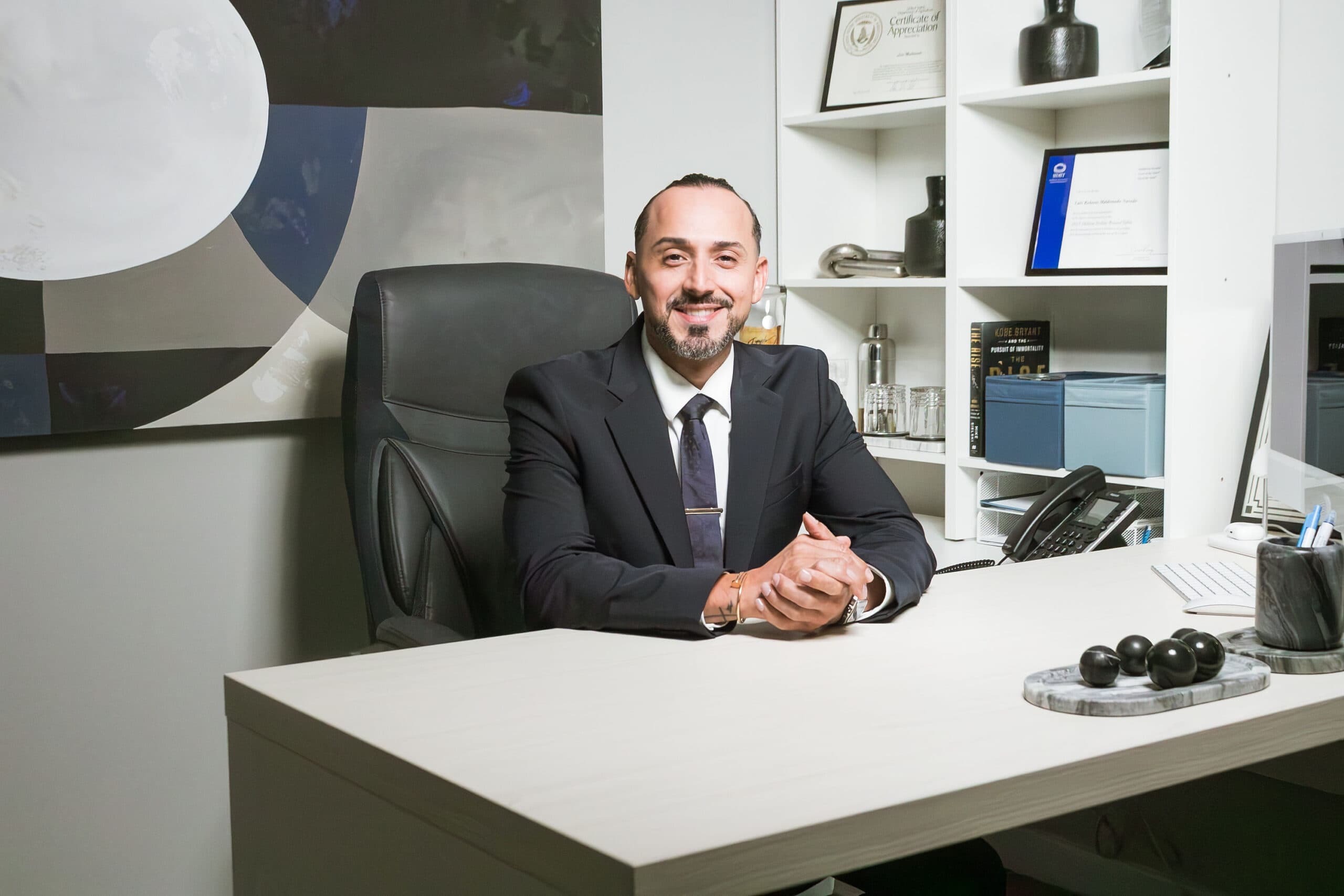
Luis Maldonado Built a Financial Strategy Firm to Fit the Island’s Unique Money Culture
From a farm in Corozal to a robust practice serving a unique niche, Maldo Group’s founder is betting on trust and literacy to close a savings gap that is wider here than almost anywhere in the U.S.
Luis Maldonado can’t point to the moment he discovered his knack for helping people. It’s simply been woven into his DNA since before he can remember.
From selling avocados and raising pigs on a farm in Corozal, to building one of the most trusted retirement-planning firms in Puerto Rico, he says the combination that has carried him through every stage of his journey has been his faith, devotion to service, and an uncanny ability to read people and understand their needs.
“I’ve always enjoyed talking with people, being able to serve them, and if possible, making a difference in someone’s life,” Maldonado said, a formula he credits with building the level of consultant-client trust that grows and sustains a financial practice over time.
That instinct, along with what he calls a series of mentor-like “parent figures” who shaped him along the way, is the throughline he draws from his early jobs to his current role as president of Maldo Group, the San Juan financial services firm he leads.
Maldonado describes the growth of the firm less as the result of a defined strategy than as the accumulation of that trust over time, reinforced, he assures, by keeping the firm’s culture personal rather than “cold or mechanical.”
Trust, he affirms, “isn’t earned overnight. It’s earned client by client.”
A Puerto Rico-specific kind of risk
A big part of that approach is a set of Puerto Rico-specific realities that don’t show up in a typical mainland retirement conversation: hurricane season, extended power outages, and the need for cash and supplies on hand, not just money invested, all to build preparedness as integral to a financial strategy.
The data backs up the instinct. Only 41% of adults in Puerto Rico report having emergency savings, compared with 53% on the mainland, according to a 2024 FINRA Investor Education Foundation study, and just 20% of owner-occupied homes damaged by Hurricane Maria carried homeowners insurance at the time the storm hit, a University of Puerto Rico-linked analysis of FEMA data found.
Federal disaster guidance for the island is clear about the reason cash matters as much as a brokerage statement. After Maria, most ATMs on the island were inoperable for days, leaving families who had planned only in digital dollars with no way to buy fuel or food.
“We often focus only on a retirement plan, when the reality is that a financial literacy is much broader.”
Luis Maldonado
The silence around money
He also points to a cultural pattern he’s had to work against: inherited habits around money, like building savings quietly, not discussing the subject, doing it the way it’s always been done. It’s an idiosyncrasy he believes no longer serves people well.
Researchers who study Latino household finances describe the same pattern. Surveys cited by the Employee Benefit Research Institute have found that roughly half of Hispanic workers prioritize supporting extended family financially over their own retirement savings, and industry researchers have repeatedly identified talking about money as a cultural taboo in Latino households, one that limits how much financial knowledge gets passed between generations.
The FINRA study puts a number on the downstream effect in Puerto Rico specifically: just 35% of adults on the island report owning a retirement account, compared with 57% on the mainland.
Changing that collective mindset, he says, has been one of the biggest challenges his firm has had to face.
“Some people don’t understand the basic concepts: how a retirement plan works, how to apply for or claim certain benefits, how a Thrift Savings Plan (TSP) works, or different financial tools, or what options are available. We often focus only on a retirement plan, when the reality is that financial literacy is much broader,” he clarified.
That education push feels more urgent now, Maldonado says, with inflation and rising costs squeezing both households and businesses across the island. When income doesn’t keep pace with expenses, he argues, the instinct to postpone strategizing is exactly backward.
Instead, people need more liquidity, tighter budgeting, and a plan tailored to their specific circumstances, rather than a one-size-fits-all approach.
Financial literacy at the forefront
The challenge Maldonado describes extends well beyond any single group of workers. Across Puerto Rico, retirement planning often means navigating a mix of savings vehicles, insurance products, pensions and government benefits while also contending with rising living costs and limited household savings.
For Maldonado, the problem is not a shortage of financial products, but a gap between having access to those tools and understanding how they fit together. That disconnect is where he believes financial education and individual progress become particularly important.
Federal retirement benefits in particular, he explains, like pensions, the Thrift Savings Plan, survivor benefits, are dense enough that many workers never fully understand what they’re entitled to or how to plan around it. His approach starts not with a product but with a seminal question: how much will a client actually need to live on once they stop working.
That client-first framing is also how he explains scaling a business. “We began with a lean team of just seven people, including employees and Authorized Agents combined,” he added. “We have since experienced rapid growth, and our commitment is to keep strengthening our team every day so we can reliably serve the people of Puerto Rico.”
Looking ahead, Maldonado frames Maldo Group’s next phase at a greater scale: reaching more people, expanding educational programming, and growing into new markets like the U.S. and Latin America.
“Our goal is to continue improving as professionals, as a team, and as a company, and to give people access to the very best when it comes to planning,” he concluded.
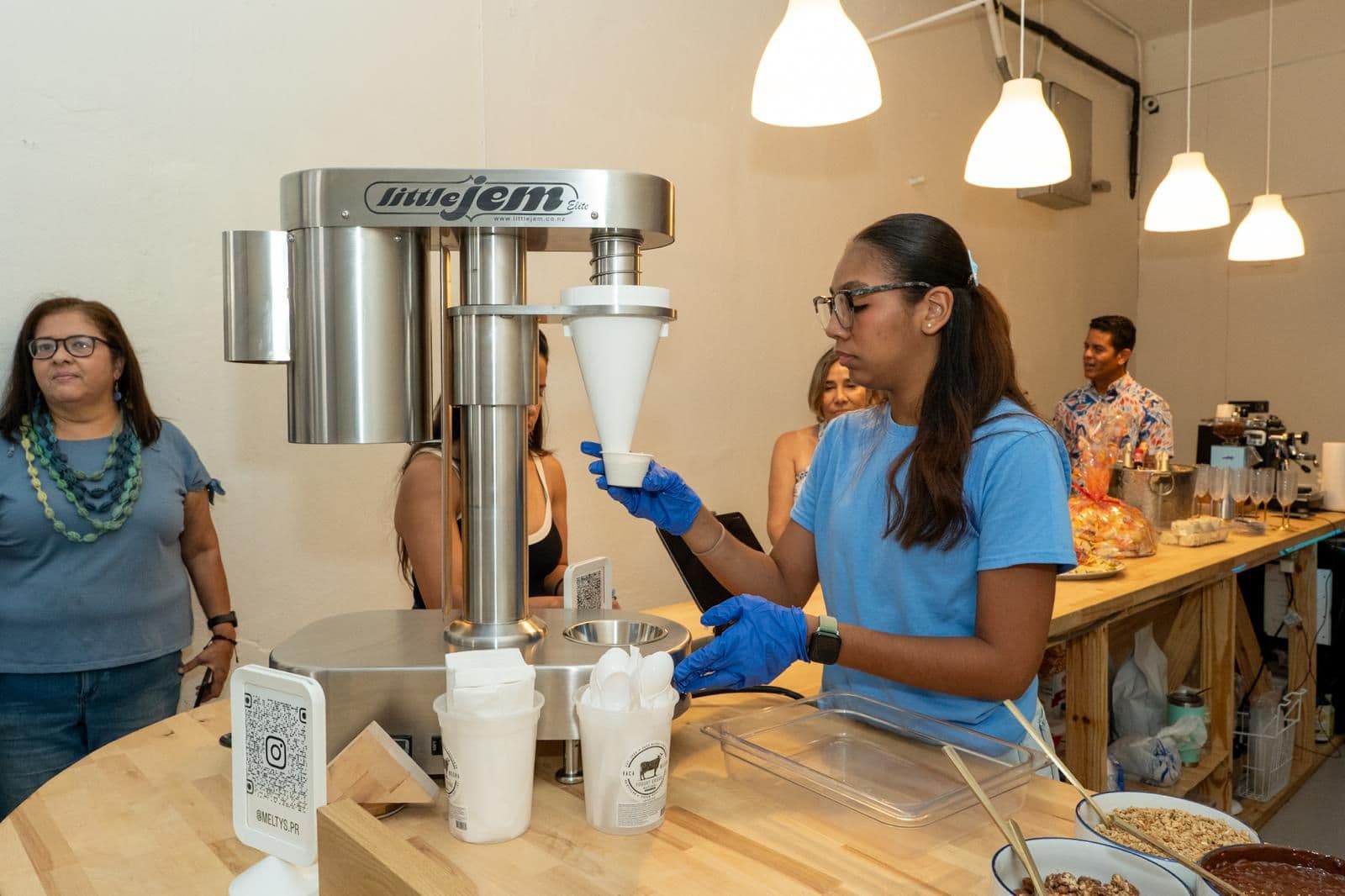
In this first of a series, we focus on the role of the Economic Development Bank in Puerto Rico’s small commercial funding space, and how one new ice cream shop got it done