LUMA CEO Frames Energy Crisis as a Problem of Governance, as the system spirals in uncertainty
Janisse Quiñones says four-year policy resets hold back the system and points to batteries, grid upgrades and $6.2 billion in federal funds, while LUMA’s own study puts the generation shortfall at 700 to 850 MW
Adapted from this week’s CB Print Edition, a story by Eva Lloréns and Philipe Schoene.
As the Puerto Rico government pursues efforts to terminate LUMA Energy’s contract, President and CEO Janisse Quiñones argues that the private operator’s most significant contribution has been bringing greater standardization, long-term planning and technical discipline to an electric system she says has long been driven by shifting political priorities rather than industry best practices.
In an exclusive interview with Caribbean Business, Quiñones said one of Puerto Rico’s greatest challenges is not the technical complexity of the electrical system itself but the structural instability that has repeatedly altered utility priorities with each change in administration.
“The electric system in Puerto Rico is complicated, not technically, but structurally,” Quiñones said. “The biggest issue that I see technically in Puerto Rico is that we deviated from industry standards in almost anything that we did.”
“What it does for a long-term planning process is change the direction every four years,” Quiñones said. “Every administration changed the direction of the Authority.”
The framing marks a shift in emphasis. In recent public remarks, according to published reports, Quiñones has centered on the shortage of generation and its effect on customers’ bills. In this interview her answer is continuity: long-term planning that survives a change of administration.
That argument is easier to weigh against the record, much of which CB has covered in recent weeks, than in the abstract.
The four-year reset
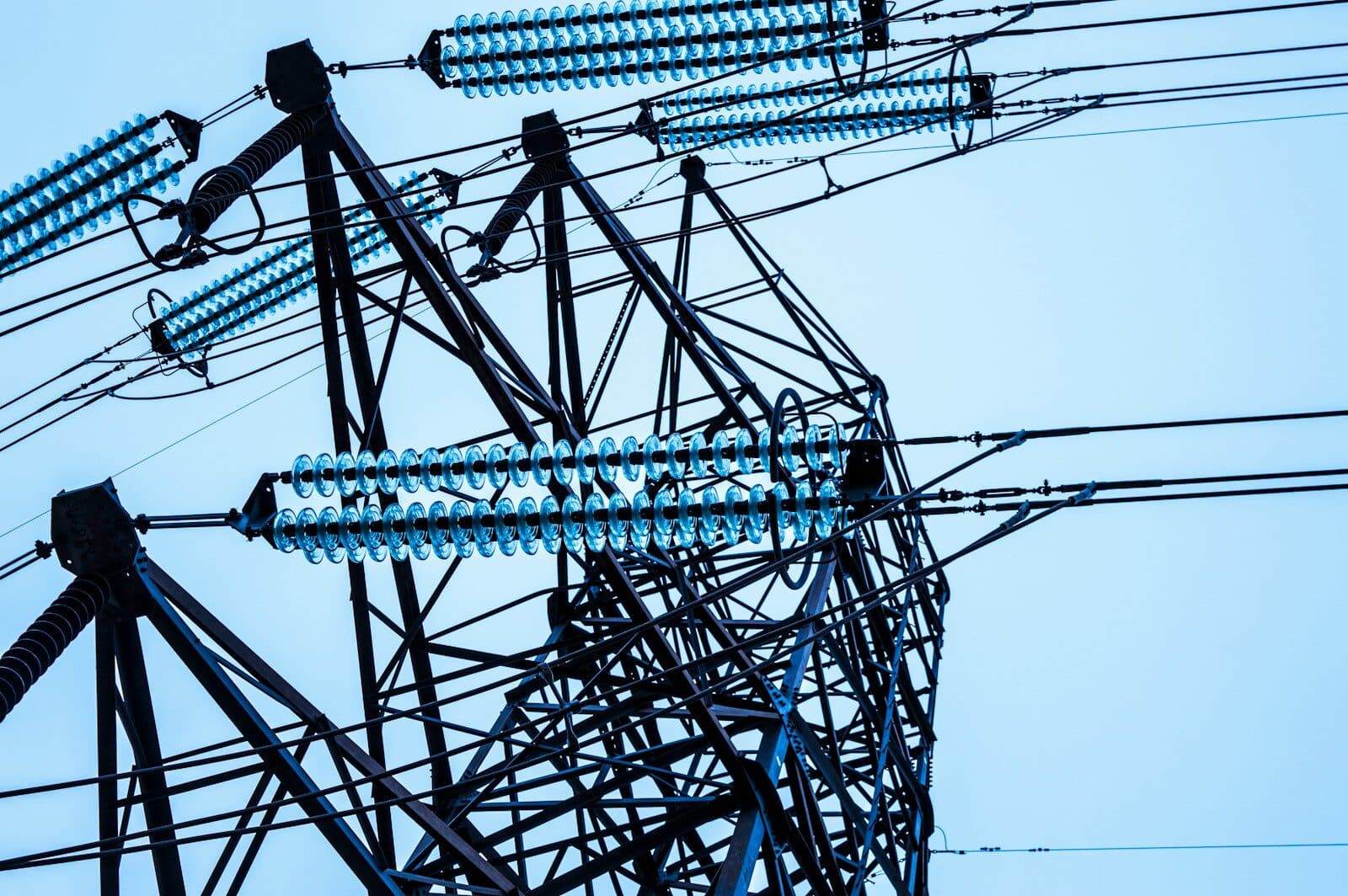
According to Quiñones, LUMA has focused on aligning Puerto Rico’s transmission and distribution system with industry standards, improving system planning, strengthening interconnection processes and preparing the grid for the large-scale integration of renewable energy envisioned under the island’s Integrated Resource Plan, or IRP.
She said decades of changing leadership at the Puerto Rico Electric Power Authority (PREPA) resulted in shifting priorities and interrupted long-term planning efforts.
“What it does for a long-term planning process is change the direction every four years,” Quiñones said. “Every administration changed the direction of the Authority.”
That diagnosis is not unique to the operator under pressure. Daniel Hernández Morales, a former senior executive at PREPA, LUMA and Genera PR, told CB earlier this month that Puerto Rico has not built a new power plant in nearly two decades and that, because privatization law requires new plants to be private cogenerators, the government must offer stable contracts and clear planning to attract investors.
“We need to move decisively,” he said. “If we don’t execute now, the next crisis will be worse than the one we’re trying to solve.”
The cycle Quiñones describes now reaches LUMA itself. The government is seeking to end its contract, and the dispute sits before the Puerto Rico Supreme Court.
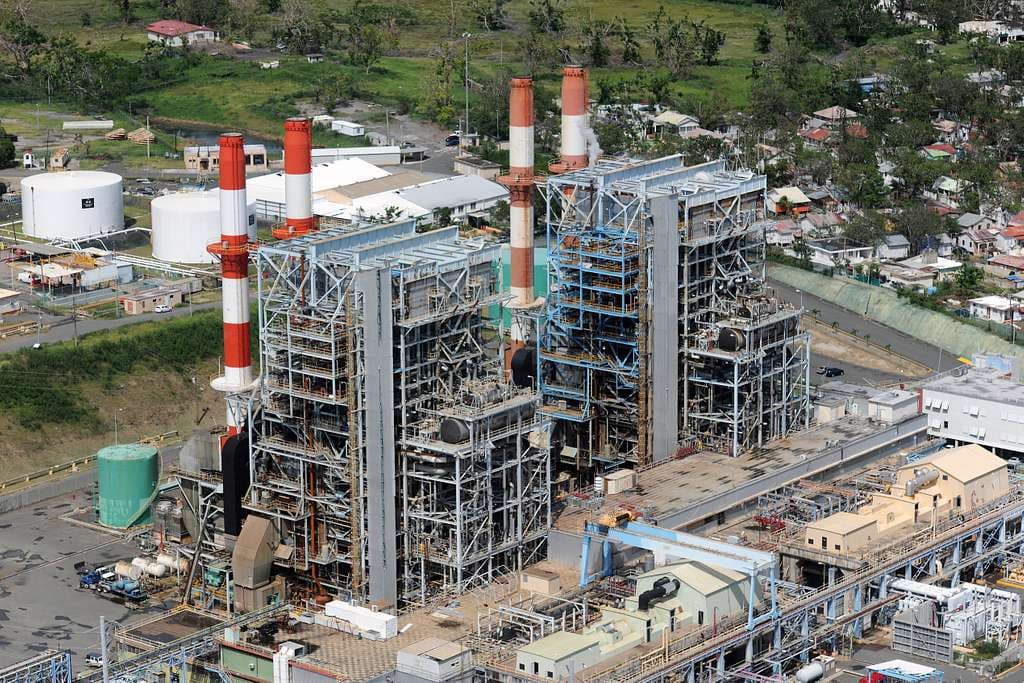
Generation, a gap of 700 to 850 MW
She credited the company with helping prepare the grid for utility-scale renewable generation and battery storage projects now under development across the island.
“You mentioned the IRP, and we have a lot of technical knowledge,” she said. “We’re trying to open the aperture of what other options do we have to bring more generation on the island and what is the best way to move that generation throughout the island.”
As litigation over LUMA’s contract continues before the Puerto Rico Supreme Court, Quiñones said the company’s focus remains on modernizing the transmission and distribution network and preparing the grid for the island’s renewable energy future.
The scale of the problem is visible in LUMA’s own numbers. In a filing CB reported Sept. 9, LUMA described a persistent generation deficit of 700 to 850 MW that has held across four annual resource adequacy studies.
Puerto Rico recorded 17 shortfall events in fiscal 2026, against a North American utility benchmark of one loss-of-load event per decade. Peak demand reached about 3,234 MW in August, the highest in four years, while only about 3,200 MW was available in real time after outages.
LUMA’s modeling found that 800 MW of firm temporary generation would bring the system close to the benchmark.
Quiñones pointed to utility-scale battery storage as a critical component of improving reliability, saying batteries could help mitigate a substantial portion of load-shedding events by providing rapid injections of power when generating units unexpectedly trip offline.
That fits one part of the picture. Fast-responding storage can cover the moments after a unit trips, which is the use she described. But storage moves energy in time rather than creating it, and in the interview she did not address the temporary generation that LUMA’s own study says the system needs.
Hernández’s plan, as CB reported Oct. 5, lists batteries as a high priority, as is adding temporary generation. He noted that more than 50 approved renewable and battery projects are mostly stalled in financing after federal tax credits were weakened and PREPA’s bankruptcy deterred lenders, and he sees no major new generation before 2031, against the roughly 5,500 MW he and other experts say is needed.
Quiñones’ reference to the best way to move generation across the island points to the part of the problem LUMA does control.
With LUMA’s contract up in the air, Quiñones places the cost of nullifying the extension at about $1.3 billion, at least $726 million of it unavoidable, and says about $6.17 billion in obligated federal funds for 279 grid-reconstruction projects could be jeopardized.
Rooftop solar and the cost of success
At the same time, Quiñones said Puerto Rico’s rapid growth in rooftop solar adoption is beginning to create operational challenges in certain parts of the distribution system.
The island has one of the highest levels of rooftop solar penetration in the United States, she said, and previously added roughly 4,000 residential solar systems per month. While she described that growth as positive, she acknowledged that increasing amounts of distributed generation are creating voltage fluctuations and infrastructure constraints in some areas.
“We have operational challenges today because of the amount of solar systems,” Quiñones said.
Those challenges, she continued, can be addressed through upgrades to transformers, substations and distribution circuits as federal reconstruction funds continue flowing into grid modernization projects.
The numbers support her account of the boom. The U.S. Energy Information Administration reported that rooftop solar reached about 1.5 gigawatts in 2025, roughly a fifth of the island’s generation capacity, with about 3,850 systems installed a month.
CB reported Aug. 31 that Energy Czar Josué Colón told the Energy Bureau that more than 80% of feeders exceed a 15% solar penetration threshold, and that LUMA counts 121 substations and 145 circuits operating above 90% of load.
The interview stops short on who pays. Quiñones pointed to federal reconstruction money for the upgrades. In the Energy Bureau proceeding, Colón proposed that developers, not ratepayers, cover upgrades their projects trigger, while independent engineer Robert A. García Cooper argued that early adopters cannot be charged retroactively and attributed much of the problem to voltage conditions rather than solar saturation.
Solar industry groups cite statutes that guarantee automatic interconnection for systems of 25 kW or less. A federally funded upgrade path would sidestep that dispute, but only if the money keeps flowing.
The contract fight and $6.2 billion in federal funds
She also expressed concern that ongoing efforts to replace LUMA could complicate implementation of federally funded reconstruction projects.
Approximately $6.2 billion in obligated federal funding is currently supporting grid modernization efforts, and Quiñones argued that transferring those responsibilities to another operator could delay projects and create uncertainty around execution.
The warning echoes the argument the Puerto Rico Manufacturers Association made to the Supreme Court, as CB reported Oct. 6, that voiding the 2022 extension would destabilize the investment climate.
LUMA puts the cost of nullifying the extension at about $1.3 billion, at least $726 million of it unavoidable, and says about $6.17 billion in obligated federal funds for 279 grid-reconstruction projects could be jeopardized.
It also said selecting and certifying a new operator could take two years, plus 18 months or more to secure federal obligations.
The manufacturers, whose sector says it accounts for about 45% of Puerto Rico’s gross national product, told the court the case “transcends the operation of the electrical system per se.”
The government disputes the numbers. According to published reports, Gov. Jenniffer González called LUMA’s cost estimate false, and the government has suggested PREPA could temporarily run the system during a transition, which LUMA says PREPA lacks the personnel, infrastructure and resources to do.
The $1.3 billion estimate comes from a sworn statement by Quiñones, so the risk to federal funds she described to CB is part of the same argument. Both LUMA and the manufacturers say the case turns on legal certainty rather than the operator’s performance. No ruling has been announced.
Transparency, interconnection, a ‘young regulator’
Quiñones argued that one of LUMA’s achievements has been introducing greater transparency regarding the condition of Puerto Rico’s electrical infrastructure and the investments needed to build what she described as a reliable, affordable and sustainable system.
The executive said LUMA has continued refining customer service and interconnection processes while working to address one of the most significant challenges facing Puerto Rico’s energy transformation: determining how much renewable generation the system can safely accommodate and where new projects should connect to the grid.
Quiñones defended the company’s interconnection review process, saying studies are necessary to identify available capacity, evaluate system impacts and ensure new projects can be integrated safely without jeopardizing reliability.
She noted that many renewable developers are competing for access to the same substations and transmission corridors, making technical analysis essential as Puerto Rico seeks to rapidly expand renewable generation.
More broadly, she said Puerto Rico’s energy transition will require balancing reliability, affordability and sustainability while developing a regulatory framework capable of supporting long-term infrastructure investment.
“We need to move decisively. If we don’t execute now, the next crisis will be worse than the one we’re trying to solve.”
Daniel Hernández, formerly with LUMA, PREPA and Genera PR
“I think, to be fair, our regulator is a young regulator,” Quiñones said. “Regulation is a complicated business because you have to take into consideration what the customer needs versus what they want versus what they can afford.”
The affordability test is already visible on bills. CB reported Oct. 5 that the Energy Bureau approved a record 33.86 cents per kilowatt-hour for October through December, 18% above the prior quarter, adding $42.27 a month for unsubsidized residential customers.
As litigation over LUMA’s contract continues before the Puerto Rico Supreme Court, Quiñones said the company’s focus remains on modernizing the transmission and distribution network and preparing the grid for the island’s renewable energy future.
Rather than focusing on any single operator, she said, the larger challenge is ensuring Puerto Rico maintains the technical expertise, planning discipline and investment needed to achieve a reliable and sustainable electric system over the long term.
The 20-MW Peñuelas storage project advances under a revised contract the public cannot yet see, as regulators review it and lawmakers press for clarity on the producer’s gas plant beyond 2032