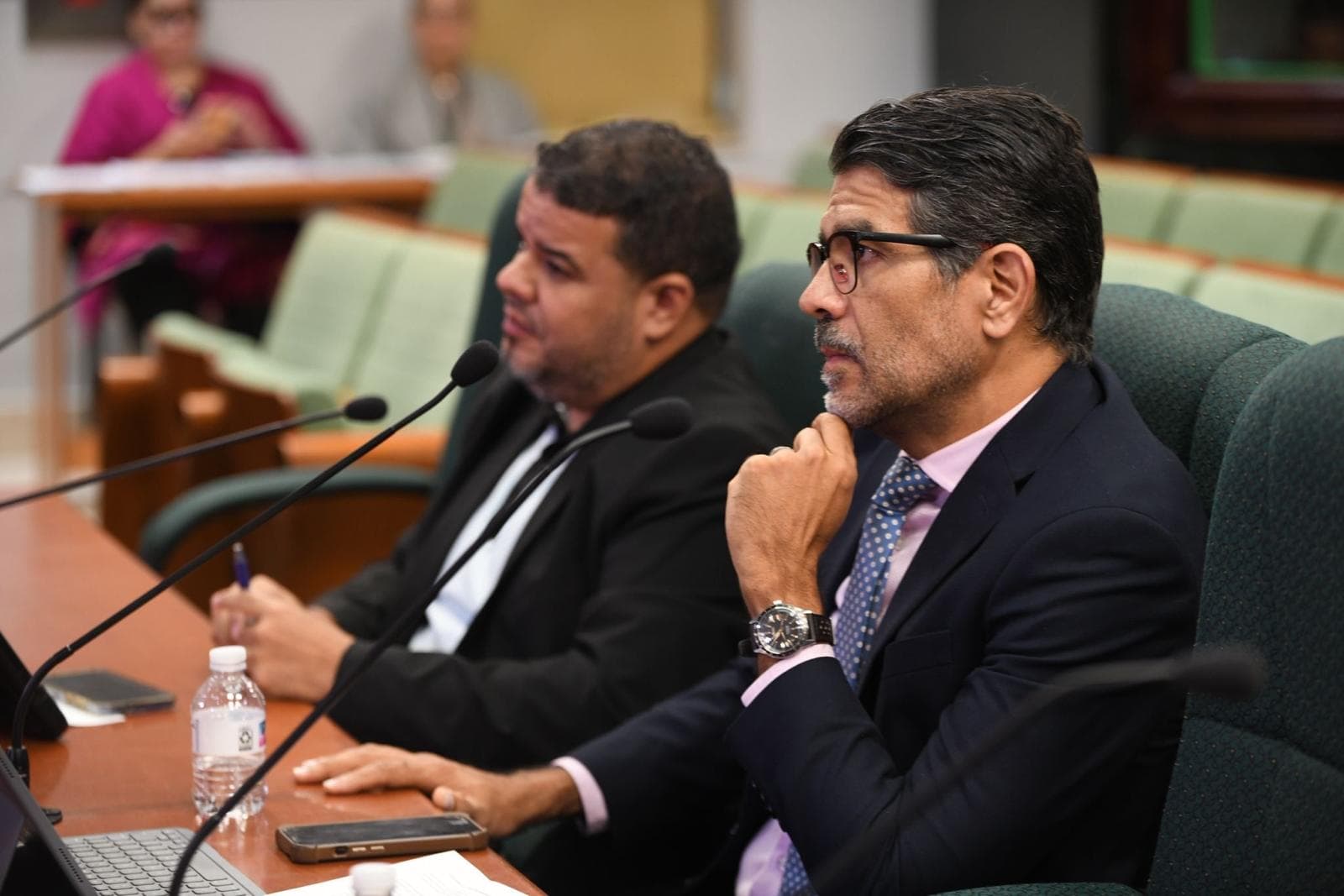
At a recent hearing of the House Municipal Affairs Committee, the Municipal Revenue Collection Center (CRIM in Spanish) opposed Senate Bill 723, a measure that would exempt solar equipment and backup generators installed at residential, commercial, and industrial properties from municipal taxes.
CRIM Executive Director Javier García Cintrón told lawmakers the proposal would remove roughly $12 million from municipal revenues without identifying a replacement funding source, a requirement imposed by the Financial Oversight and Management Board, placing municipalities at the center of the same energy transition that state regulators are trying to manage on the grid.
Rooftop solar capacity on the island reached roughly 1,456 megawatts by the end of 2025. That translates into energy delivered, or rooftop solar’s average capacity factor on the island, of 18% of that installed capacity, or the actual contribution to the electricity Puerto Ricans consume. That is closer to a tenth of total demand by some independent estimates, smaller than the capacity figures alone suggest.
The Energy Czar’s warning
As previously reported by Caribbean Business, Energy Czar Josué Colón has warned that distributed solar has already pushed portions of the system past their physical limits.
In formal comments to the Puerto Rico Energy Bureau (PREB), Colón said more than 80% of feeders exceed the 15% penetration threshold, while 35% are operating above 70% capacity, conditions he linked to voltage fluctuations, frequency dips, and load-shedding events that disconnect between 130 and 140 megawatts at a time.
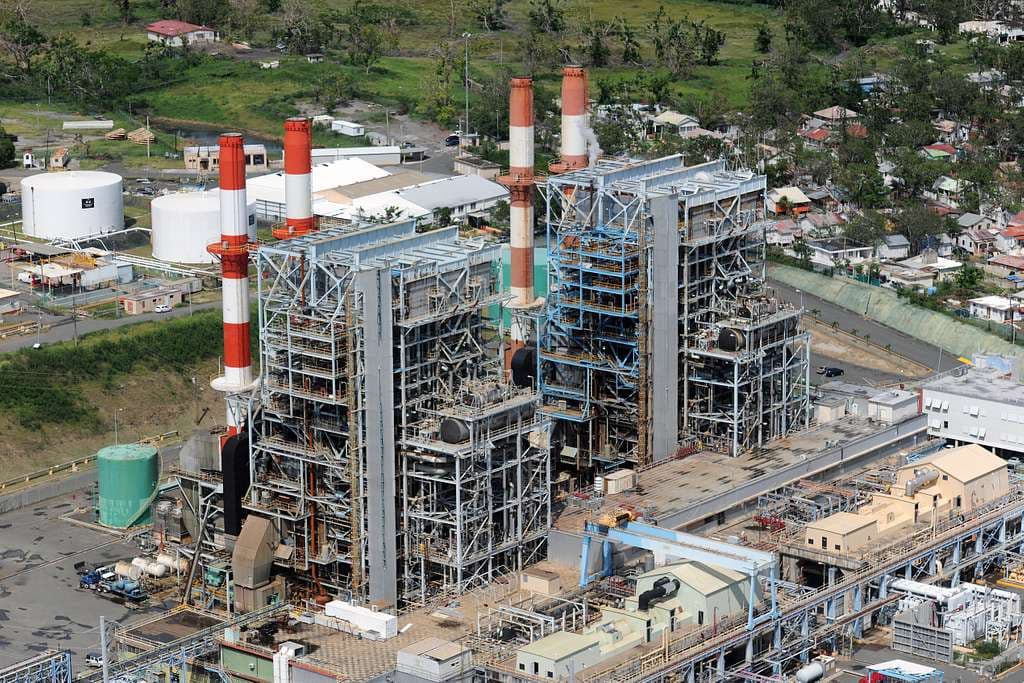
He also cited older inverters that drop offline during frequency disturbances, causing sudden losses of roughly 100 megawatts, “the equivalent of losing the San Juan 7 unit,” according to his filing.
Colón urged regulators to require full interconnection studies for all new systems, including those under 25 kW that currently qualify for automatic approval, and recommended that developers, not ratepayers, pay for any upgrades triggered by their projects.
He also asked the Bureau to authorize uncompensated curtailment of excess solar generation and to mandate advanced inverter settings such as Volt-VAR and Volt-Watt for all systems, including those already installed.
Voltage that can shut down solar systems
Independent engineer Robert A. García Cooper echoed some of Colón’s concerns but identified a different underlying problem: voltage conditions that are already severe enough to shut down solar systems even on feeders with low solar penetration.
In comments filed August 27, García Cooper cited real-world measurements showing line-to-neutral voltages of 127.7 to 128.8 volts on feeders classified as “unsaturated” by LUMA Energy. One feeder exceeded 254 volts line-to-line for more than 160 hours in a single week.
“These values exceed the Class B threshold that LUMA confirmed as its proposed unsafe condition limit,” he wrote, adding that the overvoltage is “an operational parameter within LUMA’s authority” and not caused by rooftop solar saturation.
García Cooper warned that once PREB mandates Volt-VAR settings, customers will lose real power output as inverters prioritize reactive power to stabilize voltage, a quantifiable economic harm that he said must be compensated.
Without a compensation mechanism, he argued, the regulation would create “a new systemwide injury the moment it takes effect.”
He also raised social-equity concerns that connect the technical dispute to the broader question of who pays for the energy transition. Early adopters, typically higher-income households, contributed to today’s constraints but cannot be charged retroactively for upgrades, he wrote, leaving lower-income customers to shoulder disproportionate costs.
He urged PREB to acknowledge this gap and recommend legislative reform to Puerto Rico’s cost-allocation rules.
The grid operator’s numbers
LUMA Energy is making a similar case from the operator’s perspective, urging regulators to adopt a more controlled, technically grounded interconnection framework.
In a presentation filed under Case No. NEPR-MI-2019-0009, in which PREB is evaluating new regulations for the interconnection of solar equipment and microgrids, the private operator reported that 121 substations and 145 circuits now operate above 90% of load, while 105 circuits exceed 100% of daytime design capacity.
LUMA said it has reviewed more than 25,000 high-voltage complaints, with over 21,000 tied to feeders where solar penetration has depressed minimum daytime load and reduced system inertia.
LUMA, which operates the power utility’s transmission and distribution system, is advocating a clear separation between technical interconnection rules and customer programs such as net metering, arguing that no system should export power without written authorization.
LUMA also warned that current cost-allocation frameworks fail to capture cumulative upgrade costs and ongoing operational needs, leaving the utility to absorb costs for voltage regulation, protection coordination, monitoring, and re-certification.
The industry’s rebuttal
In a motion to the PREB in the interconnection regulation case, the Solar and Energy Storage Association of Puerto Rico (SESA) and Solar United Neighbors (SUN) told the regulator that the July 13 draft of the interconnection rule is incomplete and omits several components required by law.
Their filing argues that Puerto Rico’s statutes guarantee automatic interconnection and automatic net metering within 30 days for systems of 25 kW or less, upon certification by a licensed electrician or engineer.
“Such systems shall be interconnected automatically,” they wrote, emphasizing that the draft rule improperly replaces this statutory process with multiple layers of utility review and a supplemental study mechanism that could impose costs or restrictions even after a system is installed.
Back to the fiscal fight
Meanwhile, back at CRIM, García Cintrón said in a statement that the agency could support a “limited exemption” for equipment installed at certified elder-care centers and at a homeowner’s primary residence if that residence already qualifies for an exemption under existing law.
But he warned that a broad exemption covering commercial and industrial properties, or wide categories of movable equipment, would create an unsustainable fiscal gap.
He reminded legislators that “any legislation that has an economic impact must contain a repayment source to replace the revenues,” noting that the measure would have a direct effect on municipal budgets.
CRIM’s governing board, he said, determined it could consider an exemption only for fixed equipment installed at a taxpayer’s primary residence that already enjoys a statutory exemption, and for certified elder-care centers.
“After evaluating the measure, CRIM maintains its institutional position of opposing the approval of the bill as drafted, particularly regarding the provision to broadly expand tax exemptions for energy generation or storage equipment, especially if they extend to commercial and industrial properties and broad categories of movable goods,” he said.
He concluded by acknowledging the social importance of elder-care centers, saying CRIM could support an exemption “exclusively for machinery that is an electric generator.”
In sum, as PREB prepares the next draft of the interconnection regulation, policymakers face a complex balancing act: preserving the momentum behind rooftop solar, protecting municipal finances from unfunded exemptions, assigning grid-upgrade costs fairly, and stabilizing an electric system that is being reshaped faster than it can be modernized. Every one of those fights, fiscal, technical and regulatory, is being litigated at once, and the cumulative outcome, more than any single filing, will determine whether rooftop solar remains Puerto Rico’s fastest-growing energy source or becomes the target of the constraints now converging on it.