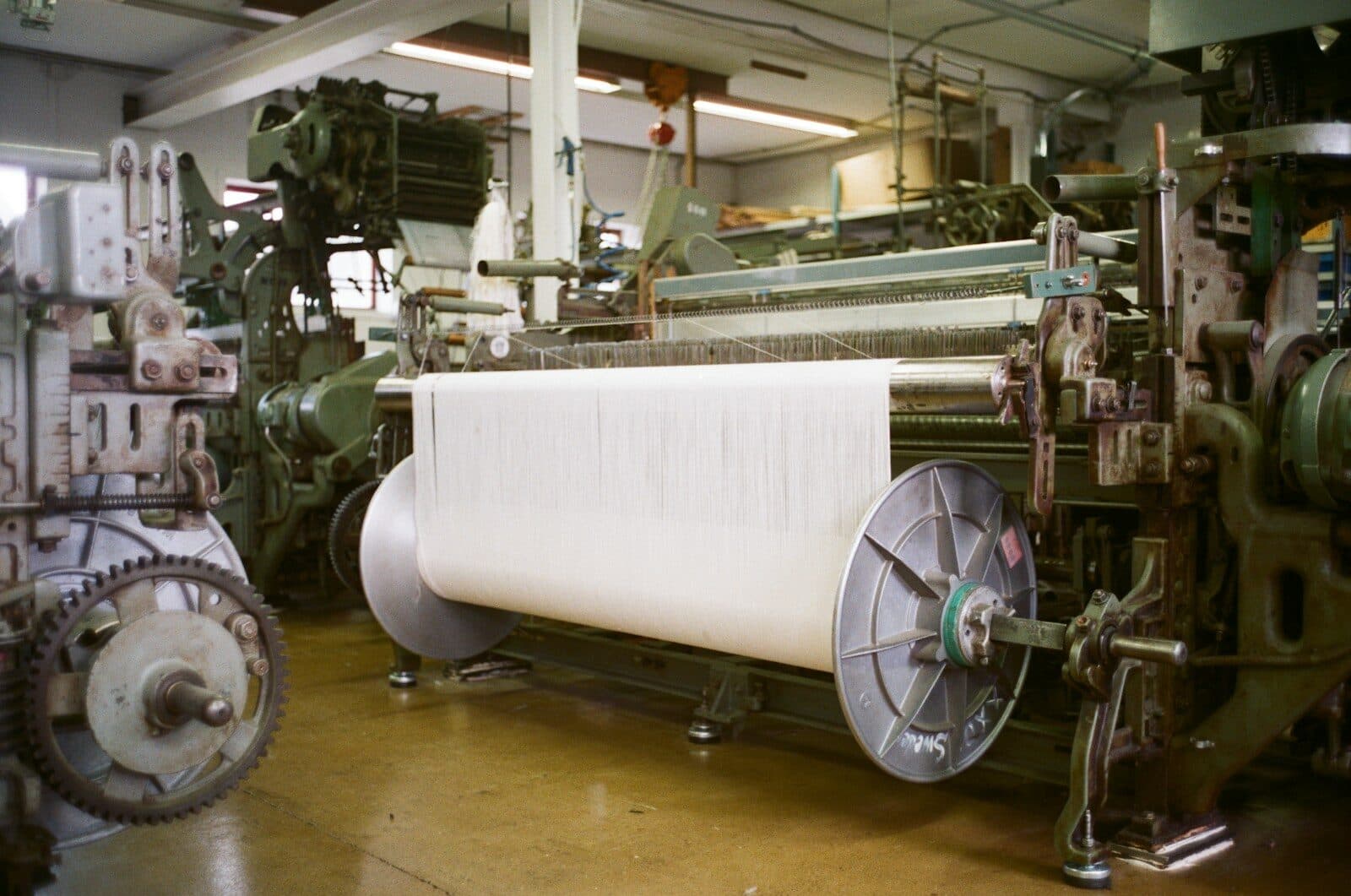
Pentaq Manufacturing Corp. is expanding its production capacity in Sabana Grande after receiving a new industrial property from the Puerto Rico Industrial Development Company (PRIDCO), a move that follows the company’s recent award of a $41.36 million U.S. Department of Defense contract for military uniform components.
It is also the third eight-figure Pentagon textile award to a Puerto Rico manufacturer in roughly nine months, and that pattern is the larger story.
In November, PRAK Industries of Camuy won a five-year contract worth up to $44.28 million for combat uniform coats and trousers, competing against six other bidders for Navy and Coast Guard business.
In July, Kandor Manufacturing of Arecibo took a $33.79 million award for green service uniform dress shirts.
Both came through the Defense Logistics Agency’s Troop Support division in Philadelphia, the same office that buys nearly all the clothing the U.S. military wears. Add Pentaq’s award, and three island plants have booked roughly $119 million in Pentagon apparel work since late last year.
50 jobs at Pentaq
The 5,785-square-foot facility in the Rayo Guaras sector will allow Pentaq to scale manufacturing of knee pads, elbow pads and training shorts used in U.S. Army physical training uniforms. The expansion is expected to create 50 additional jobs.
Pentaq, a PRIDCO tenant since 2004, has steadily grown its operations over two decades, producing personal and military textile products for federal clients. The new contract, which spans five years, positions the Sabana Grande manufacturer for continued growth in defense procurement markets.
PRIDCO executive director Roberto Lefranc said the property transfer reflects the agency’s strategy to leverage industrial assets for companies with long-term growth potential. As part of the agreement, PRIDCO granted $19,521 in rent credits for initial improvements, and the facility includes more than $405,000 in FEMA-assigned funds for future upgrades.
Pentaq president Oscar Quiles highlighted the importance of federal partnerships, including the Department of Defense, SBA and SBTDC, in strengthening Puerto Rico’s textile sector. He credited the company’s workforce for sustaining high-quality production standards that have helped secure federal contracts.
Why DoD work lands here
The structural reason behind multiple deals in Puerto Rico is a law older than most of the companies bidding on these contracts. The Berry Amendment, enacted in 1941 and made permanent in the fiscal 2002 defense authorization, requires that textiles, clothing, footwear and tents bought by the Defense Department be 100% domestic in origin, from the fiber forward. There is no percentage test and no price-preference escape hatch of the sort the Buy American Act allows. And the statute explicitly counts Puerto Rico as domestic.
That gives island manufacturers a structural position that no foreign competitor can claim at any price, paired with a cost base well below the mainland. It is the same logic behind the island’s pharmaceutical pitch, but here applied to sewing.
The near-term reason is that Congress is tightening the rule. Lawmakers have moved through the National Defense Authorization Act to close a long-standing exemption that allowed the Pentagon to buy foreign textiles on purchases under $150,000, the most commonly used workaround for Berry compliance on smaller orders.
Industry analysts expect that change to redirect or reshore additional contract dollars toward domestic producers, a category in which Puerto Rico is already among the largest players.
A bigger apparel industry than New York’s
The employment data suggests this is not a blip. Apparel manufacturing employment on the island grew from 7,167 workers in 2020 to 8,238 in 2024, a 15% increase, according to Bureau of Labor Statistics figures compiled in the Department of Economic Development and Commerce’s 2025 apparel and textiles profile. Total wages in the sector rose faster, from $105.5 million to $180.5 million, a 71% increase over the same period.
Those 8,238 workers make Puerto Rico a larger apparel manufacturing employer than New York, which had 7,505; Texas, with 4,739; or Florida, with 3,276. The island does it with 64 establishments against New York’s 818, meaning island plants are far larger on average, the scale that Berry-covered federal contracts require.
The competitive advantage is also, unsurprisingly, a wage story. Average annual pay in Puerto Rico apparel manufacturing was $21,914 in 2024, against $70,241 in New York and $68,382 in Florida. The island’s cost position in this sector rests substantially on paying roughly a third of what mainland apparel workers earn, even as sector wages here have risen.
Pentaq is not operating alone in this space. Federal procurement records list a cluster of island firms holding Defense Logistics Agency, Coast Guard and Army contracts, including: Propper International in Cabo Rojo; BlueWater Defense in San Lorenzo with additional plants in Cidra, Corozal and Yabucoa; SNC Manufacturing in Camuy; Kandor in Arecibo; Aurora Industries; M&M Manufacturing, and Puerto Rico Industries for the Blind
BlueWater alone reports having produced more than 20 million garments and equipment items across its Defense Department history, including 7.2 million combat trousers and 5.8 million coats.
Beyond uniforms
Textiles are the most visible cluster, but they are not the only federal defense money moving on the island.
In August, the U.S. Army Corps of Engineers awarded a $45 million contract to build an installation-level microgrid at Fort Buchanan, a project that will run through 2029 and that speaks directly to the energy resilience problems the island’s civilian grid has not solved.
In April, the Army Contracting Command awarded a $19.5 million five-year contract for grounds maintenance across Puerto Rico.
Last September, the Defense Logistics Agency’s energy division awarded more than $40 million for fuel support at José Aponte de la Torre Airport in Ceiba, the former Roosevelt Roads Naval Station.