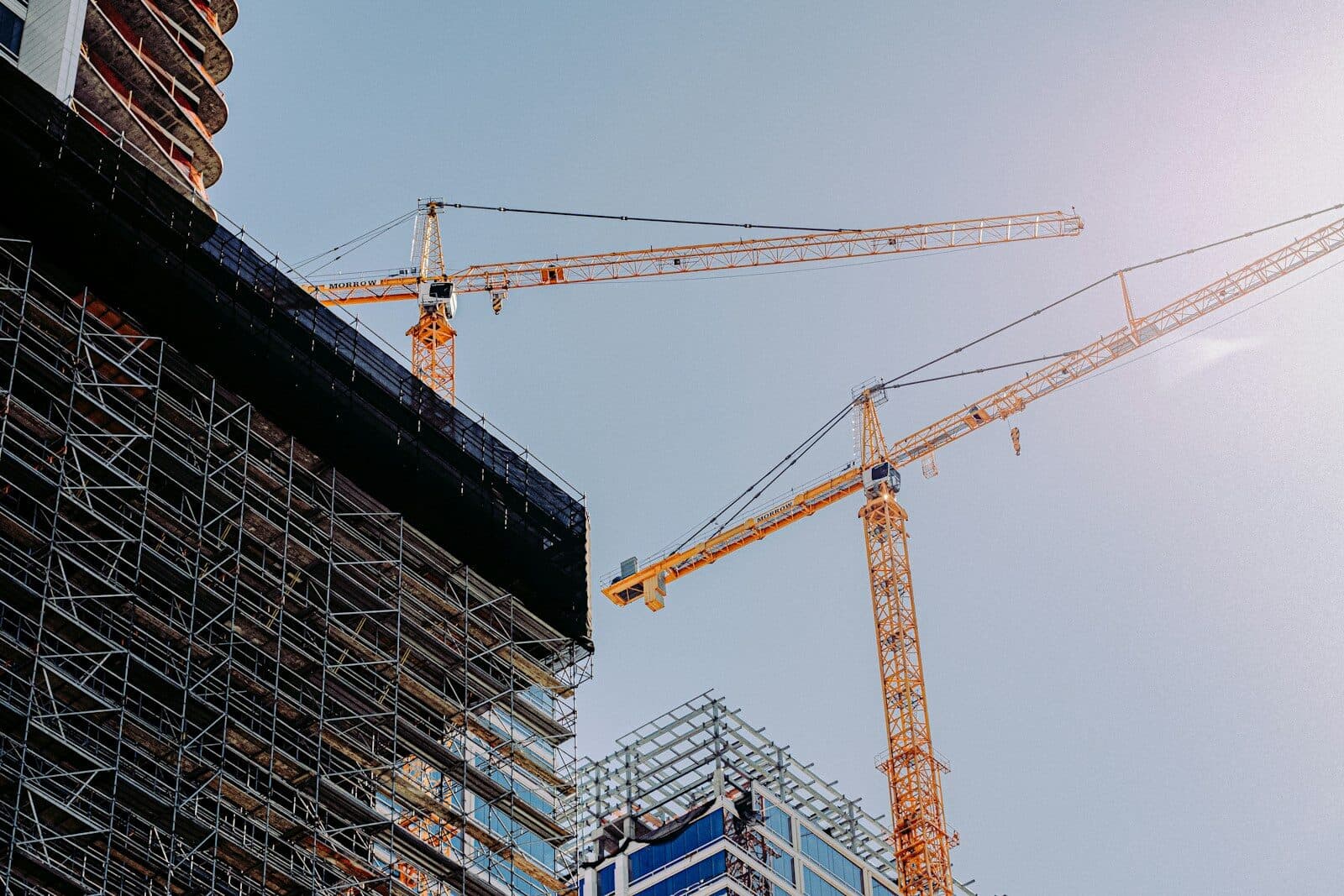
It is a long way from its peak 25 years ago, as it begins to crawl up from the bottom
When Puerto Rico’s general contractors gather at El Conquistador in Fajardo next month for the AGC annual convention, the headline session on their program is a Sept. 11 executive conference called “Hablemos de Construcción: Retos, reformas y oportunidades” (Let’s talk about construction: challenges, reforms and opportunities). The agenda pairs it with working sessions involving PRASA, COR3, the Infrastructure Financing Authority, municipalities, the energy sector, Highways, Transportation, Ports, the U.S. Army Corps of Engineers and Housing, which is to say nearly every entity that controls whether a project on the island actually gets built.
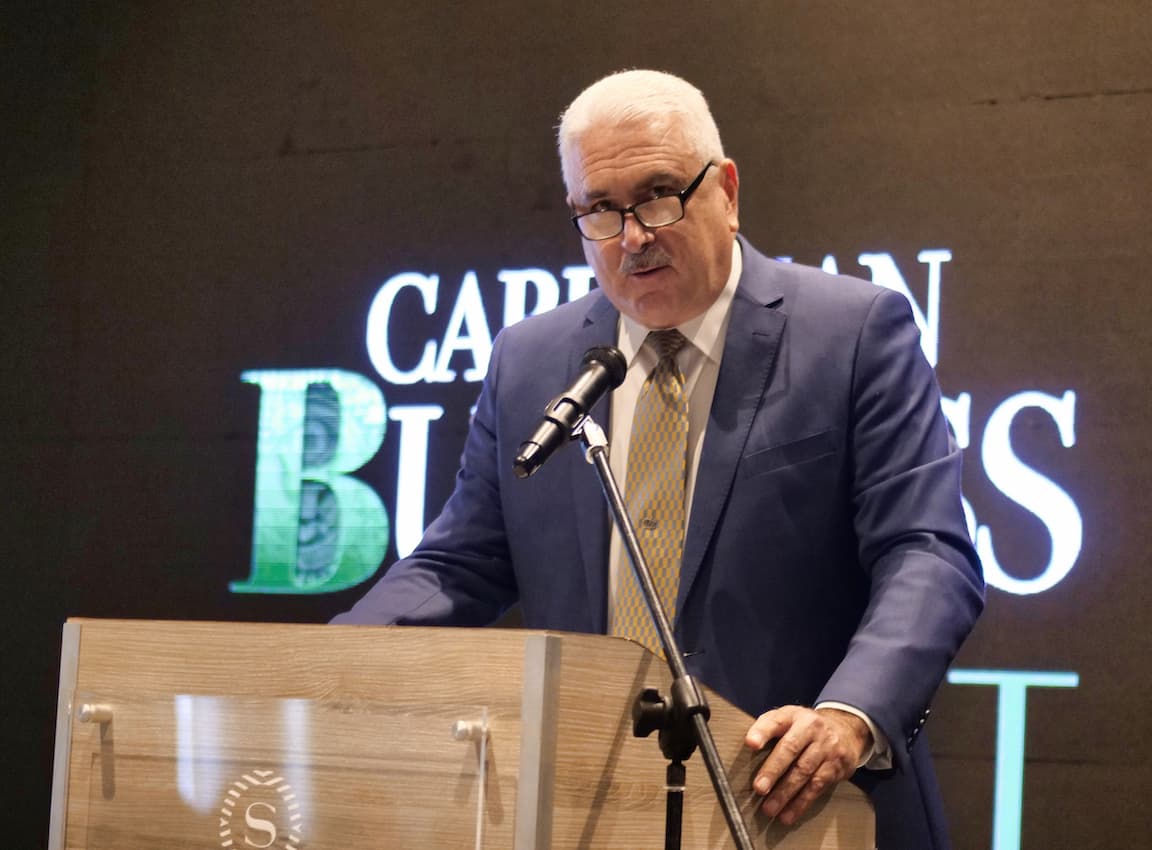
The Association of General Contractors of Puerto Rico (AGC-PR) announced the program for its 52nd Annual Convention and Expo Construcción on Friday, along with the news that engineer Humberto H. Reynolds will receive the Alejandro S. Herrero award, the industry’s highest local honor. The convention runs Sept. 9 through 13 and typically draws more than 1,000 attendees, making it the largest construction gathering on the island.
But what exactly will they likely talk about? The figures AGC-PR cited alongside the announcement are genuinely good news. Construction employment stood at 39,900 jobs in July 2026. Cement production reached roughly 9.0 million 94-pound sacks in fiscal 2026, up 5.7% over fiscal 2025, and sales reached about 15.4 million sacks, up 1.2%.
As economic indicators go, this one has always been a leading one, and today they point toward growth. Set against the industry’s own history, though, those numbers describe something more complicated than a recovery, and they frame the questions likely to dominate the Sept. 11 session.
An industry that lost seven of every ten jobs
Federal Bureau of Labor Statistics data tracked through the St. Louis Fed puts Puerto Rico construction employment at 69,100 in July 2004, the high point of the available series, which begins in 2003.
The industry many readers remember, the one built on the postwar industrialization and middle-class push, housing expansion and public works, was still operating at roughly that scale into the mid-2000s.
What followed was more a collapse than a downturn. Employment fell below 60,000 by the end of 2006, below 50,000 during 2008, below 36,000 by the close of 2009, and kept sliding through the bankruptcy years. It bottomed at 20,200 jobs in October 2017, one month after Hurricane Maria, having shed roughly seven of every ten positions the industry held at its peak.
The rebuild since then is real. Employment has climbed almost without interruption for eight years, briefly interrupted by the pandemic, from 20,200 to the 39,000-to-40,000 range where it has held through 2026. That is close to double the trough. It is also about 57% of where the industry stood in 2004.
Cement tells a compatible story on a longer timeline. Fiscal 2026 sales of roughly 15.4 million sacks are healthy against recent years: 14.5 million in fiscal 2023, 15.1 million in fiscal 2022, 13.8 million in calendar 2020. But in 1977, Puerto Rican Cement alone sold 19.9 million bags on an island then consuming roughly 29 million. Today’s market moves a bit more than half the cement Puerto Rico was pouring in the late 1970s.
From exporter to importer
There is a structural change buried in AGC-PR’s own two cement bullets that is easy to miss. The island produced about 9.0 million sacks in fiscal 2026 and sold about 15.4 million. The difference, roughly 40% of what Puerto Rico consumed, came from somewhere else. Planning Board figures show 530,036 tons of cement imported in fiscal 2023.
That is close to an inversion of the island’s historic position. In the 1960s and 1970s, Puerto Rico’s cement plants ran near capacity and shipped surplus product to Venezuela, the Dominican Republic and the smaller Caribbean islands. The 1977 federal minerals yearbook records domestic producers supplying more than two-thirds of local consumption while still exporting over a million bags. An industry that once supplied the region now imports a substantial share of its own core input.
The more consequential fact about the current expansion is where the money comes from. AGC-PR’s own economic analysis has noted that despite billions in federal recovery funds, construction has nonetheless grown below its potential given that injection.
Total public and private construction activity reached $5.73 billion in fiscal 2023, up 7.8% over the prior year, according to the Planning Board. The sector now counts roughly 4,551 establishments, 96% of them small and midsize firms, meaning the recovery is distributed across a large number of modest companies rather than concentrated in a handful of large contractors.
What is actually on the table Sept. 11
Read against that backdrop, the agency lineup for the Sept. 11 working sessions looks less like a courtesy roster and more like a list of the specific chokepoints between the dollars in assigned federal funds and money actually moving into projects.
COR3 administers the federal recovery disbursements. AFI finances infrastructure. PRASA and the energy sector represent the utilities whose reliability problems raise costs on every job site. Highways, Transportation and Ports control the public works pipeline. The Army Corps has its own portfolio. Municipalities with approved territorial plans issue their own permits.
The reform question sitting underneath all of it is permitting. The Financial Oversight and Management Board pressed the governor and legislative leaders last week to convene immediate joint technical work on a unified Planning and Permitting Code, warning that disagreements between the chambers could delay one of the Fiscal Plan’s core structural reforms.
A government task force found in December 2025 that Puerto Rico’s permitting framework remains fragmented across nearly 100 legal instruments and 45 separate laws.
“We are expecting a full house, which points to a robust industry, ready to keep growing as an engine of economic development,” AGC-PR President Ismael Sánchez said in announcing the program, adding that the industry is prepared to “move Puerto Rico forward, executing public and private projects with integrity, responsibility and skill.” The industry is measurably healthier than it was a decade ago. Whether it can close the remaining gap to its former scale, and whether it can do so on something more durable than a finite tranche of federal reconstruction dollars, is the question the numbers pose and the one the Fajardo agenda is built to address.