Centro de Salud de Vieques’ LEED Silver certification raises role of disaster recovery in finally moving the needle on green building in Puerto Rico Nine years after Hurricane Maria left Vieques without a functioning hospital, the island-municipality’s replacement health center is open. And not just open. This month, the facility earned LEED Silver certification, a […]
Centro de Salud de Vieques’ LEED Silver certification raises role of disaster recovery in finally moving the needle on green building in Puerto Rico
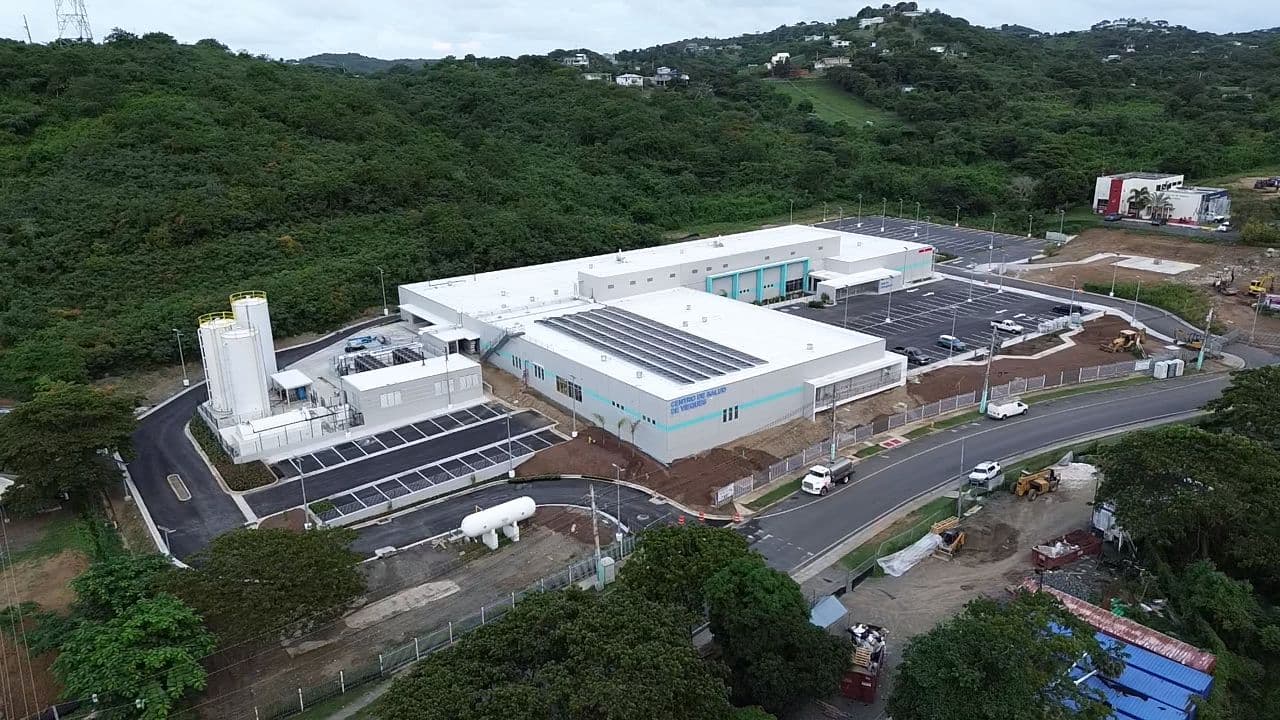
Nine years after Hurricane Maria left Vieques without a functioning hospital, the island-municipality’s replacement health center is open.
And not just open. This month, the facility earned LEED Silver certification, a designation few Puerto Rico healthcare facilities carry.
The Centro de Salud de Vieques, developed by the Puerto Rico Infrastructure Financing Authority (AFI) through a design-build contract with local firms Caribe Tecno and FIA, received the certification under LEED v4 BD+C: Healthcare, widely regarded as one of the most demanding tracks in the LEED system because of the operational, technical and regulatory complexity specific to medical facilities.
The achievement stands on its own. It also says something about the state of green building certification in Puerto Rico, a market where LEED has been available for a quarter century but has never taken hold the way it has on the mainland, and where this particular project’s sustainability requirements were part of a FEMA-led federal funding process that enabled the LEED certification.
The opening marks a historic turning point in Centro de Salud de Vieques and the “isla nena” more broadly. Hurricane Maria damaged the Susana Centeno Diagnostic and Treatment Center, Vieques’ only hospital-like facility, in September 2017. The building was never repaired. Residents of the island-municipality of roughly 9,000 people were left dependent on a temporary clinic set up in a school and a scattering of shipping containers for services including dialysis, obstetrics and emergency care.
FEMA responded by obligating dollars toward a permanent replacement, and construction began with the groundbreaking ceremony in November 2023, where FEMA and the developers announced that the facility would be built to LEED standards.
What the certification required
LEED, created by the U.S. Green Building Council and validated by Green Business Certification Inc., is the leading global standard for evaluating a building’s environmental performance, weighing energy efficiency, water management, materials selection, indoor environmental quality, construction-process innovation and broader sustainability commitments.
The Healthcare track under LEED v4 BD+C applies those criteria to facilities that must simultaneously meet infection-control, life-safety and regulatory standards specific to medical buildings, which is why healthcare projects are considered among the harder building types to certify.
“Health facilities demand an extraordinary level of interdisciplinary coordination, innovation and technical precision,” said José Domingo Pérez Muñiz, president of Caribe Tecno. “This certification validates the commitment Caribe Tecno has maintained for more than half a century to quality, responsible construction and the wellbeing of all.”
The building’s photovoltaic system was sized to exceed the capacity required in the original request for proposals by more than four times, according to the release announcing the certification, and the project also incorporated electric-vehicle charging stations and landscaping built around native and endemic vegetation.
The contract award to Caribe Tecno coincided with the firm’s 50th anniversary; the company, founded in 1972, has framed the project as consistent with the Pan American Academy of Engineering’s 2022 San Juan Declaration and the United Nations Sustainable Development Goals.
“This certification represents much more than a technical recognition,” Pérez Muñiz said. “It demonstrates that Puerto Rico has the talent, capacity and commitment to develop projects that meet the highest international standards of sustainability and construction excellence. The Vieques Health Center is the result of the joint effort of dozens of professionals and workers who understood from day one the importance of this project for the country.”
The Puerto Rico College of Engineers and Surveyors (CIAPR) separately recognized the project this year as Outstanding Civil Engineering Work and Outstanding Environmental Engineering Work, the only project the organization honored in two disciplines in 2026.
Never too late
LEED launched in March 2000, and the U.S. Green Building Council has organized its presence here for most of that period through what has largely operated as a regional Caribbean chapter rather than a Puerto Rico-specific one, a structural difference from most mainland markets, where standalone state and metro chapters helped drive LEED into standard practice for major commercial and institutional construction well before the 2010s.
Adoption on the island lagged accordingly. As of 2014, only 119 local projects had even been registered for LEED review, according to figures the chapter provided at the time. The projects that did get certified in that period tended to be flagship, single-building achievements rather than evidence of a maturing market: the Sheraton Puerto Rico Hotel & Casino, the first hotel in the Caribbean and the first Sheraton anywhere in the world to earn LEED certification; the Banco Popular Foundation’s Hato Rey headquarters; CooperVision’s manufacturing plant in Juana Díaz; a public school in Arecibo. Notable, in other words, precisely because each was still exceptional rather than routine.
That history is what makes a LEED Silver healthcare facility, one of the most technically demanding categories in the entire system, a meaningful data point today.
Healthcare buildings are a small subset of an already small pool of Puerto Rico LEED projects, and this one was not primarily a market-driven bet by a private developer chasing tenant demand or resale value, the dynamics that have driven LEED adoption on the mainland. It was a public infrastructure project built to a standard that allowed access to federal disaster-recovery funding.
Centro de Salud: leading the way beyond Vieques?
Whether that federal push becomes a lasting pattern is the open question for Puerto Rico’s construction industry.
FEMA has obligated more than $31 billion for nearly 10,900 recovery projects across the island since Hurricane Maria, and resilience-linked design standards, LEED among them, have increasingly appeared as part of that funding process.
If that continues, Puerto Rico’s LEED inventory may end up shaped less by the market forces that built it on the mainland and more by the terms of federal recovery dollars, an unusual path and Puerto Rico model to the same certification.
For now, Vieques has a hospital it waited for the better part of a decade, built to a sustainability standard that may now gain greater traction than before. Pérez Muñiz, in the certification announcement, framed the achievement in terms that reached beyond the building itself. “More than an institutional recognition, this certification is a tribute to the talent of the engineers, architects, specialists, technicians and workers who made this project possible,” he said. “Behind every achievement of this magnitude lies a shared vision and the conviction that infrastructure can transform lives and contribute to the wellbeing of future generations.”