Madrid’s Affordable Housing Model Offers Lessons for Puerto Rico
Public land, streamlined permits and public-private partnerships shape Madrid’s model; Resident Commissioner Pablo José Hernández presented ROAD Housing Act
Puerto Rico’s ongoing housing shortage took center stage at the Puerto Rico Builders Association’s two-day annual convention, where it emerged as a central topic among industry leaders and policymakers.
The panel’s most striking lessons came from Madrid, where the city has built a public-private model that puts affordable rentals on public land. Resident Commissioner Pablo José Hernández, for his part, also addressed the audience, pointing to a recently enacted federal housing law and a bill he introduced to change how income limits are set for Puerto Rico.
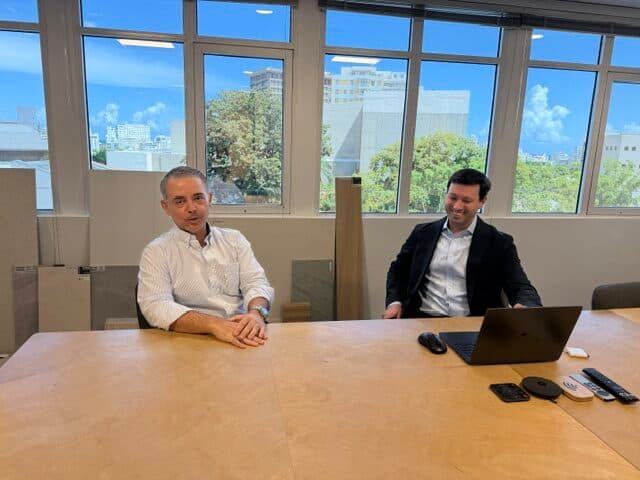
Coming to the convention directly from Madrid, Jerónimo Escalera spoke on the panel “Solutions to the Housing Crisis: Vive Madrid Plan” about how the city has tackled its own version of the problem.
Madrid’s response to its own housing shortage is Plan Suma Vivienda, a program that uses public-private partnerships to speed up the construction of affordable rental housing.
Escalera is the manager of the Municipal Housing and Land Company of Madrid (EMVS Madrid) and president of the city’s Association of Public Housing and Land Managers (AVS Madrid).
He shared the stage with Gabriel Jiménez, cofounder and principal of RioBlanco Capital, and Vanessa de Mari, vice president of development at Interlink. Together they discussed how access to public land, streamlined permitting and financial incentives can make affordable-housing projects economically viable for private developers.
A permitting and cost problem
Government red tape around construction permits has been a hurdle for developers on the island for decades. Today the challenges are intensifying. Rising construction material costs, a limited workforce and inflation driven by federal tariffs make the landscape harder to navigate.
Madrid’s response to its own housing shortage is Plan Suma Vivienda, a program that uses public-private partnerships to speed up the construction of affordable rental housing.
According to Escalera, the first phase has 1,608 homes awarded across seven municipal lots, and a second phase of more than 600 homes is planned. The full plan covers 27 municipal parcels and more than 2,200 affordable rental homes.
Madrid, like Puerto Rico, has a vacant-home problem, which the city is addressing through ReViVa, a program that brings empty residential properties back into use.
The first two developments, at Los Berrocales and Los Ahijones, have 446 homes under construction, with completion expected in 2028.
Under the program, the city provides land through a long-term arrangement. The developer finances and builds the housing, manages the properties as affordable rentals for 65 years, and then hands them over to the municipality.
Escalera said tenants never pay more than 30% of their income in rent. Eligible households earn up to 5.5 times the IPREM, the Spanish public income benchmark.
Bidders also had to offer tenants a 5% rent reduction, which was one of the award criteria, according to Brains Real Estate News.
What developers get
When Jiménez asked what incentives private developers have to join these partnerships, Escalera offered four:
Free access to municipal land.
Stable regulations and predictable contractual terms.
Financial support.
Predictable rental income.
The program also depends on faster permitting. Developers do not have to wait five or eight years for a green light on a project.
“The land offered through these programs has already undergone important planning and infrastructure assessments. The system allows developments to proceed through a responsible declaration rather than waiting for a traditional advance license,” Escalera said.
Asked how the projects can be economically viable, he pointed to industrialized construction methods as a way to reduce costs and speed up housing production. The current developments also use air-to-water heat pumps and rooftop solar, according to the city’s July 2026 announcement.
He added that tenants in EMVS social housing do not pay more than 30% of their income in rent. Madrid also offers payment plans for financially vulnerable tenants, which Escalera said keeps rental income predictable for the developer.
Madrid’s vacant-home program
Madrid, like Puerto Rico, has a vacant-home problem, which the city is addressing through ReViVa, a program that brings empty residential properties back into use.
Under ReViVa, the city’s housing company covers renovation costs of up to €45,000 per property, interest-free. Owners repay the amount through reduced rent, and they transfer the home for a usufruct period of five to 10 years, during which it is rented at 15% to 20% below market prices.
“The land offered through these programs has already undergone important planning and infrastructure assessments. The system allows developments to proceed through a responsible declaration rather than waiting for a traditional advance license.”
Jerónimo Escalera
Eligible tenants earn up to 5.5 times the IPREM, or €63,800 gross a year. By January 2026, the program had recovered about 200 homes, according to EMVS Madrid.
The program addresses a problem Puerto Rico knows well. Property owners may inherit homes that need major repairs but lack the money to renovate them.
Washington’s role
Resident Commissioner Pablo José Hernández also spoke to the builders and developers in the room. He pointed to the 21st Century ROAD to Housing Act as an opportunity to expand access to smaller mortgages, facilitate new housing development and streamline federal processes that can delay construction.
The law became effective on July 11, 2026, after passing the Senate 85 to 5 and the House 358 to 32.
Hernández also mentioned the Puerto Rico Low-Income Housing Support Act, which he introduced in Congress and which is awaiting approval. The bill, H.R. 1696 in the 119th Congress, would change the definition of “extremely low-income families” in the United States Housing Act of 1937 so that Puerto Rico uses the same poverty guidelines as the continental United States. Rep. Ritchie Torres, a New York Democrat, is a co-sponsor.
The Resident Commissioner argues that the current methodology restricts the island’s ability to build and provide housing for lower-income residents.
The bill would also require the Government Accountability Office to report on how federal and island housing agencies serve extremely low-income families, how disaster recovery funds have been used for low-income housing, and how to improve those programs.
Hernández argues that the current methodology restricts the island’s ability to build and provide housing for lower-income residents. The change, he says, would make more housing assistance available under Puerto Rico’s economic conditions.
Lessons for Puerto Rico
Even under Puerto Rico’s particular economic conditions, Madrid’s experience offers a possible blueprint for policymakers and developers who want to expand affordable housing without relying exclusively on public investment.
For an island that badly needs more housing, developers are calling on the public sector to get more involved. Initiatives like ReViVa and Plan Suma Vivienda show what is possible when government and the private sector work together on the problem.
Asset manager is adding hotels and fast casual to private credit and real estate businesses, with its Guaynabo luxury project selling to Puerto Rican buyers
Airport operator weighing more projects; the master plan behind them understates how fast the climate is worsening, keeping LMM vulnerable to big risks
At the upcoming PRBA annual convention, builders are expected to call for reforms to permitting, financing and regulations to unlock the housing market for the middle class and working professionals