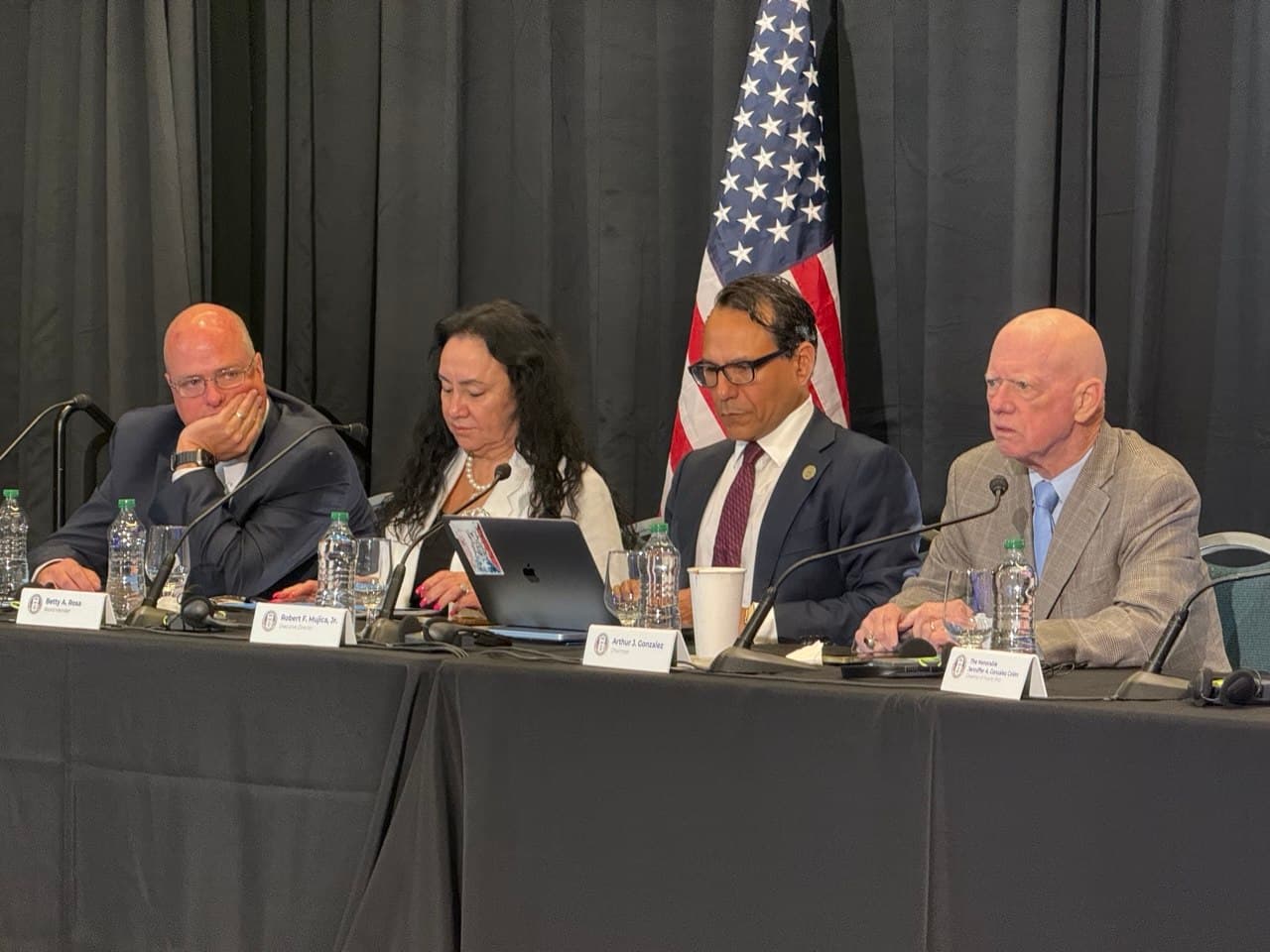
San Juan — The Puerto Rico Fiscal Oversight and Management Board (FOMB) has ordered mayors to halt enforcement of two recently enacted laws that would allow municipalities to collect construction excise taxes on projects funded with federal dollars — warning that the move could jeopardize the island’s standing with Washington as a reliable steward of federal funds.
FOMB Executive Director Robert Mujica sent letters to the presidents of both mayoral associations — Gabriel Hernández Rodríguez of the Federation of Mayors and Jorge González Otero of the Association of Mayors — directing them to confirm by June 22 that their members have been notified that neither Law 141 nor Law 215 can be implemented without prior Board approval.
“The laws cannot be implemented until the Board concludes that they do not violate PROMESA or any corresponding fiscal plan and do not impair or frustrate the purposes of PROMESA,” Mujica wrote. He added that the Board reserves the right to take action under Sections 104(k), 108(a), and 204 of PROMESA — including measures to nullify and/or block the laws’ implementation.
The Federal Funding Warning
Beyond the PROMESA compliance argument, Mujica raised a sharper concern: that taxing federally funded construction projects could signal to Washington that Puerto Rico is misusing federal dollars.
“This could lead the federal government to consider the financing of projects in Puerto Rico inefficient, prompting it to reconsider its fund distributions to the island,” he wrote. “This risk increases as municipalities impose higher excise taxes on federally funded projects.” He also warned that contractors could walk away from projects — particularly those related to the electrical grid — if the tax burden makes them financially unworkable across all 78 municipalities.
On Law 215 specifically, Mujica said the Board had already flagged it in a June 2025 letter to AAFAF, citing that the law undermines competitive bidding requirements by doubling the threshold for contracts that can be awarded outside the sealed public bid process — from $100,000 to $200,000 — and more than tripling the no-bid micro-purchase threshold from $3,000 to $10,000.
Mayors Push Back
Federation of Mayors President Hernández Rodríguez rejected the Board’s position, arguing that the FOMB is operating from a flawed premise.
“The Fiscal Oversight Board starts from an incorrect premise by suggesting that these laws eliminate controls or reduce competition. Municipalities remain subject to the requirements of the Municipal Code, federal regulations, and multiple oversight mechanisms. What these measures do is allow for more agile processes and preserve revenues that are necessary for the fiscal stability of municipal governments,” he said.
Hernández Rodríguez defended the construction excise taxes as a decades-old revenue tool that municipalities rely on to absorb the local impact of construction activity and fund essential services. “Limiting that authority would affect resources currently used to deliver direct services to citizens,” he said. The Federation maintains that collecting these fees does not constitute misuse of federal funds and is not incompatible with PROMESA or the island’s certified fiscal plans.