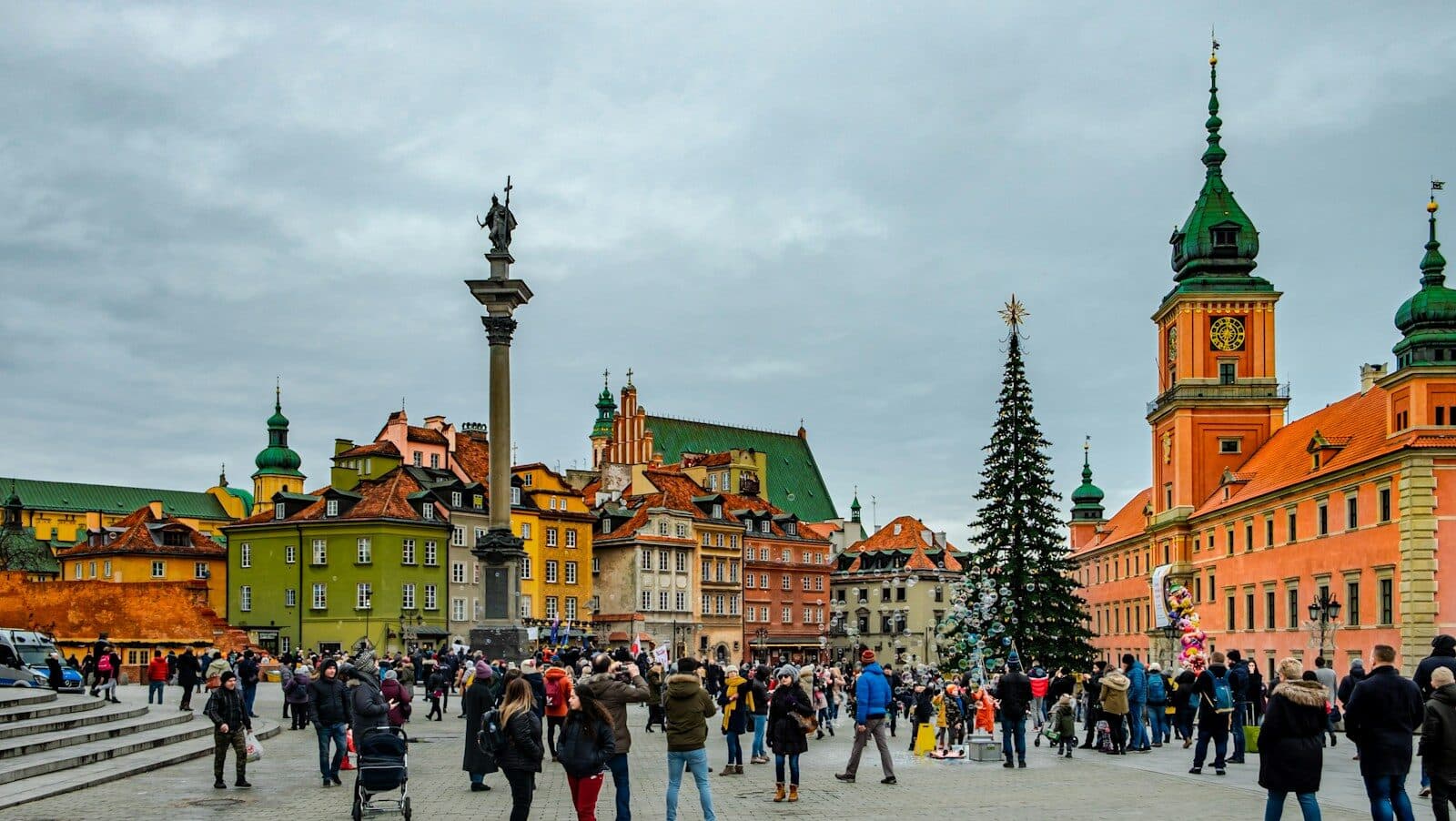
Puerto Rico in Poland’s Mirror: Lessons on What Economic Transformation Really Requires
Poland has nearly caught Puerto Rico’s per-person income by keeping a reform vision alive across governments and turning outside capital into lasting productive capacity
A column by Rafael Sánchez Torres, Founder & Lead Advisor, Intelbex
What would Puerto Rico look like if its economic strategy survived elections, administrations and political slogans? Poland offers a useful mirror.
In 1990, Poland began one of Europe’s most difficult economic transitions. It was not emerging from the Soviet Union, as is sometimes stated, but from four decades inside the Soviet political and economic bloc.
It entered that year with inflation near 585%. Its move from central planning to a market economy was abrupt. Prices were liberalized, state enterprises were restructured, trade opened and inflation was attacked through reforms that became known as “shock therapy.”
The social cost was real. Output fell by nearly 18% across 1990 and 1991, businesses failed and unemployment, officially near zero under communism, climbed above 12%. But in 1992, Poland became the first post-socialist economy to return to growth.
What followed was not one miracle policy. It was a long economic transformation that continued through different governments, political disagreements and changing global conditions.
The question is not whether Puerto Rico can become Poland or Singapore. It is whether we are willing to look beyond ourselves, study how other societies transformed their economies and institutions, and decide what Puerto Rico should learn from them.
When the World Bank studied how Poland reached high-income status, its overarching conclusion was not about a single reform. It pointed to “the importance of a shared vision for continued reform.”
Some of that continuity was written into law. Poland’s 1997 Constitution prohibits borrowing that would push national public debt above three-fifths of GDP, a limit every government since has had to work within. Rising deficits are now testing that ceiling, a reminder that institutions matter most when they are under pressure.
That is where Poland becomes interesting for Puerto Rico.
The numbers are difficult to ignore
Poland’s economy surpassed $1 trillion in nominal GDP in 2025. The World Bank describes its post-transition ascent as remarkable: per-capita GDP growth averaged about 4% a year, and the country moved from middle- to high-income status in less than 15 years.
But Poland’s trajectory cannot be reduced to joining the European Union in 2004 or receiving outside funding.
Those factors mattered enormously. EU membership gave Poland access to a much larger single market, supported infrastructure investment and reinforced its integration with the European economy.
Between 2004 and 2024, Poland received nearly €250 billion from the EU budget. After accounting for its own contributions, its positive net balance exceeded €163 billion.
Those are extraordinary amounts of money. But money alone does not explain transformation. Puerto Rico should understand that distinction particularly well.
Turning capital into capacity
Poland used access to capital alongside investments in transportation, energy, digital infrastructure, enterprises and human development. EU cohesion funding alone supported projects ranging from transportation and energy to innovation and business development.
Over time, the country developed a broader productive base spanning manufacturing, business services, technology, logistics and increasingly sophisticated exports. Its unemployment rate remained around 3% in 2026, among the lowest levels in the European Union.
Infrastructure. Productive companies. Skills. Export capacity. Access to larger markets. An economy able to produce more sophisticated goods and services than it did decades earlier.
That distinction between receiving capital and converting it into permanent capacity deserves more attention in Puerto Rico.
Looking at Puerto Rico
Puerto Rico cannot copy Poland. Its geography is different. Its political and monetary structures are different. Poland has access to the European single market and operates within an entirely different historical context.
A direct comparison would be intellectually dishonest. That is also not the point.
The value of looking at Poland is asking what can be learned from a country that experienced economic disruption, rebuilt major parts of its economic system and sustained a development trajectory across several decades.
Still, one measure is hard to look away from. In 1992, Puerto Rico’s gross national income per person was more than three times Poland’s: $6,760 versus $2,080, according to World Bank data. By 2025, the figures were $27,320 and $25,520. A gap of more than 200% has narrowed to about 7%.
Gross domestic product counts what is produced on the island. Gross national income counts the income that belongs to its residents. In 2025, Puerto Rico’s GNI was roughly 68% of its GDP, meaning close to a third of the value produced here flows out as income to non-residents. Poland’s ratio was about 96%. In Puerto Rico, that share has barely moved since 1992.
Puerto Rico has also received extraordinary access to outside capital through federal programs, tax incentives, reconstruction funding, public investment and private investment.
The question is what those resources ultimately create. Stronger local suppliers? Better infrastructure? More exportable knowledge? A more productive workforce? Companies capable of retaining more value in Puerto Rico?
Those outcomes matter even more under demographic pressure. Puerto Rico’s population was estimated at approximately 3.18 million in 2025, about 3% below the 2020 Census and roughly 14.5% below the 2010 Census count. Between mid-2024 and mid-2025, deaths outnumbered births nearly two to one.
Poland faces demographic challenges of its own. Its experience does not offer Puerto Rico an answer to ours. What it offers is another history worth examining.
Beyond Poland
Perhaps that is the larger point. In Puerto Rico, we spend considerable time studying ourselves: our political limitations, our economic problems, our fiscal history and everything that makes our situation unique.
That’s all good and healthy. But uniqueness should not become an excuse for intellectual isolation.
Poland is not the perfect blueprint. Neither are Ireland, Estonia, Singapore, South Korea or any other economy that has undergone significant transformation. Each has a different history, political system, geography, population and set of advantages.
But their experiences expand the questions we can ask about our own. What did they prioritize? What survived changes in government? Where did investment go? What capabilities remained afterward? What failed? What would never work here and what deserves a closer look?
Economic transformation is rarely the result of one law, one incentive, one administration or one extraordinary investment. It is built over time.
The question is not whether Puerto Rico can become Poland or Singapore. It is whether we are willing to look beyond ourselves, study how other societies transformed their economies and institutions, and decide what Puerto Rico should learn from them.
Elizabeth Holmes’s return to the cameras humanizes a convicted founder, but for communicators the lesson is that empathy cannot replace specific, verifiable answers.
Insurance cannot replace security, but it can transfer part of the cost when a breach interrupts operations, exposes data or triggers claims from third parties