The Wall Street message is linked to Island’s Integrated Economy push
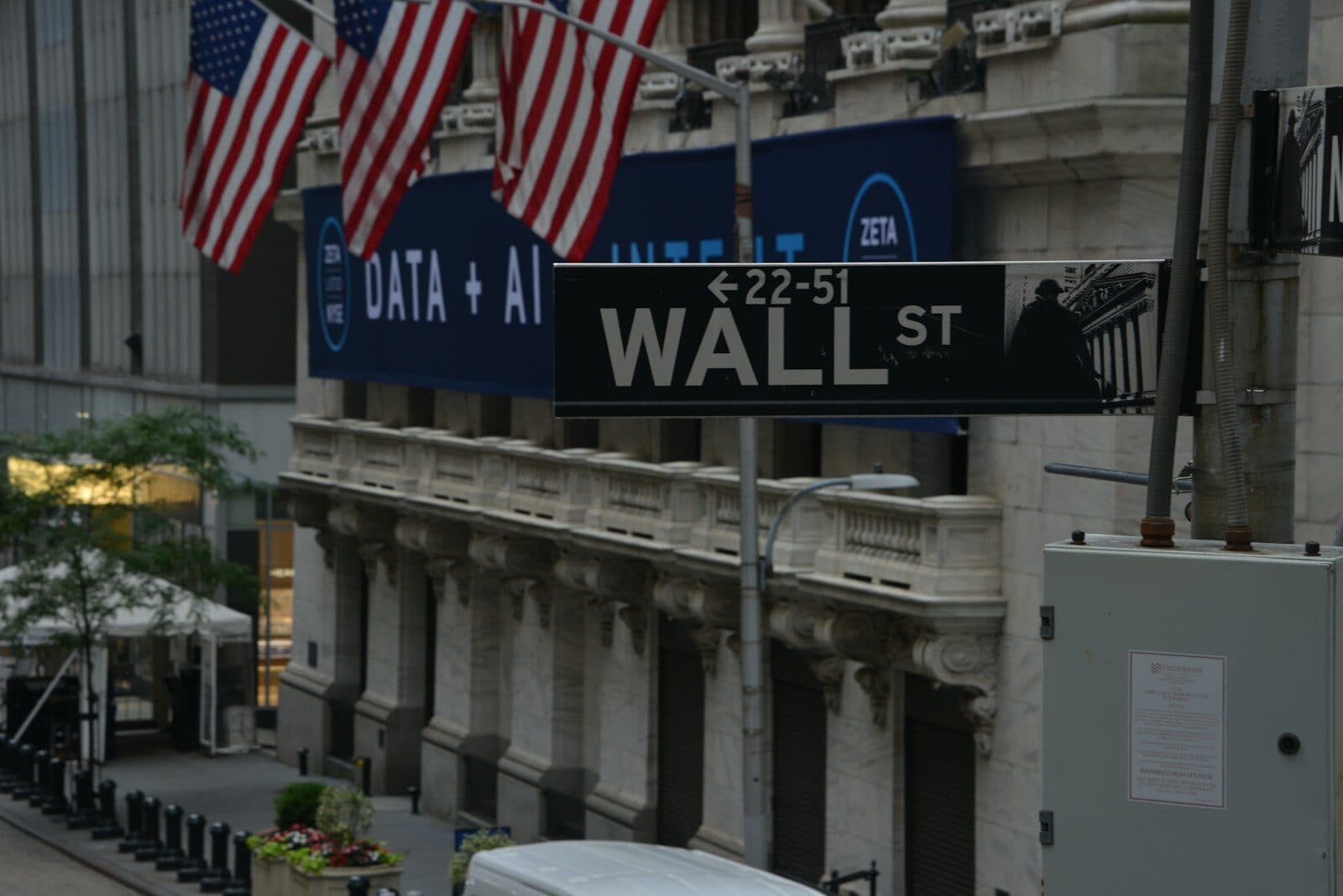
At the New York Stock Exchange on Monday, Gov. Jenniffer González Colón delivered her most forceful pitch yet that Puerto Rico is “open for business,” using the symbolism of the Opening Bell Ceremony to anchor a long-term investment strategy aimed at attracting capital, entrepreneurs, and high-growth industries to the island.
The appearance, the government’s first at the NYSE, comes as the administration works to position the island as a competitive U.S. jurisdiction with a stable tax framework, a manufacturing resurgence, and a tourism sector operating at historic strength.
The administration’s message to Wall Street mirrors the economic framework the governor presented last Friday at ExpoComPR in San Juan, where she publicly linked manufacturing, tourism, small business development, and permitting reform into a single strategy, what Caribbean Business has called the administration’s Integrated Economy approach. The NYSE appearance effectively exported that narrative to a national audience.
At NYSE, the Governor was joined by Economic Development Secretary Carlos Ríos Pierluisi, Treasury Secretary Ángel Pantoja, PRFAA Executive Director Gabriella Boffelli, and private-sector leaders from firms including Paulson Puerto Rico, Evertec, and Banco Popular, the governor outlined a plan to provide qualifying new resident investors with tax certainty through December 31, 2055.
The extension of Act 60 Chapter 2 resident investor provisions, she argued, is central to Puerto Rico’s ability to compete for long-term capital.
“Puerto Rico is competing for investment, businesses, talent, and opportunity, and we intend to win,” González Colón said at the NYSE. “Providing long-term certainty strengthens our ability to attract capital that can support new businesses, economic activity, and quality jobs on the Island.”
The governor’s pitch centered on the competitive tax environment Puerto Rico offers to qualifying investors and businesses. Ch. 2 provides a maximum 4% tax on Puerto Rico-source interest, dividends, and capital gains for eligible resident investors, while other provisions extend a 4% corporate tax rate for qualifying export services.
Ríos Pierluisi emphasized that long-term certainty is the competitive edge. “The extension of Act 60 through 2055 builds on that vision to attract investment, support businesses, generate economic activity, and give investors the certainty to make long-term decisions.”
The government illustrated the compounding effect of the tax framework: a $10 million portfolio generating a 20% annual return would grow to roughly $1.9 billion over 30 years under Puerto Rico’s 4% rate, compared with $161 million if managed from New York City, an advantage exceeding $1.8 billion, according to local-government estimates.
Capitalizing on the manufacturing moment
The administration is also pursuing so-called Tax Fairness legislation that would establish a 4% tax rate on capital gains, interest, and dividends for all Puerto Rico residents, eliminating the need for individual decrees.
The NYSE message also arrives as Puerto Rico’s manufacturing sector is experiencing its strongest deal flow in more than a decade.
Under Executive Order 2025‑012, the administration created a Reshoring Task Force and expanded pharmaceutical training and Act 60 Chapter incentives. Since then, Eli Lilly committed more than $1.2 billion to expand its Carolina site; Amgen invested $650 million in Juncos; Terumo inaugurated a $45 million device plant in Caguas; Millicent Manufacturing acquired Teva’s Fajardo facility; PharmaEssentia formalized a $46 million biopharmaceutical investment.
In total, the governor’s deck cites 29 completed projects representing $2.6 billion in private investment, 5,069 new jobs, and more than $584 million in committed payroll.
The governor’s integrated strategy hinges on permitting reform, the one leg of the agenda that remains stuck in the Legislature. The proposed Planning and Permitting Code, now a 793-page Senate substitute, has yet to reach a floor vote, facing objections from municipalities and environmental groups. The private sector has also signaled that the bill needs more uniformity and standardization before earning full support.
By taking Puerto Rico’s pitch to the New York Stock Exchange, the governor effectively extended the Integrated Economy narrative beyond the island: manufacturing as the anchor, tourism as the demand engine, small business as the ecosystem, and permitting as the enabling mechanism, all supported by a long-term tax framework designed to attract capital and talent.
For the private sector, long-term certainty is a powerful competitive advantage,” said José Julio Aparicio, President of the Puerto Rico Chamber of Commerce. “Investors need confidence in the environment where they are committing capital, building businesses, and making decisions for the future. Extending Act 60 through 2055 provides that visibility and strengthens Puerto Rico’s ability to compete for investment. More capital coming to the Island means greater potential to support entrepreneurship, local businesses, job creation, and sustainable economic growth.”
Whether the strategy becomes more than a slide deck will depend on the Legislature’s ability to deliver permitting reform, and on whether Puerto Rico can resolve the energy and water crises that continue to weigh on its competitiveness.
But at the NYSE, the administration made clear that Puerto Rico intends to compete for investment on a national stage.