After three decades in active journalism—26 of them spent in editorial leadership—I believed few assignments could still surprise me.
My benchmark for disaster coverage had always been Hurricane Maria. As editor-in-chief of “Metro Puerto Rico,” I led a newsroom that, like the rest of the Island, had to learn how to operate without electricity, without telecommunications, and with roads rendered impassable. That experience reshaped my understanding of natural disasters and the social responsibility of journalism.
As I was putting the finishing touches on my preparations for a professional fellowship at Stanford University, where I will spend several months studying the impact of artificial intelligence on newsrooms, a phone call changed my entire state of mind. The academic papers were put aside. My laptop gave way to field boots. I packed only the essentials and headed to Venezuela.
Nothing could have prepared me for the human dimension of that assignment.
At the time of this writing, official figures placed the death toll at just over 4,000 people. Yet those numbers still failed to capture the scale of the devastation in the state of La Guaira, where access remained limited and recovery efforts were still underway nearly two weeks after the twin earthquakes struck.
That is where photojournalist Alec Rivera Cardec and I arrived.
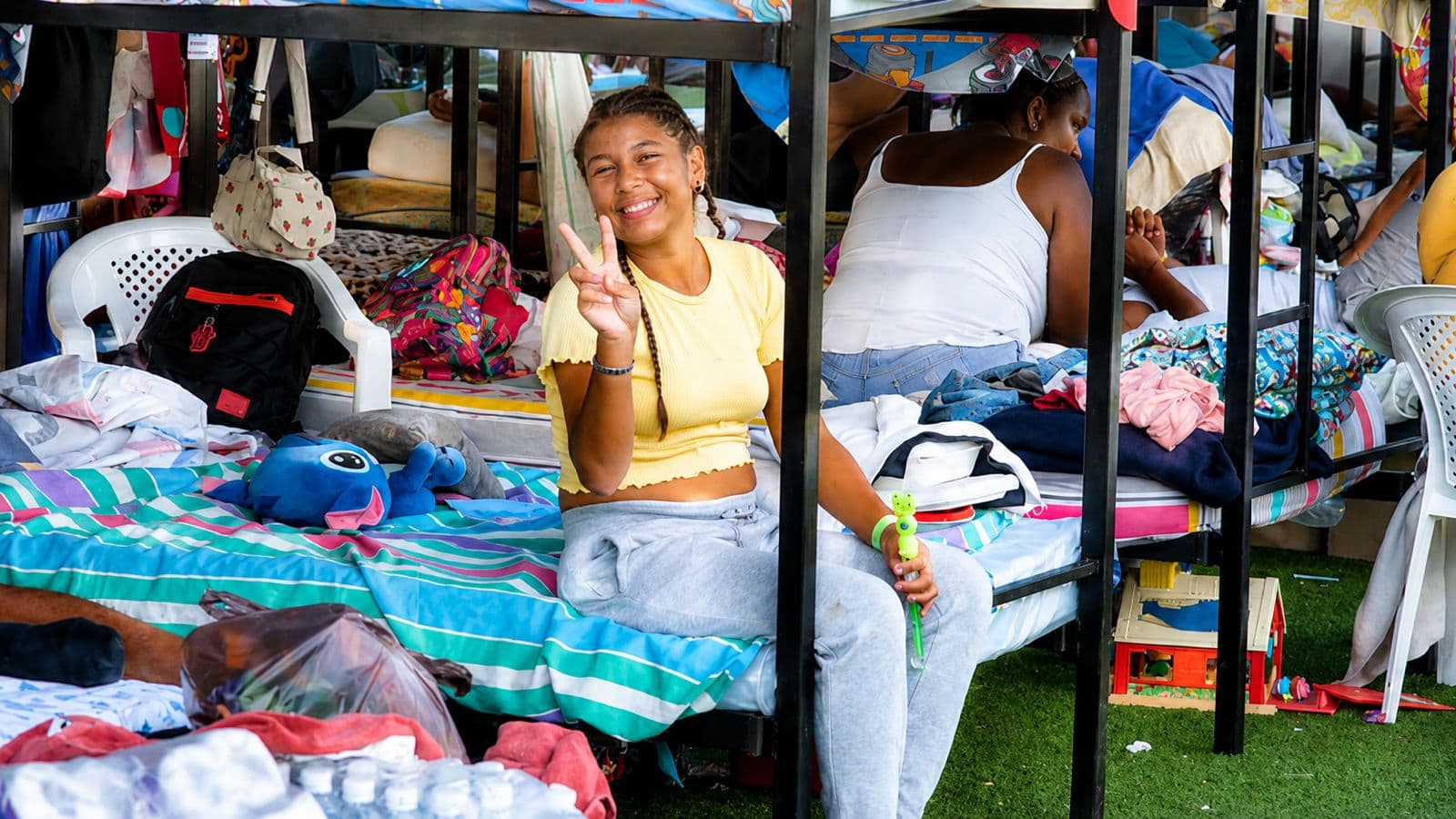
There comes a moment when statistics lose all meaning. You can write about thousands of deaths, thousands of injuries, or thousands of displaced people, but those figures become abstract when you stand before entire apartment buildings reduced to mountains of concrete. Buried beneath those mountains are not only homes, but family histories. Many families continued living in makeshift camps directly across from the rubble because they refused to leave the place where they still hoped to recover their loved ones.
Eyewitness to the Magnitude of the Disaster
In the Los Corales neighborhood, we witnessed a scene that encapsulated the magnitude of the disaster. Twelve days after the earthquakes, Venezuelan and international rescue teams had recovered only the fifth body from a building where roughly 40 people were still believed to be trapped. Massive excavators first broke apart enormous concrete slabs, allowing rescue workers to enter, stone by stone, searching for human remains. Whenever a body was located, the machinery stopped. Forensic teams entered. Then the entire process began again.
There is another sensation that will stay with me forever.
The smell.
Before arriving, I expected the overwhelming scent of decomposition. I was wrong. What lingers in the air is something far more difficult to define: the dense dust from buildings still being dismantled in the search for victims; the diesel fumes from heavy machinery; the waste generated by makeshift refugee camps where hundreds of families continue to live; and the unsettling certainty that beneath those piles of concrete lie thousands of stories that have yet to find an ending.
The only word I could find for it was destruction.
It feels strange to use a noun to describe a smell.
Walking those streets, I realized the earthquakes had exposed far more than collapsed buildings. It had laid bare the fractures Venezuela had been accumulating for decades.
The physical destruction alone carries a staggering price tag. According to estimates by the United Nations Office for Disaster Risk Reduction (UNDRR), direct losses to residential buildings, critical infrastructure, and essential services approach $37 billion. Yet even that figure only begins to illustrate the challenges ahead. Rebuilding roads, hospitals, power grids, ports, water systems, and restoring economic activity will push the true cost of recovery far beyond those initial estimates.
Challenges Beyond the Earthquakes
The disaster also struck a country already burdened by profound economic and institutional challenges. Venezuela entered this crisis after years of inflation, mass emigration of skilled professionals, institutional deterioration, and an economy that, according to the International Monetary Fund, has shrunk to roughly one-quarter of its 2012 size. Rebuilding will require far more than international financing. It will demand the return—or replacement—of engineers, architects, physicians, technicians and countless other professionals who left the country over the past decade.
Public opinion gathered in the days immediately following the earthquakes reflects the depth of that institutional fracture. According to the AtlasIntel/Bloomberg “Latam Pulse” survey conducted between June 26 and June 30 among 2,581 Venezuelan adults, 52.4% rated the government’s response to the disaster as “very poor,” while another 8.3% described it as poor. Only 21.3% considered the response good or excellent. The survey carries a margin of error of two percentage points at a 95% confidence level.
The findings also reveal a remarkable map of public trust for reconstruction. Physicians and healthcare workers ranked highest among the institutions Venezuelans trust to manage the crisis, with an 88% confidence rating. They were followed by firefighters (76%), businesses and the private sector (73%), non-governmental organizations and foundations (60%), and religious institutions (60%).
By contrast, confidence in the national government and public authorities stood at just 43%, while 66% said they did not trust interim President Delcy Rodríguez to lead the country’s recovery.
The survey also underscores the expectation that rebuilding Venezuela will require international support. Seventy-five percent of respondents said they trusted the U.S. government to contribute to the recovery effort, followed by international NGOs (63%), the European Union (59%), the Colombian government (55%), and the United Nations (48%).
That international support is already beginning to arrive.
A small delegation of Puerto Rican physicians, organized by the humanitarian organization “Haití Se Pone de Pie,” reached La Guaira during the initial response phase. They treated patients suffering from cholera, scabies, respiratory infections, and wounds that had worsened after nearly two weeks without proper medical attention.
Even amid collective grief, I found the Venezuelan people to be among the most generous I have ever encountered.
The Puerto Rican medical team became living proof of that generosity. At nearly every stop, local residents greeted them with words of gratitude, embraces and heartfelt thanks offered not only on behalf of themselves, but also on behalf of an entire nation.
Back in Puerto Rico, I received the following text message:
“The telescopic crane finally arrived at Rita Sol Palace. Our prayers have been answered. Thank you, Metro Puerto Rico. Your reporting was shared in countless public and private chats. The government responded, and now these families will finally be able to bury their loved ones with dignity. Every bit of pressure helped.”
As journalists, we often assume our work is fleeting—that it will disappear with the next news cycle or be buried beneath the algorithm deciding how long a story survives between one swipe and the next.
This time, something different happened.
Finding the right words to comfort people in the midst of unimaginable loss will always be a complicated task. Yet simply being present often speaks louder than any speech ever could. Puerto Rico was there—with physicians and journalists committed to telling the world’s story from the very center of its pain.
And once again, I was reminded why journalism remains the most beautiful profession in the world.
Because our purpose is to serve, to bear witness, to make the invisible visible, and, whenever possible, to help move solutions forward.Top of FormBottom of Form