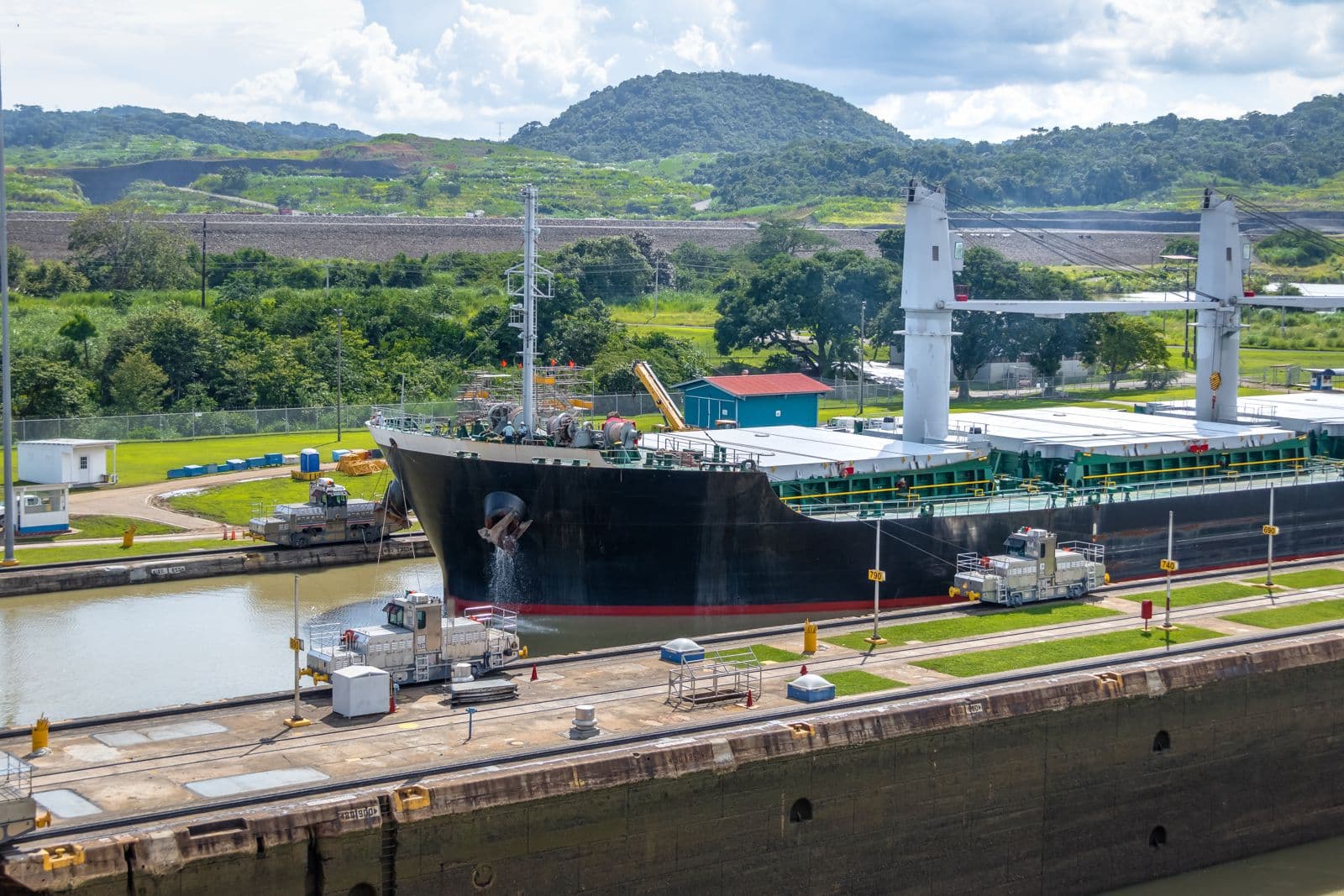
Auction prices for vessels without reservations have surged as global trade disruptions increase demand for the strategic waterway.
Auction prices for vessels without reservations have surged as global trade disruptions increase demand for the strategic waterway, even as the Canal faces its own water-management challenges.
Shipping companies looking for a last-minute passage through the Panama Canal are paying a steep premium, with some vessels spending more than $1 million at auction to secure a transit slot as shifting global trade patterns and the prolonged Middle East crisis increase demand for the strategic waterway.
The surge does not represent an increase in the Canal’s regular tolls. Instead, the prices are being generated through an auction system available to vessels that need to transit without a previously scheduled reservation.
For companies moving time-sensitive cargo — particularly energy products — paying seven figures for a slot can make economic sense if the alternative is waiting or potentially missing contractual delivery windows.
“Some vessels that transited recently have paid amounts exceeding $1 million at auction to address their specific market needs,” the Panama Canal told EFE on Wednesday.
The Canal said the increases reflect changes in supply and demand in global trade rather than adjustments to its established tariffs, which remain unchanged.
110 ships waiting to cross
The pressure was evident Wednesday morning.
There were 110 vessels waiting to transit the 82-kilometer waterway, including 78 with confirmed reservations and another 32 without them.
The Panama Canal operates both a reservation system and auctions for vessels seeking passage without a previously scheduled crossing.
Not every vessel without a reservation participates in an auction. The Canal stressed that auction slots correspond to specific windows already incorporated into its operating schedule and therefore do not displace vessels with confirmed reservations or change the established transit order.
Auction prices have jumped
The difference from just a few months ago is significant.
Between October and February, the average auction price was approximately $55,000, according to the Canal. More recent results have produced average prices roughly three times higher.
Some individual transactions have gone much further.
In April, a liquefied petroleum gas, or LPG, carrier reportedly paid $4 million at auction for a transit slot, while two Aframax tankers paid approximately $3 million each.
The Canal characterized those cases as isolated transactions reflecting temporary market conditions and increased demand.
The amount a shipping company is willing to pay depends on factors including urgency, commercial priorities, freight rates and bunker fuel prices.
For energy cargoes in particular, time can be worth millions.
“In many cases, the value of time, particularly for energy cargoes subject to contractual delivery windows, can significantly exceed the auction price,” the Canal said.
Middle East crisis boosts Canal traffic
The prolonged crisis in the Middle East has helped drive additional business toward Panama.
The Canal said daily traffic reached as many as 41 vessels during the second quarter, compared with a typical average of roughly 36 to 37 ships.
Official figures show transits increased 5.2% during the first nine months of the current fiscal year, from October 2025 through June 2026, while revenue climbed 17%.
Container ships and LPG carriers were among the segments driving that growth.
The numbers underscore the Canal’s importance to international commerce. The freshwater waterway connects the Atlantic and Pacific oceans and handles an estimated 3% to 5% of global trade, with major routes including the U.S. East Coast to Asia, the U.S. East Coast to the west coast of South America, and Europe to the west coast of South America.
More ships, but less water
The increase in demand comes as the Panama Canal confronts another familiar challenge: water.
The Canal has begun implementing a schedule of draft reductions for its expanded locks, limiting how deeply vessels can sit in the water.
The measure is intended to conserve water during the seasonal dry period as authorities prepare for what is expected to be a strong and prolonged El Niño event.
For now, however, the Canal has not announced plans to reduce the number of daily transits.
That distinction is important. During the severe drought of 2023, water shortages forced the Canal to impose significant restrictions on daily crossings, creating shipping backlogs and disruptions to global supply chains.
This time, the Canal is attempting to manage water consumption without resorting to similar transit restrictions.
The combination of higher demand, geopolitical uncertainty and water constraints puts the Panama Canal back at the center of a global shipping equation in which time increasingly carries a substantial price tag.
For some vessels, that price is now measured in millions of dollars.