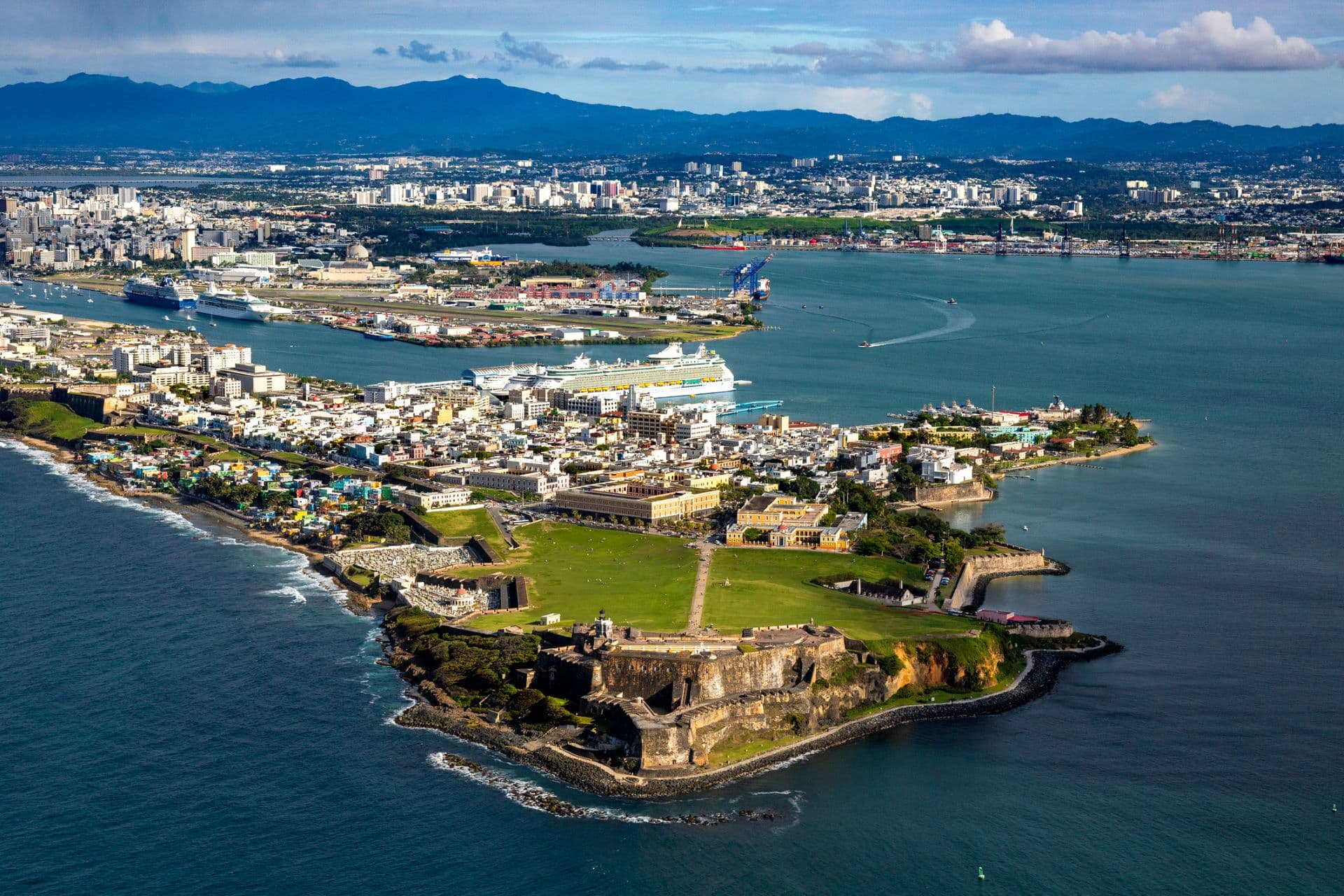
Amid an energy crisis that has forced the San Juan Power Plant to burn diesel at a cost four times higher than natural gas, New Fortress Energy (NFE) insisted on its proposal to allow Captain Daniel Montes, a San Juan Bay pilot with 29 years of experience, to carry out the maneuver to bring the Amur River tanker into the company’s terminal and thus put an end to a judicial stalemate that has kept the barge at sea.
According to NFE, Montes reviewed the vessel’s operational information and confirmed under penalty of perjury that he is available and prepared to perform the maneuver.
The proposal is part of the ongoing dispute between NFE and the San Juan Bay pilots over maritime safety concerns and the dimensions of the LNG tanker, which the pilots argue exceeds the parameters authorized in prior agreements.
They claim the Amur River has a beam of 44.24 meters, compared to the stipulated limit of 43.40 meters.
At stake is not just maritime protocol; it is the cost and reliability of the electricity powering homes and businesses across Puerto Rico.
The island’s electrical bills and grid reliability, that is, may ultimately be decided by whether Montes can safely maneuver the tanker through a bottleneck that was designed for smaller vessels.
If this natural gas supply is interrupted, the island’s power plants must switch to burning diesel fuel, which costs roughly four times as much, and that cost flows directly to consumers’ electric bills.
Why This Matters to Your Electricity Bill
LNG, or liquefied natural gas, is natural gas that has been cooled to minus 260 degrees Fahrenheit, turning it into liquid form so it can be transported by ship. It is the least expensive fuel option for Puerto Rico’s power generation, which is why the government prioritizes keeping it flowing.
The current dispute centers on tugboat safety standards. The San Juan Bay Pilots argue that NFE’s newest LNG vessel, the Amur River, is 0.84 meters wider than what maritime safety agreements allow, and that the specialized tugboats that were previously required for safe maneuvering would not fit the new parameters. NFE disputes these measurements and argues that Montes can get it done.
The Judicial Escalation
On September 24, U.S. District Judge Silvia Carreño-Coll issued a forceful order expressing deep skepticism about NFE’s conduct. The judge stated that NFE has withheld critical information and may face sanctions of $10,000 if it fails to produce required documentation by 2:00 p.m. on September 25. NFE requested an extension until 5:30 p.m., saying it is still verifying the material.
Judge Carreño-Coll questioned the timing and preparation of NFE’s motion. “The only way that Captain Montes could have reviewed the voluminous production he claims, under penalty of perjury, to have reviewed, for Defendant NFEnergia to have prepared its motion and for Captain Montes’ affidavit to have been prepared, is if all that drafting had been in the works hours prior.”
The judge’s skepticism rests on a fundamental question: if Captain Montes could review such a large volume of technical documents and reach a safety conclusion, why have the other pilots not been granted access to the same documents so they can independently verify his analysis?
If this natural gas supply is interrupted, the island’s power plants must switch to burning diesel fuel, which costs roughly four times as much, and that cost flows directly to consumers’ electric bills.
The order requires NFE to provide updated certifications for the tugboats to be used, documentation confirming whether the Amur River actually fits in the berth pocket (a technical maritime term for the designated anchoring area), and additional technical information the pilots have been requesting for weeks.
The judge also stated that if NFE cannot demonstrate that there is no encroachment, meaning if the vessel does not fit as claimed, then two standby tugboats must be used during any maneuvering. NFE has refused to pay for that safeguard, viewing it as an unnecessary cost.
A Parallel Government Escalation
Outside the courtroom, the Puerto Rico government is taking its own drastic measures. The Independent Office of Procurement (3PPO), which oversees energy procurement, has ordered Genera PR (the NFE subsidiary operating the San Juan Power Plant) to immediately activate an alternative mechanism for supplying LNG.
The directive instructs Genera PR to identify and contract an alternate LNG supplier without delay, pointing to options such as Crowley, whether through trucks or vessels, to ensure fuel delivery to the San Juan plant within a comparable timeframe.
This government order signals profound concern that the ongoing maritime dispute could prolong Puerto Rico’s reliance on expensive diesel generation. In effect, the 3PPO is telling Genera PR to secure backup supply now, in case this lawsuit prevents the Amur River from ever entering the harbor.
NFE’s Defense
During a press conference, NFE attorney Alberto Castañer rejected the judge’s characterization of the company’s conduct. He insisted that the motion announcing Captain Montes’ availability was drafted “two or three hours” before filing, after confirming that Montes was on duty and willing to sign a sworn statement.
According to Castañer, NFE has produced “thousands and thousands of documents” and that the pilots continue to request additional information without end, continually “finding a gap” to demand more.
Castañer also raised a critical issue: the Amur River’s crew has less than 24 hours of provisions remaining. U.S. Customs did not allow the vessel to be resupplied in local waters, a constraint that intensifies the pressure.
If the vessel must depart for the Dominican Republic or another nearby port to obtain provisions, Puerto Rico’s electrical system will be left without LNG supply for additional days while the ship makes the journey and returns.
“If this is not resolved now, the Amur River will leave, and we will continue paying higher electricity prices,” Castañer said, underlining the financial stakes for consumers.
Both Castañer and Stephen Rivera, former president of the San Juan Bay Pilots, argued that the impasse is not genuinely about safety but about a “hidden agenda” or lack of capability among the pilots who are plaintiffs in the case.
They note that pilots from the southern region, who also hold licenses to maneuver tankers, are ready to perform the operation if granted a waiver by the Pilotage Commission.
NFE has also pointed to the fact that the Amur River received a compliance certificate from the U.S. Coast Guard and that the agency raised no objections to its entry.
“If this is not resolved now, the Amur River will leave, and we will continue paying higher electricity prices.”
NFE attorney Alberto Castañer
The pilots’ counter-argument is straightforward: they underwent nearly two years of technical simulations and detailed analysis with NFE to establish that four specialized tugboats of 80 tons of bollard pull (a nautical measurement of towing capacity) were the safe minimum.
Now, NFE is unilaterally trying to reduce that requirement, prioritizing cost savings over the safety protocols that were collectively developed and agreed upon.
The Broader Stakes
Judge Carreño-Coll’s order remains in effect, prohibiting any LNG vessel movement except for the Energos Maria and Energos Princess (two other ships already operating under the old tugboat standards) until NFE complies with the required disclosures.
Meanwhile, the clock is ticking on multiple fronts: Montes’ work schedule, the Amur River’s provisions, Puerto Rico’s mounting diesel costs, and the judge’s September 25 documentation deadline.
The resolution of this case will signal whether Puerto Rico’s maritime safety standards can be overridden by cost pressures from a major energy contractor, or whether independent pilots and federal courts will maintain the integrity of protocols designed to protect the harbor and the surrounding community.
For businesses and consumers watching their electric bills, the outcome also determines whether they continue bearing the high cost of diesel-generated electricity or whether LNG supply flows reliably to the island at a fraction of the price.