Juan A. Hernández Contrary to what may be expected, the biggest impact the war between the United States, Israel and Iran has had over Puerto Rico is not the loss of direct cargo originated from or going to the Middle East. “For the last few months, the biggest impact has been in the disruption of […]
Juan A. Hernández
Contrary to what may be expected, the biggest impact the war between the United States, Israel and Iran has had over Puerto Rico is not the loss of direct cargo originated from or going to the Middle East.
“For the last few months, the biggest impact has been in the disruption of the capacity and related costs in the global containers network. We have seen an increase in surcharges, the lack of containers to and from the Middle East and other [ports]. And while it was recently said the situation had stabilized, we are back to overbooking from Asia,” said Michael Latimer, general manager for CMA CGM (a global shipping and logistics company) in Puerto Rico.
“Prices are going up again and our capability to receive merchandise has been limited,” the local manager for the international shipping giant added.
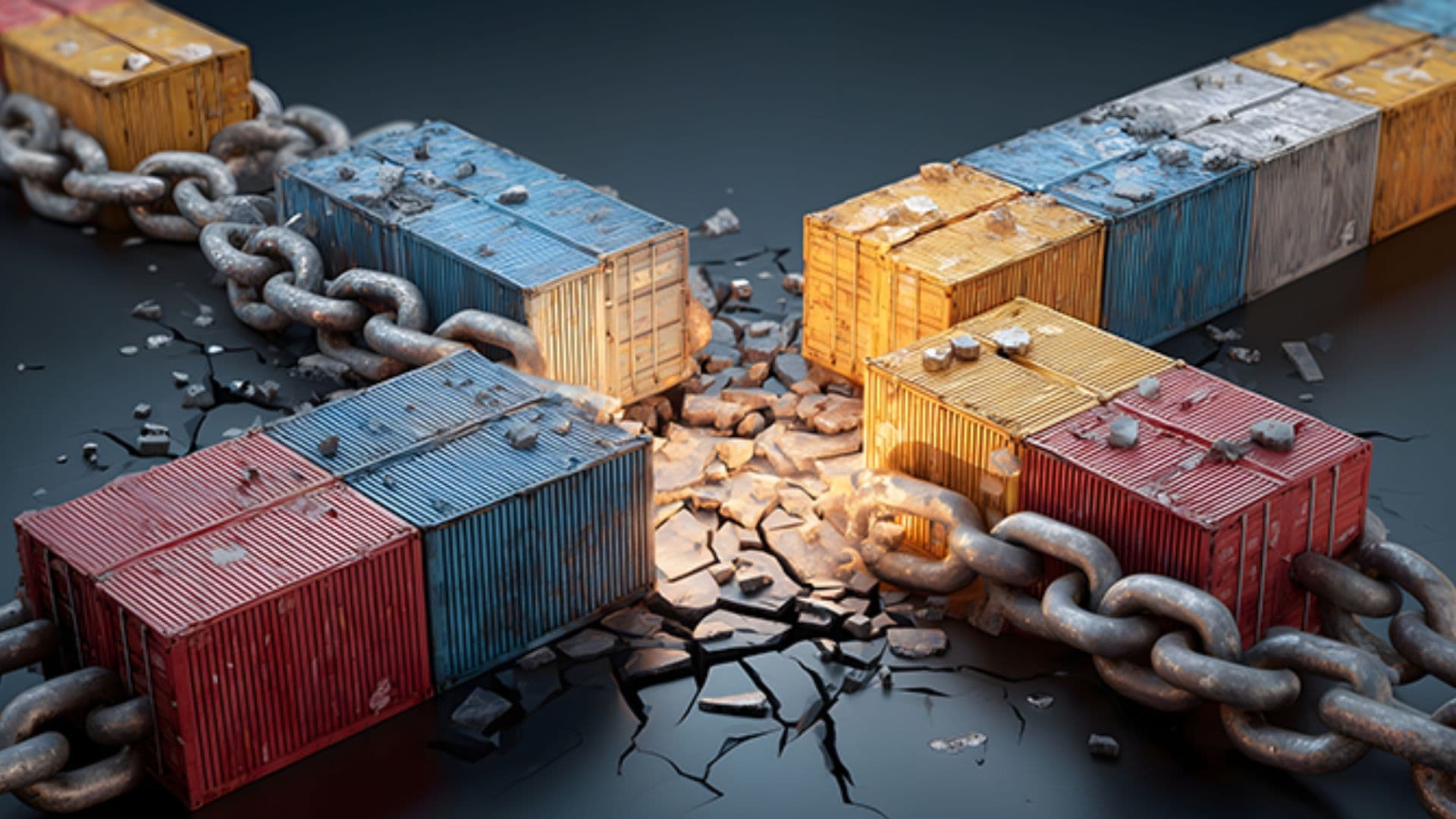
War has caused a critical paralysis in the global supply chain due to the forced closure of strategic shipping routes in the Middle East, forcing cargo ships to take longer and more expensive routes. Constant attacks on transport infrastructure and key ports have driven up shipping freight prices, created a severe shortage of containers, and caused massive delays in the delivery of essential raw materials, electronic components and general merchandise.
According to María del Mar Rodríguez, vice-president of Tropical Shipping, 40% of the world’s NAFTA (a critical element used in oil refining), 50% of ethylene and polyethylene (used for plastics production), 30% of helium (used in the manufacturing of semiconductors), and 30% of fertilizers, among other raw materials originate in the Persian Gulf.
“War in the Middle East has not just affected the world’s oil supplies,” emphasized Rodríguez.
To avoid the war zone, specifically the Strait of Hormuz, shipping companies have abandoned the Suez Canal and the Bab el-Mandeb Strait, using the Cape of Good Hope route as their main alternative to circumnavigate the African continent. This route adds thousands of kilometers and weeks of sailing to trade between Asia and Europe.
On the other hand, the Panama Canal has become an overly saturated safety valve, as many shipping companies seek passage through it as an alternative to avoid the conflict in the Middle East. Diverting ships that previously crossed the Suez Canal to the Panamanian route has caused backups and long waiting lists, increasing tolls and transit fees.
But while the lack of container space is a problem, for Richard Pujols, president of Interglobo Puerto Rico, Inc., (an international freight and logistics company), the situation is a little more specific. For Pujols, container space to and from Europe is not as much a concern as between Southeast Asia and Brazil.
“Even if the situation improves after peace negotiations in the region, and referring to what you [Rodríguez] just said about the 30% of fertilizers [coming from the Persian Gulf], we won’t be seeing the effects of that now. The fertilizers would be used on crops for the third and fourth quarter of the year. So, there’s a possibility that some products won’t be available in supermarkets in the next few months,” Pujols estimated.
Still, there are some alternatives to minimize the efects of diminishing container space, and longer and more expensive miritime routes.
For Latimer, early planning is essential.
“Things are changing everyday. We are witnessing geopolitical moves never seen before. So, planning ahead is essential,” Latimer said.
Pujols from Interglobo, coincided.
“I always tell my clients to do their booking ahead of time. Before the war, clients used to book [cargo] a week before [they needed the merchandise]. I’m recommending to book between three and four weeks ahead… The problem is ships are full and we depend on someone cancelling [an order] for us to get their space,” González said.
For Néstor González, president of Priority Global, optimization and eficiency are goals to meet.
“We, as a shipping company, need to be constantly optimizing routes, and our technology in order to monitor operations in real time and take decisions on time,” González said.
The shipping executive also emphasized in the creation of alliances to share regional capabilities and improve competitiveness.