Culture Is Puerto Rico’s Edge in the Race for Big Events, World Cup Marketing Chief Says
Bettina Garibaldi, who led marketing for the New York New Jersey World Cup host committee, shares key lessons to boost outcomes from events like Miss Universe
When marketing an event as globally recognized as the 2026 FIFA World Cup in the states and the upcoming Miss Universe in Puerto Rico, generating awareness is not necessarily the biggest challenge. For Bettina Garibaldi, former chief marketing and communications officer of the FIFA World Cup 2026 New York New Jersey Host Committee, the real task was transforming a worldwide spectacle into something that felt personal to the communities hosting it.
In an exclusive interview with Caribbean Business following her presentation at a recent SME Marketing Summit, Garibaldi said Puerto Rico has a significant opportunity to harness its distinctive cultural identity as a unifying force that brings communities together, particularly through sports.
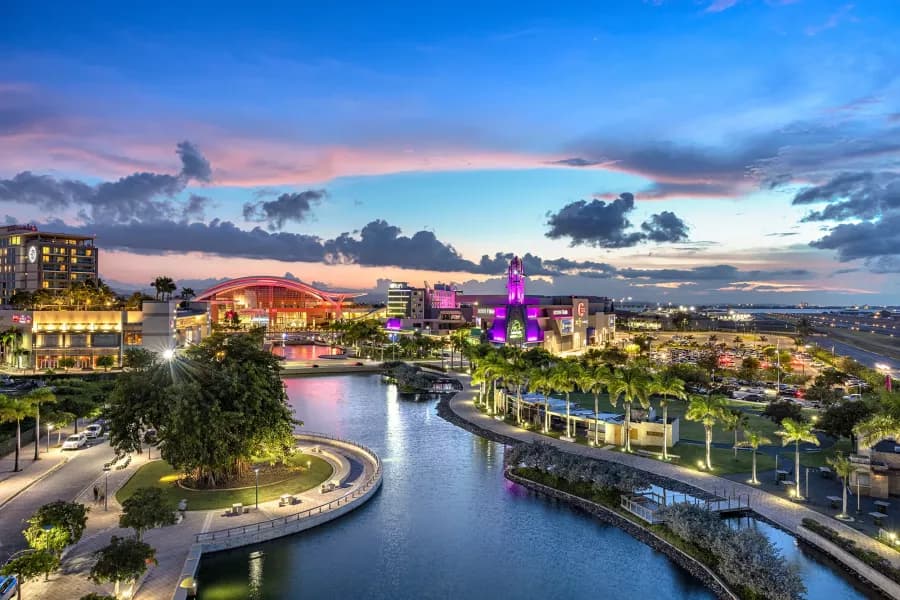
That potential comes as the island’s sports betting industry continues to expand, highlighted by the recent opening of a new sportsbook lounge at Distrito T-Mobile.
“What is that differentiator? Making that your selling point, I think that’s the best way to go. You cannot fake that, and I think that’s what makes you unique compared to other jurisdictions,” she said.
Garibaldi’s region included the World Cup Final at MetLife Stadium in New Jersey.
Puerto Rico’s event moment
The advice arrives as the island’s visitor economy keeps growing. Discover Puerto Rico projects about 13.7 million total visitors in 2026, including 8.9 million nonresidents who will spend roughly $9.5 billion directly, which would make 2026 the sixth consecutive record year, as CB reported Oct. 23.
Marquee events are becoming part of that growth. PRISA Group CEO Federico Stubbe Jr. launched PRISA Presents this month, a unit created to bring large-scale tourism events to the island, modeled on the approach Stephen Ross used in Miami. Its first project is a Puerto Rico-exclusive, 30-show Cirque du Soleil residency, Le Lo Lai, at the Coca-Cola Music Hall in Distrito T-Mobile from Feb. 12 to April 4, 2027, an investment of more than $10 million that Cirque estimates will have a $63 million economic impact.
Discover, for its part, is promoting the upcoming Puerto Rico Bowl to draw visitors from key U.S. markets, and the island will be the partner jurisdiction at the FITUR 2027 tourism fair in Madrid.
Whether through cultural partnerships, community experiences or tailored storytelling, meaningful engagement begins with understanding the audience.
The Puerto Rico Chamber of Commerce’s new Tourism Committee, meanwhile, lists regional integration among its six priorities with the aim of spreading visitor spending across all 78 municipalities, and Airbnb reports that reservations in five emerging municipalities rose more than 25% in 2025.
The SME summit where Garibaldi spoke was held Oct. 22 at the Coca-Cola Music Hall, the same venue that will host the Cirque Le Lo Lai residency, and her job in New York and New Jersey was making one event matter to many very different communities.
Localization is not translation
For a region as culturally diverse as New Jersey and New York, the marketing strategy could not be one-size-fits-all. It had to speak simultaneously to different neighborhoods, identities and interests.
“Localization isn’t translation. It is understanding what makes something meaningful to a particular community,” she said in a panel titled “Making a Global Moment Matter Locally: Lessons From FIFA World Cup 2026” at the summit.
Among the key factors in the event’s success, she explained, narrowing down the audience is where marketing agencies need to start. To determine who the event was relevant for, Garibaldi and her team identified four main audiences: soccer fans, newcomers, tourists and culturally connected audiences.
Her main takeaway: effective audience segmentation allows one event to connect with people for entirely different reasons.
The next opportunity for Puerto Rico to apply Garibaldi’s lessons will be the upcoming Miss Universe Pageant, where local favorite Jennifer Barreto figures to be one of the favorites.
Designing experiences beyond the stadium
In shaping the host committee’s approach to community engagement, Garibaldi and her team set a goal: the World Cup experience had to extend far beyond the matches themselves.
The New York New Jersey region hosted eight World Cup matches, including the final on July 19 at MetLife Stadium. The host committee, working with Tourism Economics, had projected a $3.3 billion economic impact for the region, more than 26,000 jobs and more than 1.2 million visitors.
Preliminary figures from the five group-stage matches in June put the impact at $2.1 billion, including $1.2 billion in direct visitor spending, and organizers said more than 645,000 fans attended matches at the stadium.
The tournament would become relevant through a combination of experiences that included free fan events, public watch parties, premium hospitality, digital creators, cultural programming and partnerships with local businesses. The host committee programmed fan zones across the region, including Queens, Staten Island, the Bronx, Brooklyn, Rockefeller Center and New Jersey.
Garibaldi emphasized that experiences should reflect the identity of the place where they happen. In a borough as culturally diverse as Queens, that identity is what created distinct opportunities for engagement.
Some groups connected through soccer and others through culture; some simply wanted something to do in the city, and others were intrigued by a world they knew nothing about. Whatever the reason for joining in, Garibaldi emphasized, creating multiple ways to take part was important because not everyone experiences the same moment in the same way.
“Making [culture] your selling point, I think that’s the best way to go. You cannot fake that, and I think that’s what makes you unique compared to other jurisdictions.”
Bettina Garibaldi
For an event of this scale, cultural relevance must be built into the planning, not added as a final marketing tactic. Garibaldi and her team also had to account for the region’s particular transportation challenges, which is why they created a travel demand-management campaign to address the added traffic and congestion associated with hosting the tournament.
The campaign demonstrated how marketing and communications can serve practical purposes beyond promotion, helping residents, visitors and businesses navigate major events.
Leveraging stakeholders and partnerships
Another important strategy is identifying the key players who bring your vision to life. For Garibaldi and her team, this was one of the main complexities of the planning process, given the number of stakeholders involved in an event like the World Cup.
“Identifying those shared goals was a must, because everyone has their individual goals, so I think it was just constantly doing that. It was a reality of how complex this World Cup was, it was so multilayered, that ensuring that everyone remained true to what the end result was, recognizing that there was different way on which we would all meet there,” she said.
Garibaldi cited partnerships with entities such as local chambers of commerce and restaurant associations as another key initiative, educating them on how they could take part in the activations.
She also pointed to the partnership with Uber as a key element. The company supported activations at official fan zones in Queens and Staten Island, connecting with fans outside the stadium, and sponsored the Five Borough Winners Special, a citywide dining initiative featuring nearly 900 participating establishments that offered $26 food and beverage specials or collectible merchandise.
The program, presented by Uber and run by NYC Tourism + Conventions, ran from June 11 through the July 19 final. At least 570 establishments offered the $26 specials, and more than 690 gave away collectible cups with a different design for each borough, tying everyday neighborhood spending to the tournament.
This partnership illustrates one of Garibaldi’s main points: partnership marketing is not about slapping on a logo and calling it a day. Partnerships should create experiences and add practical value rather than simply generate brand visibility.
For marketers operating in increasingly diverse and competitive markets, Garibaldi’s experience offers a broader lesson: the strength of a global brand lies not only in its reach but in its ability to connect with people on a local level.
Whether through cultural partnerships, community experiences or tailored storytelling, meaningful engagement begins with understanding the audience.
In an exclusive interview with Caribbean Business, CEO Jorge Pérez explains how the organization is retooling its strategy for a sixth straight record year
The Convention District Authority’s push to link its parcels with Bahía Urbana, add hotel rooms and draw housing for professionals revives a vision first outlined more than two decades ago to position the island as a top-tier global destination
Chairman Jon Borschow says the nonprofit will offer continuous guidance where existing resources fall short, a model it is already testing through a tourism-anchored plan in the Eastern Region