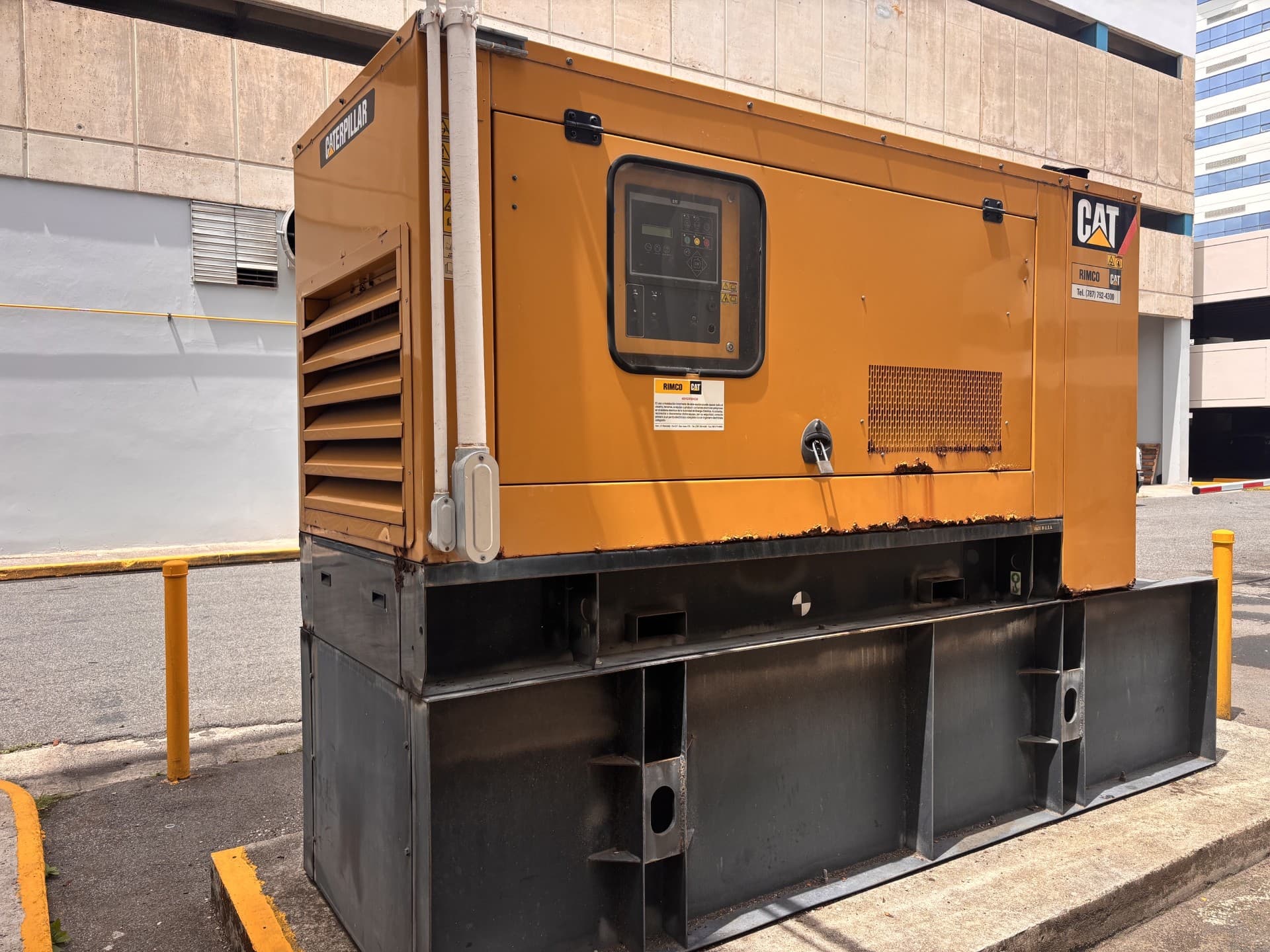
Puerto Rico’s generator market tells a story about more than energy backup. It reveals how businesses on an island in the Caribbean hurricane alley and plagued by chronic grid instability have turned power generators into a natural investment.
Where once, pre-Hurricane Maria, generators were an afterthought—something added years after a business opened, if at all—they have become part of most companies’ basic equipment. New commercial projects now routinely specify backup power systems ranging from 15 kilowatts to 2 megawatts before the first brick is laid, cementing a structural shift in how the island’s economy adapts to unreliable electricity.
This transformation reflects lessons learned from Maria, but also the fact that the island’s grid has not stabilized enough to undo the mentality that generators are essential business infrastructure, not optional emergency equipment.
A manufacturing facility with $3 million in daily production, for example, can lose roughly $125,000 per hour of downtime, according to research conducted for this story. A hospital cannot afford to lose power at all, which is why medical facilities now maintain backup generators for their backup generators. A pharmacy likewise cannot keep medications refrigerated without electricity. A restaurant cannot serve food or process credit card transactions.
“Imagine a factory like ours with 130 employees,” explained Jeyson Miranda, sales manager of RK Power, a Puerto Rico generator supplier. “If we stop operating for even a few hours, we lose thousands of dollars. If we’re down for three to seven days, it can be catastrophic. That’s why the generator has become absolutely necessary for us and for our clients.”
The surge, that is, is driven by math. The cost of inaction on the island—lost inventory, spoiled goods, damaged equipment, customer attrition—dwarfs the cost of purchasing and maintaining backup power systems.
The shift from viewing generators as emergency equipment to treating them as core infrastructure, represents Puerto Rico’s pragmatic adaptation to chronic grid instability.
For his part, Enrique Ortiz, chief revenue officer at AKM Industries, a manufacturer of electrical equipment and a leading distributor of generators on the island, observed a seismic shift in client behavior.
“Before, you’d build a business and then add a generator later if you had the money,” he said. “Now, new commercial chains—restaurants, car washes, retail operations—have their generator included in the building design from day one. It has become standard.”
Market Response, Cost Barriers and the Grid
The market has responded to this demand with rapid expansion. Residential customers typically invest $10,000 to $15,000 for a 10- to 20-kilowatt system with automatic transfer switches. Small to medium commercial operations—pharmacies, bakeries, restaurants—spend $20,000 to $25,000 for 40- to 60-kilowatt units. Large operations like hotels or industrial facilities may invest hundreds of thousands for 200-kilowatt to multi-megawatt systems.
The barrier for many small businesses is capital. While generators are now widely available, with more than 50 suppliers operating in Puerto Rico, financing options remain poorly understood.
“Many small business owners don’t know about the financing options that exist,” said Miranda. “They see the price tag and think it’s impossible, but there are ways to spread the cost over time. That knowledge gap is one of our biggest challenges.”
The cost of inaction at a business—lost inventory, spoiled goods, damaged equipment, customer attrition—dwarfs the cost of purchasing and maintaining backup power systems.
Maintenance adds to the cost picture. Annual service plans range from roughly $700 for small systems (three to four maintenance visits per year) to $4,000 to $5,000 for large equipment, an expense now seen as part of the the cost of doing business in Puerto Rico.
The reason generators have become non-negotiable is the island’s electrical grid, which remains fragile with all-too frequent power outages.
“The generator is the first line of backup when the grid fails,” Ortiz explained. “There are secondary options like solar panels and batteries, but when the power goes out for a full week, solar batteries can’t sustain a business. They might run out of charge. The generator is the true security measure.”
Technical Evolution and Supply Constraints
The generator market has grown increasingly sophisticated. Businesses are moving beyond simple fuel-based backup to integrated systems that combine generators with solar panels and battery storage, an approach known as cogeneration or Combined Heat and Power (CHP).
These systems automatically switch between grid, solar, battery and generator depending on conditions, providing both resilience and potential cost savings.
However, this sophistication has collided with supply constraints. While small and medium generators are readily available, large industrial units face extraordinary wait times.
Ortiz noted that facilities ordering mega-generators may wait 56 to 80 weeks, nearly two years, from order to delivery, as global manufacturers prioritize other projects. “The demand is almost unsustainable,” he said.
This paradox, market saturation for small units but severe supply constraints for large ones, reflects both local competition and global supply-chain pressures. More than 50 Puerto Rico-based suppliers compete aggressively on price for standard equipment, but international manufacturers control the market for specialized, high-capacity systems.
Assessing Readiness
Are businesses adequately equipped for the next major outage? According to both suppliers interviewed, Puerto Rico is better prepared than it was before Hurricane Maria. More businesses have generators, awareness of the need has spread, financing options exist. But vulnerabilities remain.
“We’ve seen tremendous improvement,” said Miranda. “Many existing businesses have replaced aging equipment with newer units. Many new businesses open with generators already installed. That’s real progress.”
However, he cautioned that a significant number of small and medium enterprises remain underprepared, lacking the capital or knowledge to invest in backup systems.
Ortiz added that the pace of generator adoption among commercial operators has normalized, as it is no longer driven by post-hurricane emergency psychology but by steady business planning.
“The mentality has definitely changed,” he said. “Generators have become part of everyday business thinking in Puerto Rico.”
This shift, from viewing generators as emergency equipment to treating them as core infrastructure, represents Puerto Rico’s pragmatic adaptation to chronic grid instability. It is a sign of business resilience and economic adaptation.
First Circuit hears arguments that collateral-treatment dispute could become a “chokehold” on the utility’s path to emergence from Title III bankruptcy
With procurements frozen, plants unbuilt, and solar hitting its limits, Project Hostos has become Puerto Rico’s least encumbered path to significant new capacity. A Paris impact award suggests the market has noticed.
The company argues federal court has jurisdiction over disputes tied to the utility’s Title III bankruptcy, citing recent precedent; PREPA counters in favor of transferring to Swain