With the Local Energy Future in Disarray, At Least One Power Project is Still Moving
With procurements frozen, plants unbuilt, and solar hitting its limits, Project Hostos has become Puerto Rico’s least encumbered path to significant new capacity. A Paris impact award suggests the market has noticed.
The CIGRE award won in Paris recently by Puerto Rico’s Project Hostos, in addition to what it says about the energy plant’s merits, seems to point to something far bigger.
Almost every path Puerto Rico has drawn out of its generation crisis is currently blocked, delayed or contested. To name the most notable, all reported of late by Caribbean Business:
The 3,600 megawatts the island was counting on from two major procurements sit frozen at the Financial Oversight and Management Board.
The 400 MW of temporary power meant to bridge the gap collapsed into a forged-signature scandal and is now being litigated over which federal judge should hear it.
The 528 MW Energiza plant has not broken ground with industry doubts swirling around it and its developers, PREPA and LUMA, arguing over who pays the grid upgrades.
Rooftop solar is being squeezed from three directions at once.
Utility-scale solar has a transmission ceiling that no regulator on the island has bothered to quantify.
And Genera, the company that manages the generation fleet, has just passed into the hands of its creditors, raising questions about the new owners’ investment priorities.
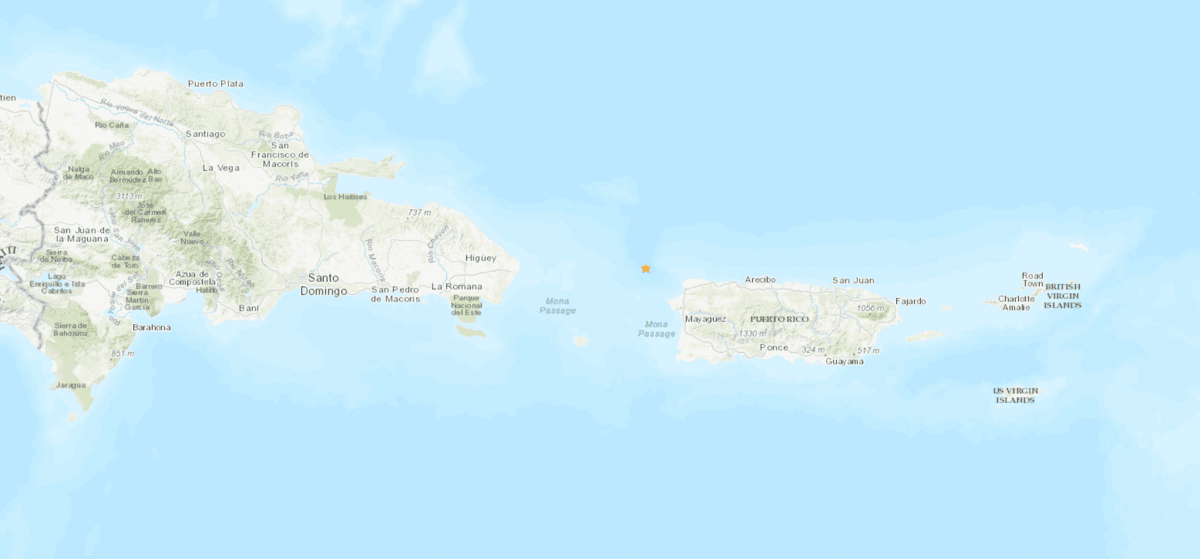
Against that backdrop, one project keeps moving. Project Hostos, the $2.5 billion combined-cycle plant and submarine interconnection between Puerto Rico and the Dominican Republic that would deliver up to 700 MW to Puerto Rico’s west coast around 2031, is now arguably the least encumbered large addition in the island’s generation pipeline.
That doesn’t solve what happens this year, but of the handful of projects that could realistically put new firm, flexible, dispatchable capacity on the grid early enough to matter, which means in another five years or so, Hostos is the one carrying the fewest unresolved dependencies.
Validation, or what could pass for it, came in Paris, where the project’s developer, Caribbean Transmission Development Co. (CTDC) received the greatest-impact award at the Siemens Energy networking event held during CIGRE 2026, the biennial gathering that reportedly functions as the global electric power sector’s most consequential technical forum.
Siemens nominated the project, a sign of support that “reinforces the confidence that Puerto Rico, the Dominican Republic, and the entire Caribbean can lead the next generation of energy infrastructure,” according to Tirso Selman, Vice President of CTDC.
The size of the hole
The case for paying attention to Hostos starts with simple math. LUMA Energy told the Puerto Rico Energy Bureau this month that the island faces a structural generation shortfall of 700 to 850 MW, a range that has now held steady across four consecutive annual resource adequacy studies.
The island has more than 6,500 MW of installed capacity. About 4,100 MW is available, but real-time availability often falls closer to 3,200 MW once forced outages and maintenance are counted.
Peak demand in August reached roughly 3,234 MW, the highest in four years. Put those two numbers together and the operating margin on the worst afternoon of the summer was, functionally, zero.
LUMA’s own modeling shows what that fragility costs. The base case projects eight days of load shedding between May and October. A ten percent load increase combined with the loss of one more baseload unit produces 47 days and 230 hours of outages. LUMA notes that this summer’s actual conditions already resemble those adverse scenarios. Puerto Rico recorded 17 shortfall events in fiscal 2026, which LUMA describes as roughly 170 times worse than the North American utility industry benchmark.
That means that Hostos, at up to 700 MW, would fill the entire structural deficit.
As the alternatives remain stuck
The comparison matters more than just the number, because each is blocked in a different way.
The 3,000 MW flexible generation procurement and the 600 MW Costa Sur replacement are the largest additions Puerto Rico has, at least on paper. Both are frozen. The Oversight Board has refused to let either advance until the government answers questions about feasibility, cost and governance, a level of scrutiny it says the Power Expectations scandal made unavoidable. To be sure, that process will run its course, and the bids will resume. It’s the delay at this point that will determine how much longer the island will be without the power it needs.
Energiza’s 528 MW carries a commercial operation date of December 30, 2030, but it remains stuck in pre-construction. Financial close is targeted for the end of this year, construction for May 2027, turbine deliveries for early 2029. The $168 million network-upgrade dispute is unresolved, with PREPA arguing the contract caps its exposure at $2.6 million, LUMA saying it cannot execute the interconnection agreement without certification of funds, Energiza saying the RFP excluded those costs entirely, and industry executives familiar with the process questioning the chances of the plant being built at all.
AES is negotiating a gas plant of up to 700 MW to replace its Guayama coal units, which must retire before 2032. Like Hostos, that project has all the makings of being viable and on time, but it is mostly a MW swap. Retiring 510 MW of coal and replacing it with up to 700 MW of gas is an at-best net addition of 190 MW, at roughly the same time as Hostos, whose MWs will be a net addition of up to 700 MW.
Genera’s plan to convert aged units to modern gas plants, meanwhile, now sits inside a company whose economic control passed to creditors this month under the New Fortress Energy restructuring, and creditor-controlled infrastructure businesses are not historically known for accelerating discretionary capital expenditure. That’s not to say Genera will not squeeze net new production from its fleet, only that the transaction raises questions the company must now answer with deeds.
Which leaves solar. Rooftop capacity reached about 1,456 MW by the end of 2025, and the Energy Czar now says more than 80 percent of feeders exceed the 15 percent penetration threshold while 35 percent run above 70 percent of capacity. LUMA reports 121 substations and 145 circuits operating above 90 percent of load.
On the utility-scale side, this newspaper has reported that developers face a transmission ceiling of their own that no operator or regulator has published a number for, which means developers price the uncertainty and ratepayers absorb the premium.
To sum it up, Puerto Rico’s entire large new-generation pipeline for the early 2030s might very well come down to AES and Hostos, at less than 900 MW combined of net new power, against a structural deficit of 700 to 850 MW, an aging fleet averaging 50 to 70 years old that still has to be retired, and an expert consensus that the island ultimately needs something closer to 5,500 MW for genuine stability.
Siemens nominated the project, a sign of support that “reinforces the confidence that Puerto Rico, the DR, and the Caribbean can lead the next generation of energy infrastructure.”
Tirso Selman, CTDC
Hostos’ chances
Given all that, CTDC points to several attributes that secure Hostos’ place in the otherwise uncertain energy transformation.
First is equipment. Siemens Energy is supplying both the generation and the converter equipment, and that relationship is worth more today than it would have been five years ago. The global gas turbine market has been swallowed by the data-center buildout. Siemens Energy closed its most recent fiscal third quarter with a 69 GW gas turbine backlog and lead times running three years or more. GE Vernova is taking reservations for 2031 delivery.
Across the major manufacturers, wait times now stretch five to seven years depending on the frame, and hyperscalers paying non-refundable slot deposits are outbidding regulated utilities for the queue positions that remain. A project with a named turbine partner already engaged is not just better connected. It is ahead of projects that have not yet gotten in line, including the others here in Puerto Rico.
Second is jurisdiction. The plant is being built in the Dominican Republic, which means it is permitted and constructed under leaner Dominican rules a faster Dominican timeline. Puerto Rico’s own permitting and interconnection process is, by any fair reading of the past several years, the binding constraint on new generation here.
Third is capital structure. Hostos is financed entirely with private money. It does not depend on a P3A procurement, on federal recovery funds, or on PREPA’s balance sheet. In a year when one procurement collapsed over a forged signature, two more were frozen over governance questions, and a fourth is deadlocked over who pays for grid upgrades, a project that does not need to pass through that machinery to reach construction has a structural advantage, and that doesn’t even get into the engineering.
It has also cleared the single hardest federal gate. The U.S. Department of Energy issued the Presidential Permit required for transmission facilities crossing an international border, in this case the Mona Passage.
More than megawatts
The capacity number understates what the project would do to the system, in three respects worth clarifying for anyone modeling Puerto Rico’s energy costs over the next decade.
Hostos would deliver firm, dispatchable baseload power, the specific thing the island is short of at seven o’clock on an August evening when rooftop solar has stopped producing and reserve margins collapse. But a modern combined-cycle plant with flexible technology is also fast-ramping, and fast-ramping firm capacity is precisely what allows a grid to absorb more intermittent solar and wind generation during the day without curtailing it. Therefore, plants like Hostos let Puerto Rico integrate more renewables, not less.
The ceilings now constraining both rooftop and utility-scale solar are, in part, functions of an aged system with old-plant technology that does not provide for that flexibility.
The interconnection point also deserves attention. The cable lands at Mayagüez. Nearly every other new project in the pipeline injects on the north and south coasts, at San Juan, Costa Sur and Guayama. On an islanded grid that cannot import from a neighbor when a unit trips, geographic diversity of injection is a reliability asset in its own right. As is the fact that Hostos will receive its natural gas from the U.S. via the DR, without having to deal with the lack of sufficient terminal capacity in Puerto Rico that so often plagues LNG supplies on this end.
The meaning of Paris
In our reading, that is, the Paris recognition is worth more than a line in the press release where we learned of it.
Puerto Rico’s generation problem has stopped being a question of which technology is best and become a question of which developers can actually execute in a market where equipment is scarce, capital is cautious and the island’s own procurement credibility is impaired.
On that narrower test, one project has been singled out by the conglomerate and the industry that would have to build it.
For a grid running at zero margin on the hottest afternoons, that may not be a solution, but it is something the island has had very little of lately, which is a hope and a plan that is still on its feet.
First Circuit hears arguments that collateral-treatment dispute could become a “chokehold” on the utility’s path to emergence from Title III bankruptcy
The company argues federal court has jurisdiction over disputes tied to the utility’s Title III bankruptcy, citing recent precedent; PREPA counters in favor of transferring to Swain
New Fortress restructuring transfers control of the island’s power-generation assets to debt holders, raising questions about future PREPA negotiations and policy.