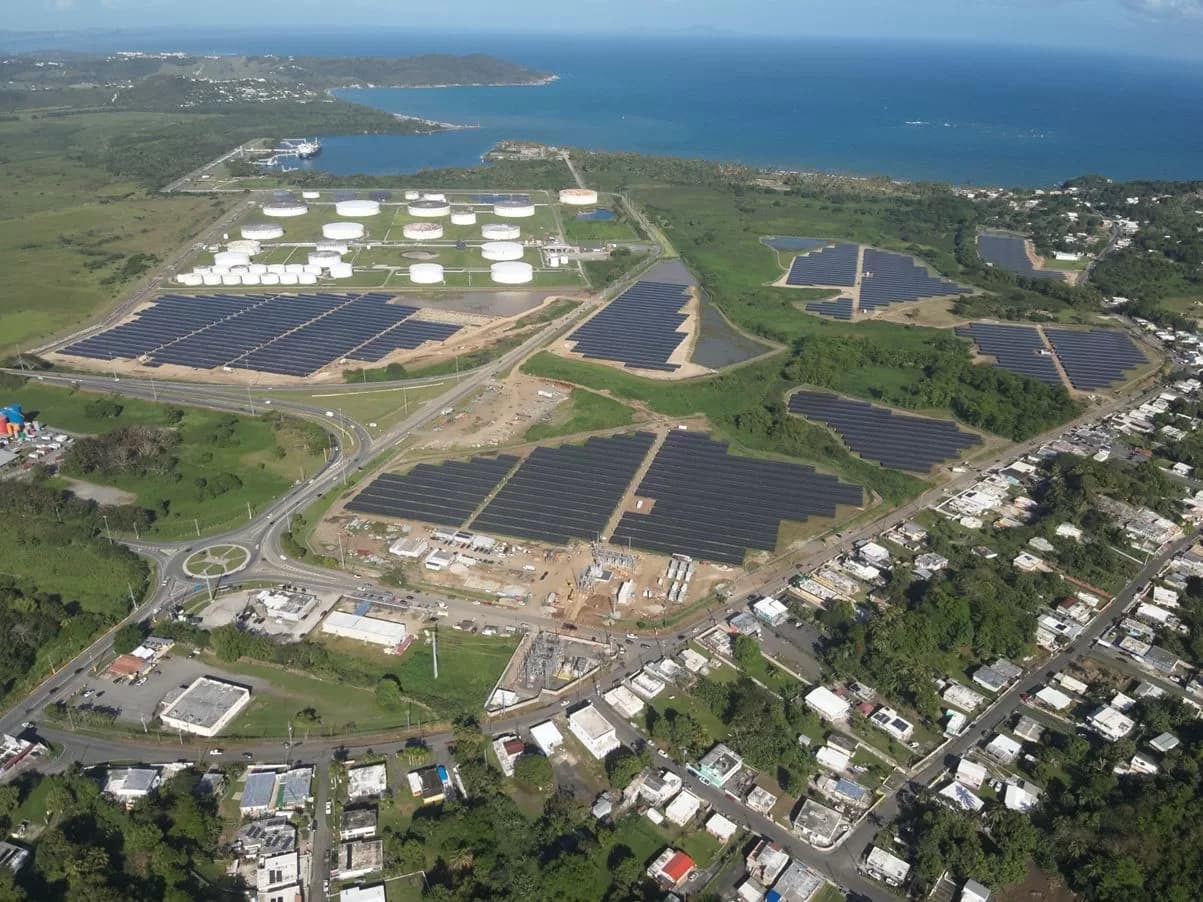
Infinigen has secured a $33 million tax-equity investment from California-based Foss & Company to advance construction of the Yabucoa Solar Project, marking a significant step in the company’s expansion of utility-scale renewable energy in Puerto Rico.
The deal also includes a $26 million commitment for a future battery storage project at the same site, positioning the company to enter the standalone storage market as it builds out its generation portfolio, Foss & Company said in a statement.
For now, the expansion is safe, as LUMA reports sufficient room to absorb the energy. But with the rooftop-solar side of the industry running into a severe growth ceiling, as Caribbean Business has reported, it begs the question if and when the same will happen on the utility-scale side.
Research conducted by this newspaper reveals, in fact, that utility-scale developers do face a transmission limit of their own, but unlike the rooftop debate now playing out at the Puerto Rico Energy Bureau, no regulator or operator on the island has yet published a number for where that limit sits.
The recently closed financing supports the development of Yabucoa Solar Park, a 42.6 MW DC facility that will become Infinigen’s third large-scale project on the island, alongside Horizon Solar Park and Oriana Solar Park.
Together, the three sites will deliver 115 MW DC of renewable capacity, reportedly lowering costs and improving reliability on a grid long burdened by high electricity prices and frequent outages.
Two different walls
The constraint that has stalled rooftop growth is a distribution-level problem. LUMA Energy told the Energy Bureau this summer that 121 substations and 145 circuits operate above 90 percent of load, and that 105 circuits exceed 100 percent of daytime design capacity, conditions the operator ties to voltage complaints on feeders where solar has depressed minimum daytime load.
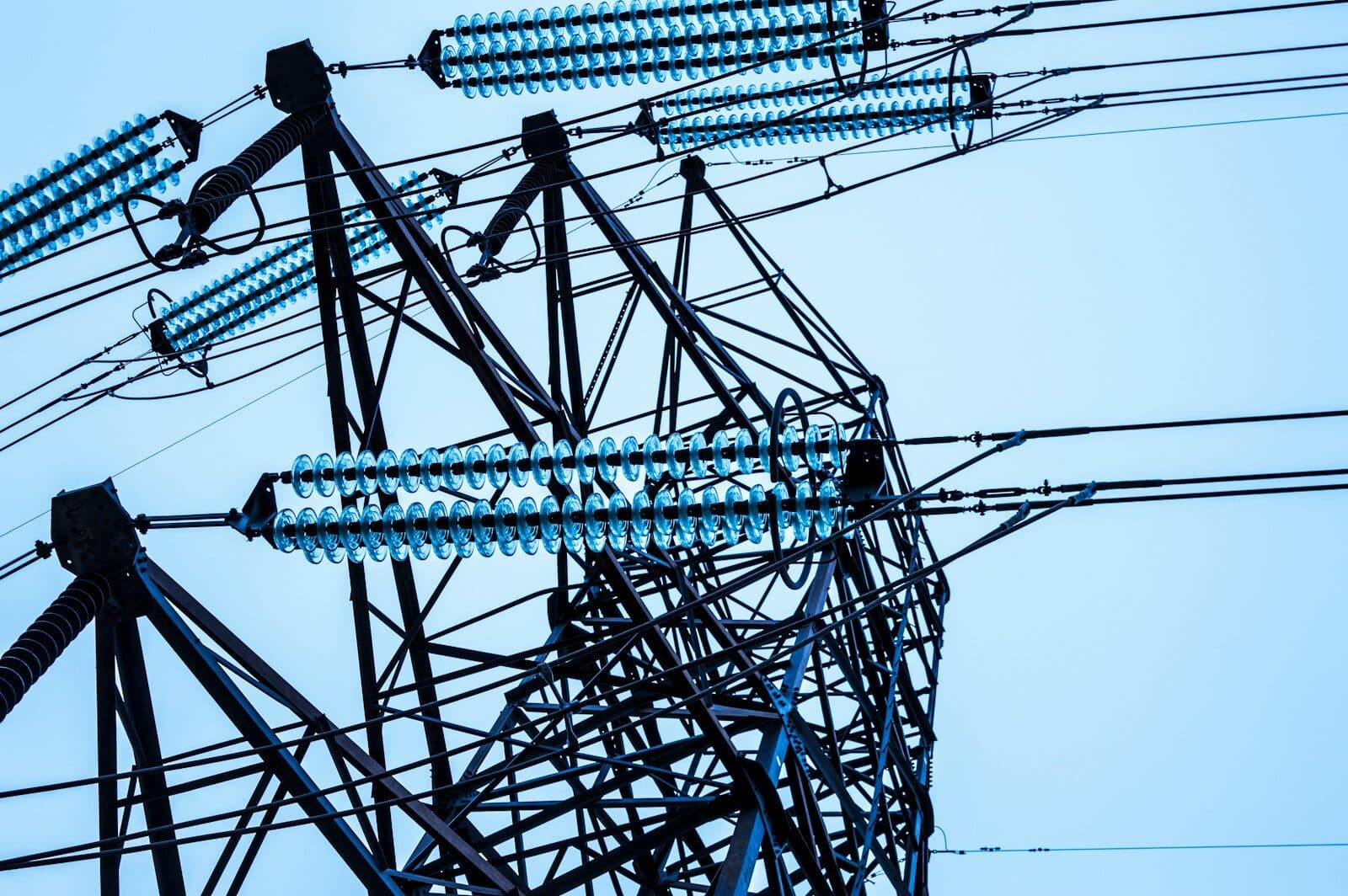
Utility-scale projects do not connect to those feeders. They connect to transmission lines, and the binding constraint there is different in kind. The U.S. Department of Energy’s PR100 study found that Puerto Rico’s lower-voltage 38-kV transmission components are insufficient to handle the projected buildout, because new generation interconnections significantly alter flow patterns on local transmission infrastructure that is predominantly served by 38-kV assets.
Rebuilding the grid to industry standards was estimated at roughly $21 billion, of which about $15.4 billion had been identified as of March 2024.
Beyond the wires, there is a stability ceiling. A 2020 renewable integration study prepared for the Puerto Rico Energy Bureau warned that grid strength across the island would decline as inverter-based generation grew, leaving the system more vulnerable to voltage collapse.
The study recommended that contracts for new inverter-based generators should be written so that the utility retains flexibility to curtail them cost-effectively when reliability requires it.
In an expert report filed with the Energy Bureau in October 2025, consultants noted that independent power producers add risk premiums to their power purchase agreement prices to account for the possibility of delay, curtailment or early contract termination.
Where the ceiling is undefined, developers price the uncertainty, and ratepayers pay the premium. The same report urged the Bureau to require LUMA to prepare a supplemental Renewable Integrated Transmission Plan defining a 25-year strategy for renewable integration, arguing that transmission investment decisions were otherwise being made without it.
What other island grids publish
Ireland runs the closest comparison. Its grid operator, EirGrid, sets a System Non-Synchronous Penetration limit, a real-time cap on the share of demand that can be met by wind, solar and interconnector imports at any moment.
That limit is currently 75%, raised from 50% over the past decade through five separate operational trials in 5% increments, with a target of 95% by 2030.
EirGrid also publishes an annual constraint and curtailment report. In Ireland, wind dispatch-down reached 11.3% in 2025, split between grid constraints at 6.6% and curtailment at 4.7%.
A published ceiling, raised on a schedule and audited annually, tells developers what to price, tells regulators what to plan for, and tells the operator what to justify. Puerto Rico has no equivalent figure, no equivalent trial process, and no equivalent public accounting of how much renewable output is being or will likely be turned away.
Hawaii, the closest peer in scale and isolation in the U.S., has demonstrated the other half of the answer. Hawaiian Electric’s modeling of the 135 MW Kapolei Energy Storage facility found that in its first five years it would cut renewable curtailment by 69% and allow the utility to integrate 10% more new utility-scale renewables than earlier models permitted.
In California, the state’s grid operator curtailed 3.4 million megawatt-hours of utility-scale wind and solar in 2024, up 29% year over year, with solar accounting for 93% of it. As battery capacity expanded through 2025, the curtailment rate fell even as solar output rose.
The battery side
Puerto Rico has arrived at the same conclusion through a program built specifically around the interconnection bottleneck. The Accelerated Storage Addition Program, or ASAP, is a standard-offer process that pairs new batteries with independent power producer sites that already hold permits, operating interconnection points and executed power purchase and operating agreements. It is a way to add dispatchable capacity without waiting on new transmission.
In determinations issued in May, the Financial Oversight and Management Board approved a set of those standard-offer agreements, among them a 50 MW project tied to Infinigen’s Yabucoa site, alongside a 120 MW Xzerta-Tec project, a 125 MW project linked to CS-UR Juncos, an 80 MW project at Lajas, a 71.4 MW Polaris facility and a 40 MW Solaner system.
The contracts run 20 years from commercial operation with options for two five-year extensions subject to Energy Bureau review, at a storage capability payment of $16,000 per MW per month.
That structure changes what a developer is selling. A capability payment compensates availability rather than energy delivered, which insulates the asset from precisely the curtailment risk that makes new solar interconnection expensive to price. It also explains the shape of the Foss & Company transaction, where a $26 million storage commitment sits beside $33 million for the solar park itself.
Once online, Yabucoa Solar is expected to provide affordable power and strengthen grid stability through battery systems designed to shift energy to off-peak hours and support operations during disruptions.
The project’s design incorporates storm-resilient features, including structures rated for 156-mph winds and flood-resistant construction. Infinigen reports that development has generated 140 direct and indirect jobs, with hiring coordinated alongside the Yabucoa Mayor’s office.
The ceiling number that’s up in the air
Infinigen is wholly owned by a fund managed by ArcLight Capital Partners, an infrastructure investor focused on electrification assets since 2001. Leslie Hufstetler, Infinigen’s CEO, said the investment shows growing institutional confidence in Puerto Rico’s renewable energy sector.
“By bringing together experienced partners and long-term investment capital, we are accelerating the deployment of critical renewable energy infrastructure that will help strengthen the island’s electric system,” Hufstetler said, adding that projects like Yabucoa demonstrate Puerto Rico’s ability to attract sophisticated investors while advancing reliability and resilience.
Foss & Company Partner and Managing Director Bryen Alperin said the firm views the project as aligned with its strategy of financing energy infrastructure in island jurisdictions.
“Puerto Rico’s grid needs exactly this kind of investment: dispatchable storage paired with new generation that can keep the lights on when it matters most,” Alperin said. He noted that Infinigen’s familiarity with the island’s energy challenges and the project’s community impact made the investment a strong fit for the firm’s portfolio.
Alperin’s framing, dispatchable storage paired with new generation, is close to a description of the only utility-scale product the system can currently absorb at scale. LUMA was due to file a transmission plan in April. Whether that plan, or the interconnection regulation the Energy Bureau is now redrafting, produces a stated ceiling for utility-scale renewables and a schedule for raising it will determine how much of the contracted pipeline ever reaches the grid, and how much of the risk premium developers are pricing today ends up on customer bills.