The Price of Succession: How Pepe Llama Navigated a Family Business Buyout
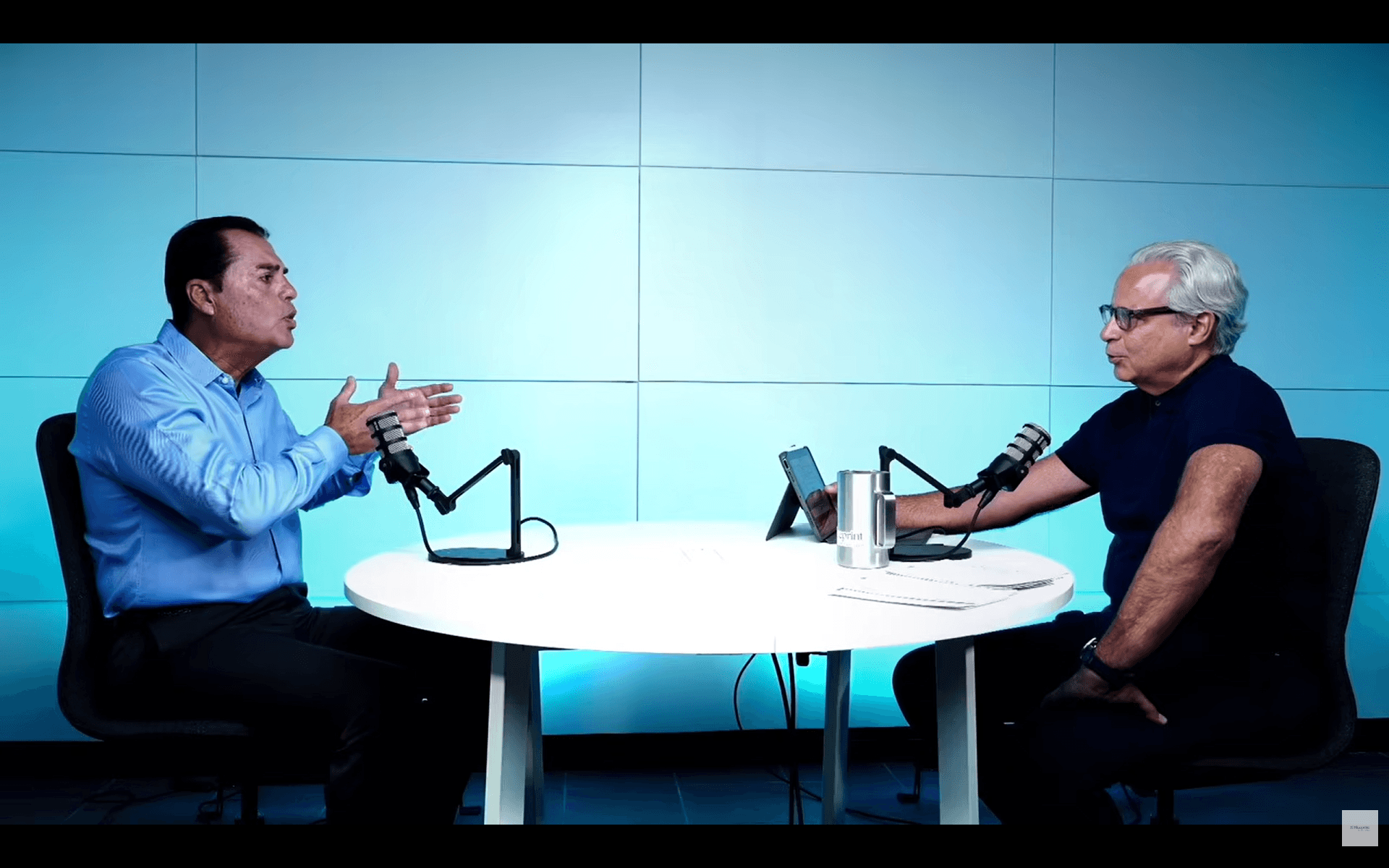
In today’s episode of El Blueprint, the auto executive tells Alberto Bacó Bagué how the valuation process helped turn the family business into a thriving leader in Puerto Rico’s automotive industry
José ‘Pepe’ Llama’s exile from Cuba transpired like so many others at the time. At 4 years old, he could not have known that he would later build a successful auto-processing and logistics company with over 60 employees that would process more than 600,000 vehicles since its founding. But to him, the Cuban origins have always been part of the story.
Caribbean Auto Processing and Logistics (CAPL), founded by Llama in the early 1980s, began as Artic-Kar, a company that installed air-conditioning systems in cars. It eventually evolved into car radios, automotive accessories, cellular phones and distribution, before transforming into the vehicle-processing and logistics operation it is today.
In the latest episode of the El Blueprint podcast with Alberto Bacó Bagué, Llama retraced his entrepreneurial journey, noting his father’s exit from the company as a memorable turning point in his career. Heavily invested in anti-Castro political activity, Llama quickly realized his father was no longer a valuable business partner, leaving him with a hard decision to make.
“I had two choices. I could either buy him out, or I could just gift him my half,” Llama said.
CAPL does auto logistics and distributes auto parts and systems, including this one.
The Problem: How Much Is It Worth?
Which is where Bacó and Llama’s conversation gets particularly interesting: there to help Llama navigate that decision-making process was Bacó himself, who in 1997 worked at Marvel International, managing business restructuring, acquisitions and sales.
According to Llama, the most difficult question wasn’t whether the company would remain in the family. It was how much the business was actually worth.
“My father thought the business was worth a lot more than it actually was. That’s why the valuation helped so much; it helped us see the reality,” Llama explained.
This disconnect between founder perception and actual value is common in closely held companies, where there is no stock-market price to anchor expectations. For these businesses, establishing a credible valuation becomes a critical first step in any succession discussion.
Bacó soon realized this was a special case because the disagreement between Llama and his father was reaching a breaking point. “He was going left and I was going right,” Llama described. Which is why Bacó treated the case as something special, taking his time with the valuation process.
For many Puerto Rican business owners, the preparation begins with a question: How much is the business actually worth, and who can help us agree on the answer?
The solution ultimately went beyond settling on a price. Instead of demanding the money upfront, Llama’s father agreed to receive payment over time, with interest, allowing ownership to pass from one generation to the next without requiring his son to finance the entire acquisition at once. This creative financing structure turned what could have been a family rupture into a structured transition.
A Problem Across Puerto Rico
Decades later, Llama’s family negotiation reflects a challenge confronting businesses across Puerto Rico today: what happens to the value an entrepreneur spends a lifetime building when the next generation takes over?
This is precisely the type of planning that many current family-owned businesses are avoiding altogether. According to a Colmena 66 2024 State of the Business Community report, 53.3% of the 640 entrepreneurs surveyed felt unprepared for succession, versus 46.7% who demonstrated some degree of preparedness. And among the 351 respondents asked about timing, 39.9% said they had not planned when succession would occur at all.
Even more telling, 45.2% said they were not interested in succession planning at all, while another 17.3% were undecided, and only 15.6% planned to transition their business to a family member.
It is a striking contradiction. Many Puerto Rican businesses are family-owned, yet one of the topics they feel least prepared for is how that ownership will be transferred. This gap is not unique to Puerto Rico. Research by the Family Firm Institute shows that only 30% of family businesses successfully transition to the second generation, with just 10 to 15% surviving to the third. By the third generation, approximately 88% of family businesses have been sold, dissolved, or gone defunct.
Valuation: The Missing First Step
Perhaps even higher on the list of priorities before deciding how ownership will be transferred is establishing what the company or ownership stake is actually worth. For closely held companies, there isn’t a stock-market price sitting there telling the family what the business is worth.
According to Popular One’s Puerto Rico Succession Planning Guide, shareholders should agree beforehand on a methodology, such as using an average of several years of audited financial statements, or hire a company specializing in business valuation, like Llama did. An objective voice guiding the company through these decisions is essential, because the value assigned determines how much the succeeding generation actually has to pay to acquire ownership.
Professional valuation incorporates more than just tangible assets. Popular’s guidance notes that a professional valuation can include intangible elements such as brand recognition and market position, in addition to financial considerations. This more holistic approach often reveals value that family members had not previously recognized, and can help reconcile disputes over what the business is truly worth.
Succession challenges are common in in every country. The lesson behind Llama’s experience is therefore universally relevant: building a business may take decades, but ensuring that its value survives beyond its founders requires preparing for the moment when ownership must change hands.
Why Governance Matters
In another report by Chambers and Partners, an international legal research and rankings organization, the 2026 Chambers Corporate M&A guide for Puerto Rico found that Puerto Rican businesses remain family-owned but they lack formal governance or institutionalized management structures.
The guide identifies lack of succession planning as a contributing factor to a growing number of transactions in which longstanding Puerto Rican family businesses are acquired by or merged into larger U.S. or international companies. The guide specifically identifies healthcare, distribution, professional services, and technology-enabled businesses among the sectors where this consolidation has occurred.
Research from business succession specialists also shows that 60% of succession failures stem from unresolved family conflict rather than financial or operational issues. Many family businesses invest heavily in legal and financial planning, yet fail to invest in the family governance structures, communication protocols, and even professional mediation needed to navigate the human side of transition.
The Llama Lesson
For Llama, it was clear he needed outside help when he and his father were not seeing eye to eye. The professional valuation process helped transform what could have been a bitter family dispute into a structured, manageable transition. The solution enabled the family enterprise to continue evolving alongside Puerto Rico’s automotive industry, with new ownership and fresh direction.
And while every succession will look different—some may favor co-leadership arrangements, others family governance councils, and still others external hires—the lesson behind Llama’s experience remains universally relevant: building a business may take decades, but ensuring that its value survives beyond its founders requires preparing for the moment when ownership must change hands.
For many Puerto Rican business owners, that preparation begins not with succession documents, but with a simple question: How much is the business actually worth? And who can help us agree on the answer?
In the first episode of El Blueprint’s second season, Rafael Rojo holds nothing back, as he shares with host Alberto Bacó Bagué key insights for the island’s growth and the secret sauce behind his own