Officials from both countries will discuss expanding the list of Chilean products excluded from Washington’s new 12.5% tariffs.
A U.S. delegation will arrive in Santiago, Chile in August to continue negotiations seeking exemptions for certain Chilean exports from the new 12.5% tariff imposed last week by the Trump administration, the Chilean government announced Monday.
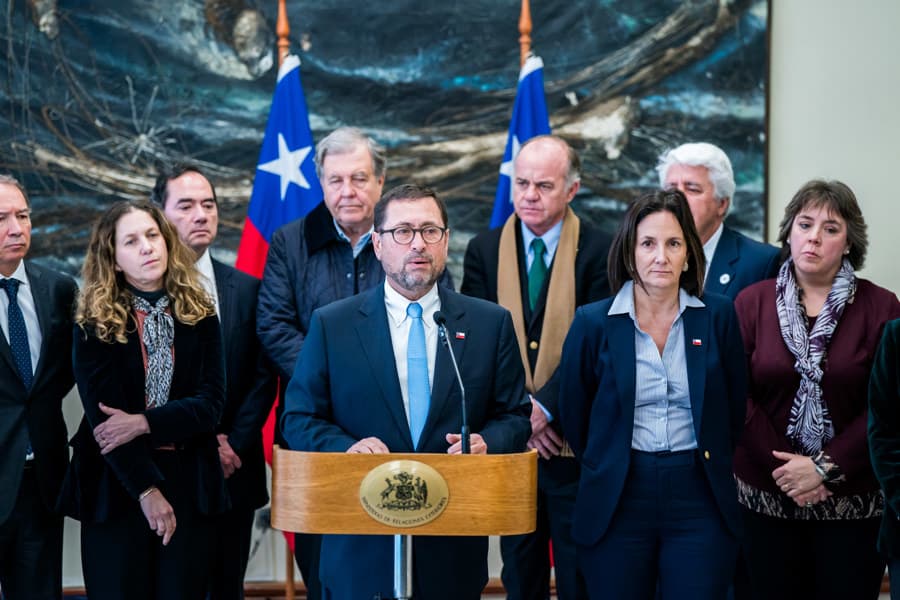
“We are going to negotiate with the United States on both the issue of tariffs and the goods exempt from this new situation; 60% of our products have been exempt so far, and we want to push for an expansion of that exemption,” said Chilean Foreign Minister Francisco Pérez Mackenna at a press conference after meeting with representatives of the main export associations affected by the measure.
Last Thursday, Washington announced new tariffs ranging between 10% to 12.5% on imports from 60 economies that collectively represent 99% of its imports, citing an investigation into “insufficient efforts to combat forced labor” as justification.
In addition to Chile, the measure also affects several major trading partners, such as: Brazil, Mexico, India, Japan, and the European Union (EU), marking a new phase in the trade war launched by Trump in April 2025.
However copper, Chile’s leading export to the United States, was excluded from the new tariffs, the Chilean government is seeking to have products such as salmon, fresh and frozen fruits, wines, and wood products, and other key products, exempted as well.
The U.S. delegation will be led by Jeffrey Goettman, deputy trade representative at the Office of the U.S. Trade Representative (USTR), according to the Chilean government.
The administration of far-right leader José Antonio had anticipated the possibility of the tariffs because Chile does not have legislation specifically banning imports produced with forced labor. However, officials argue that e country maintains “a solid institutional framework for the eradication of forced labor.”
“We hope these bilateral negotiations will be successful,” said Paula Estévez, Undersecretary for International Economic Relations, at the same press conference.
In 2025, Chile’s exports to the United States reached 17,741 million dollars, including 9,412 million in mining products.
The United States remains the largest market for Chilean salmon, with exports of the product exceeding $2 billion last year, according to official data.
The president of Salmones Chile, Patricio Melero, argued that salmon should be excluded from the tariffs because, “The United States does not produce it in significant quantities; in other words, we do not compete with their economy.”
Meanwhile, the National Agricultural Society (SNA) said that the new tariff represents a “hard blow” to the sector, which has already faced rising costs, including fertilizers and air, sea, and land freight, due to the war in the Middle East.
“The new tariff makes us less competitive,” said SNA President Patricio Walker.